
The Atlantic hurricane season is off to a notably quiet start, and NOAA is now even more confident that 2026 will end up as a below-normal season.
In its updated outlook, NOAA gives the season a 75% chance of being below normal. That’s up from 55%, and compared to a 20% chance of a near-normal season and just a 5% chance of an above-normal season.
NOAA’s latest forecast as of August 6
NOAA is now forecasting 7 to 13 named storms, 2 to 6 hurricanes and 0 to 2 major hurricanes through the end of November. Those numbers are slightly lower than NOAA’s May outlook, which called for 8 to 14 named storms, 3 to 6 hurricanes and 1 to 3 major hurricanes.
Only two named storms have formed so far this season, and most of the activity that NOAA expects is still likely to occur during the traditional peak of hurricane season from August through October.
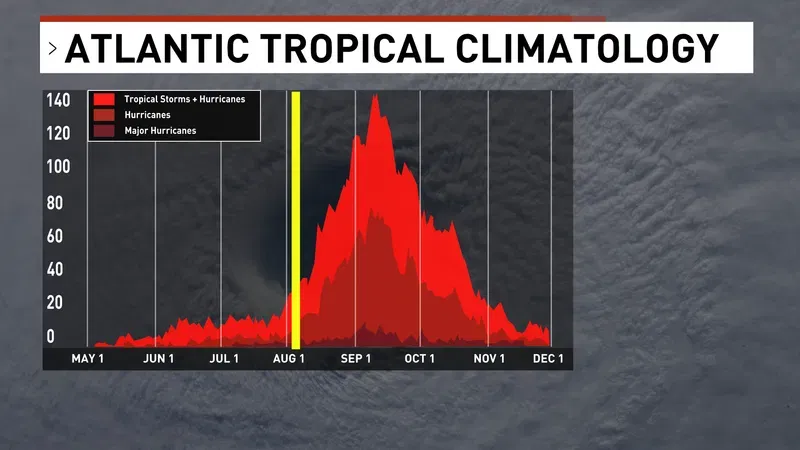
Hurricane season will reach its peak in September
The main reason for the quieter outlook is El Niño, which is expected to strengthen through the peak of hurricane season. NOAA says there is a 90% chance of a strong or very strong El Niño during August, September and October.
Strong El Niño events typically make the Atlantic a more hostile environment for tropical development by increasing upper-level winds, or wind shear. Stronger wind shear can disrupt developing tropical systems before they have a chance to organize and strengthen. NOAA notes that every strong El Niño event since 1950 has been associated with a below-normal Atlantic hurricane season.
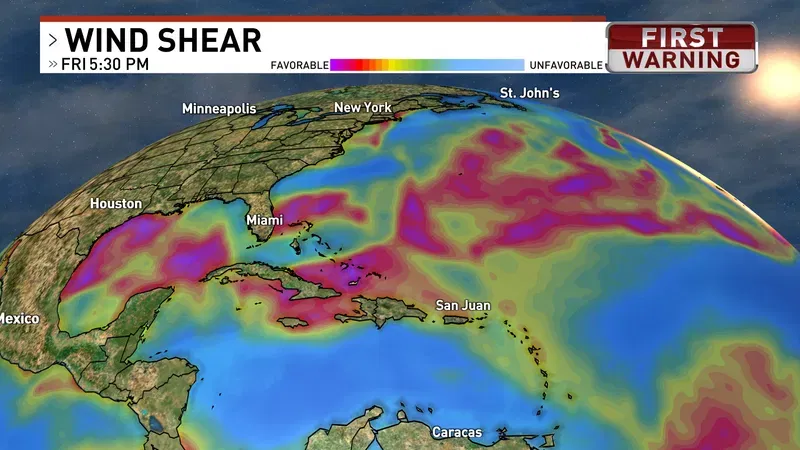
Wind shear remains high in the Atlantic basin
Other factors are also working against tropical development. While parts of the Atlantic remain warmer than average, ocean temperatures in the tropical Atlantic are not nearly as warm relative to normal as they were during the exceptionally active 2023 and 2024 seasons. Stronger than normal trade winds and less favorable conditions associated with the West African monsoon could also make it harder for tropical waves moving off Africa to develop.
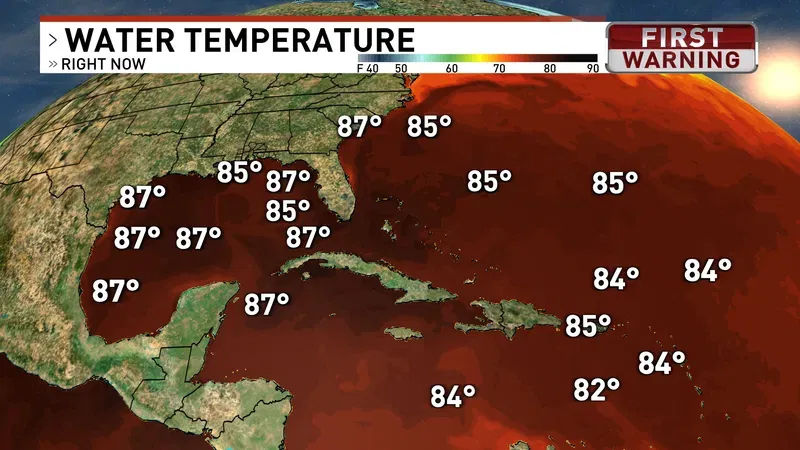
That combination has helped keep the tropics unusually quiet so far, and NOAA expects many of those unfavorable conditions to continue through the peak of hurricane season.
However, a below-normal season does not mean the Gulf Coast is in the clear.
NOAA specifically notes that during El Niño seasons, tropical activity can shift away from the central and eastern tropical Atlantic and become more concentrated toward the Gulf Coast and subtropical Atlantic. Storms can also develop closer to land, giving communities less time to prepare.
Because of that, NOAA says it is not possible this far in advance to predict how many storms will make landfall, where they will go, or how strong they could become. Those details depend on weather patterns that cannot be accurately predicted weeks or months ahead of time.
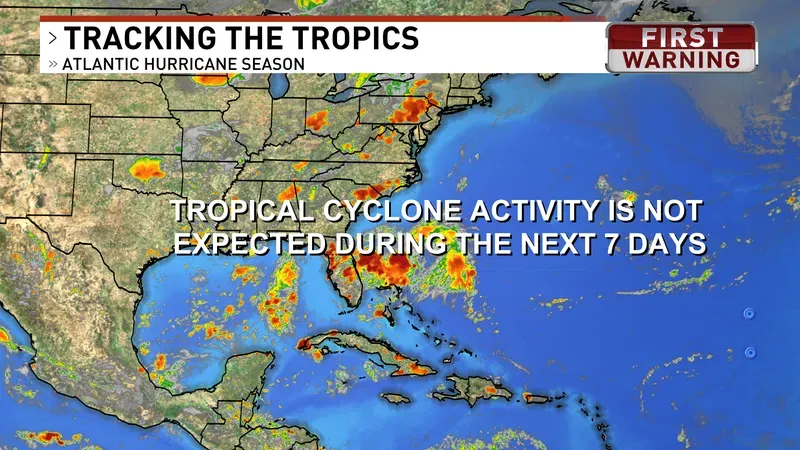
No tropical activity is expected in the next 7 days
For now, the quiet Atlantic is certainly welcome news, but hurricane season is far from over. The season runs through November 30, and the climatological peak of activity is still ahead. For Gulf Coast residents, this remains a good time to review hurricane plans and make sure emergency supplies are ready before the next tropical threat develops.