
pinned
Watch the trial live:
Clancy’s sobs bring testimony to a halt — 3:23 p.m.
By Shelley Murphy, Globe Staff
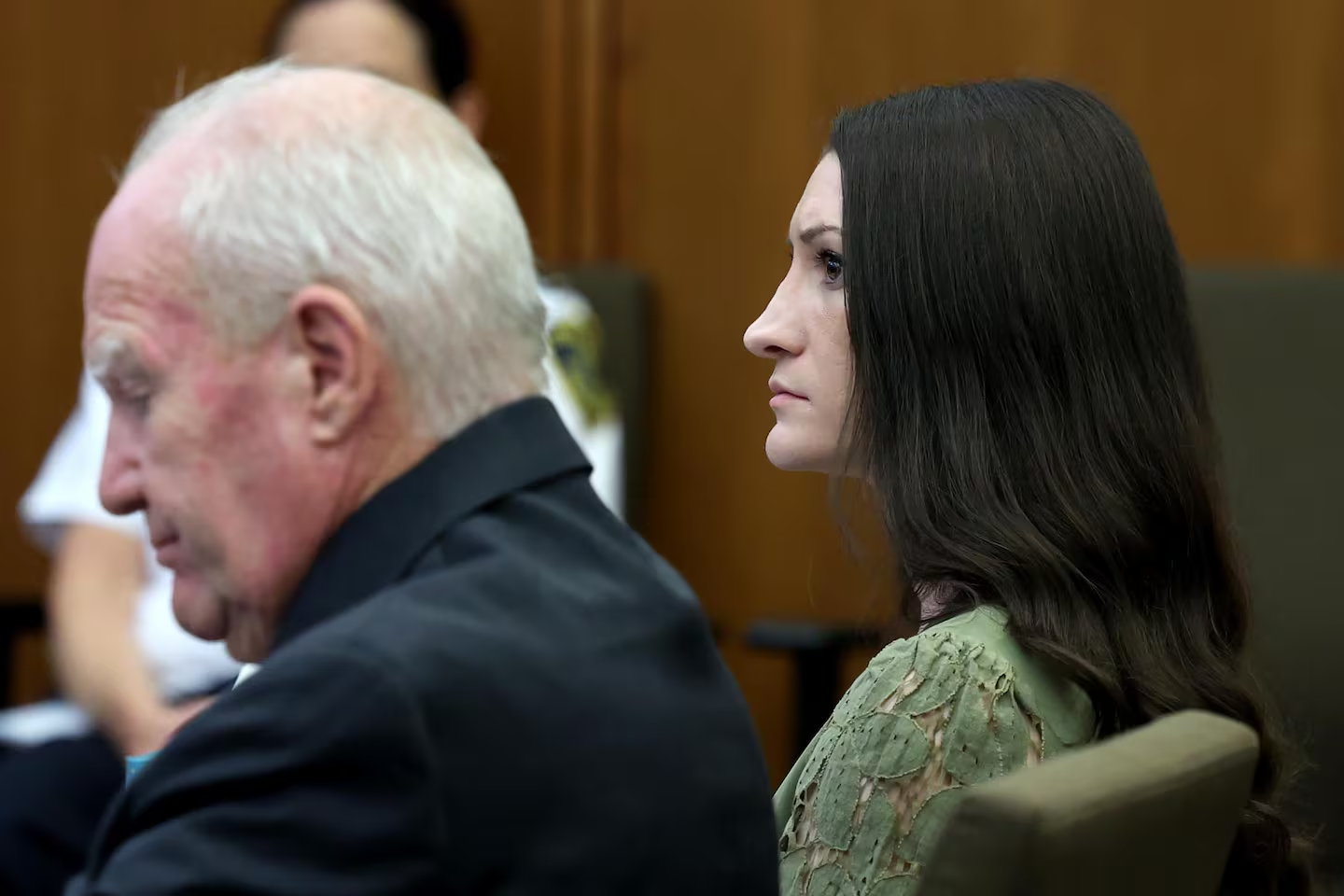
Lindsay Clancy was sobbing so loudly that the testimony of Barbara Olson, the medical examiner who performed the autopsy on her 5-year-old daughter, Cora, could not be heard. The judge quickly called another recess as Clancy was again wheeled from the courtroom.
The judge said they will discuss “scheduling” after this recess, so it’s unclear if they will be able to get through the graphic testimony today. Clancy has a right to be in the courtroom for all of the testimony, but also can waive that right if she chooses.
Recess called again after testimony of children’s autopsy continues — 3:21 p.m.
By Camilo Fonseca, Globe Staff
After a short recess, the prosecution called another forensic pathologist, Dr. Barbara Olson, who performed an autopsy on Cora Clancy.
Olson said she noted neck trauma, as well as injuries to her right arm and legs.
Within a few minutes into the testimony, Clancy began sobbing uncontrollably. Judge William Sullivan called another recess, and jurors were escorted from the courtroom as two women tried to comfort Clancy.
“We’ll recess for a few minutes,” Sullivan said. “Once I come back, I’ll speak to counsel in regards to scheduling.”
Jury returns as judge warns them to set aside emotional reactions — 3:14 p.m.
By Camilo Fonseca, Globe Staff
The jury returned to the courtroom just after 3:10 p.m. after a lengthy break. Judge William Sullivan reminded them to look at the evidence and set aside emotional reactions to testimony.
“Sometimes there’s evidence that’s presented in the trial that creates an emotional reaction,” he said. “But as jurors who have taken an oath to follow the law … the law says you must separate any emotional reaction on your part from the informational value and weight that the evidence produces.”
“Your verdict in this case is going to have to be based solely on the evidence,” he continued. “It cannot be based on sympathy or anger or passion or prejudice.”
After much testimony about Clancy’s mental health, prosecutors shift focus back to deaths of children — 3:00 p.m.
By Shelley Murphy, Globe Staff
Prosecutors shifted the focus of Lindsay Clancy’s murder trial back to the three young victims by calling a doctor from the state medical examiner’s office to the stand Wednesday. She followed a series of witnesses who testified about Clancy’s mental health and efforts to get treatment.
Judge calls recess, Clancy escorted from courtroom — 2:47 p.m.
By Shelley Murphy, Globe Staff
Judge William Sullivan called a brief recess after the medical examiner’s testimony as Lindsay Clancy sobbed uncontrollably. After jurors filed out of the courtroom, two nurses escorted Clancy from the courtroom in her wheelchair.
Forensic pathologist describes injuries to Clancy’s children — 2:45 p.m.
By Camilo Fonseca, Globe Staff
Renee Stonebridge, the director of cardiac and neuropathology at the state chief medical examiner’s office, said she found that both Clancy children had injuries to their eyes that were consistent with some sort of asphyxial strangulation.
She said it takes “between about six to eight minutes” for brain death to occur if there is no oxygen flow.
Clancy was visibly distressed during the testimony, and crying could be heard in the courtroom.
Judge William Sullivan then called for a short recess.
Clancy sobs as doctor details injuries to 5-year-old — 2:40 p.m.
By Camilo Fonseca, Globe Staff
Lindsay Clancy began to sob as a doctor from the medical examiner’s office gave jurors a clinical description of the injuries to 5-year-old Cora’s eyes after she was asphyxiated.
Dr. Renee Stonebridge also described her examination of the eyes of 3-year-old Dawson; and the brain of 8-month-old Callan.
Prosecutors previously showed jurors autopsy photos of the baby, and are poised to show them autopsy photos of the other two children.
The judge has ordered the photos impounded so they will not be publicly released.
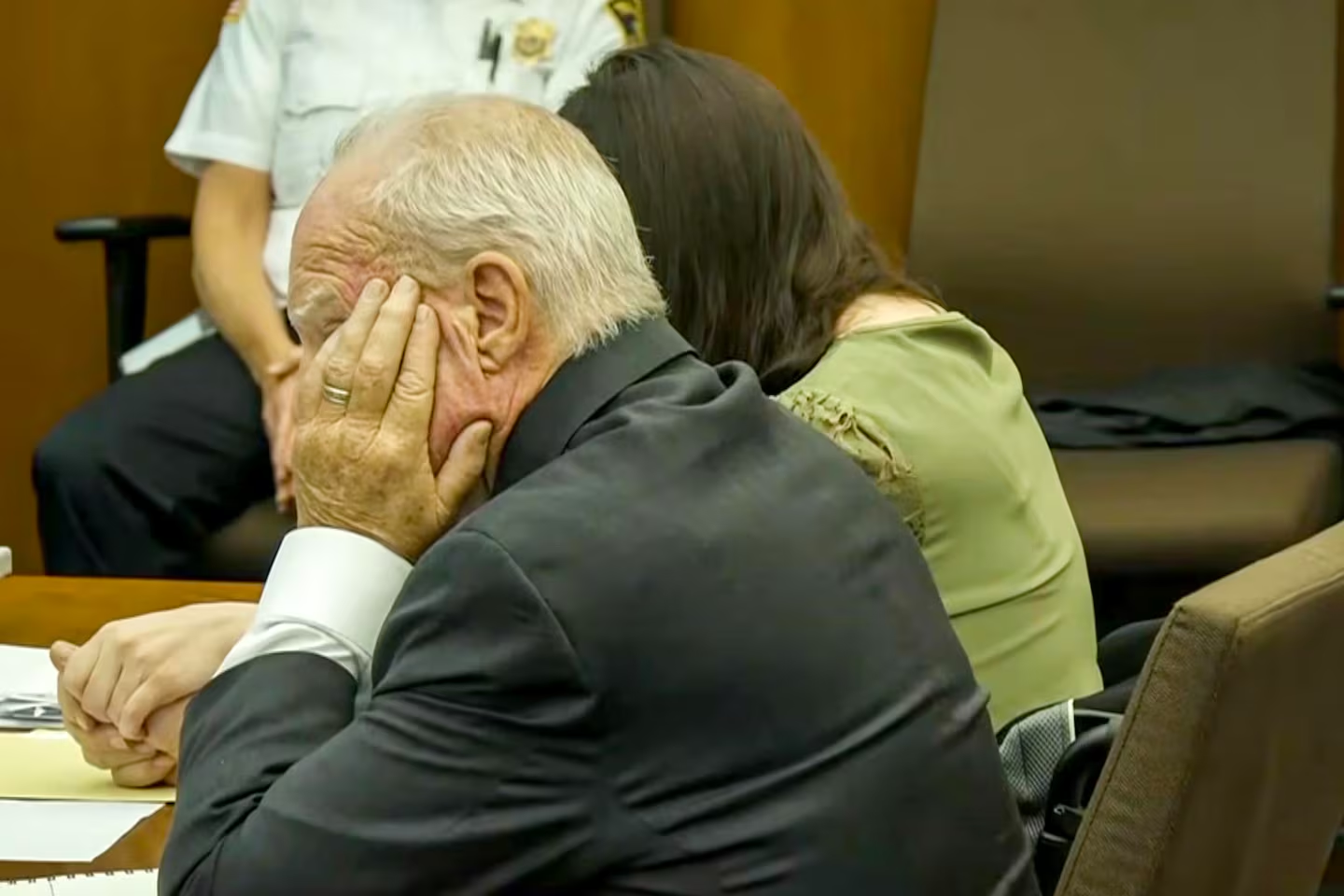
Prosecution calls officials from sheriff’s dept., chief medical examiner’s office — 2:37 p.m.
By Camilo Fonseca, Globe Staff
The first witness called after the recess was Nichole Bradley, a deputy superintendent with the Plymouth County Sheriff’s Office. Bradley testified that the sheriff’s department kept watch over Clancy in the hospital for a week after she was hospitalized.
Prosecutors then called Renee Stonebridge, director of cardiac and neuropathology at the state chief medical examiner’s office.
Stonebridge said that, in her capacity as a forensic pathologist, she is often consulted for autopsies involving children or blunt force trauma.
Stonebridge said she was involved in the autopsies of Cora and Dawson Clancy, Linsday Clancy’s two eldest children.
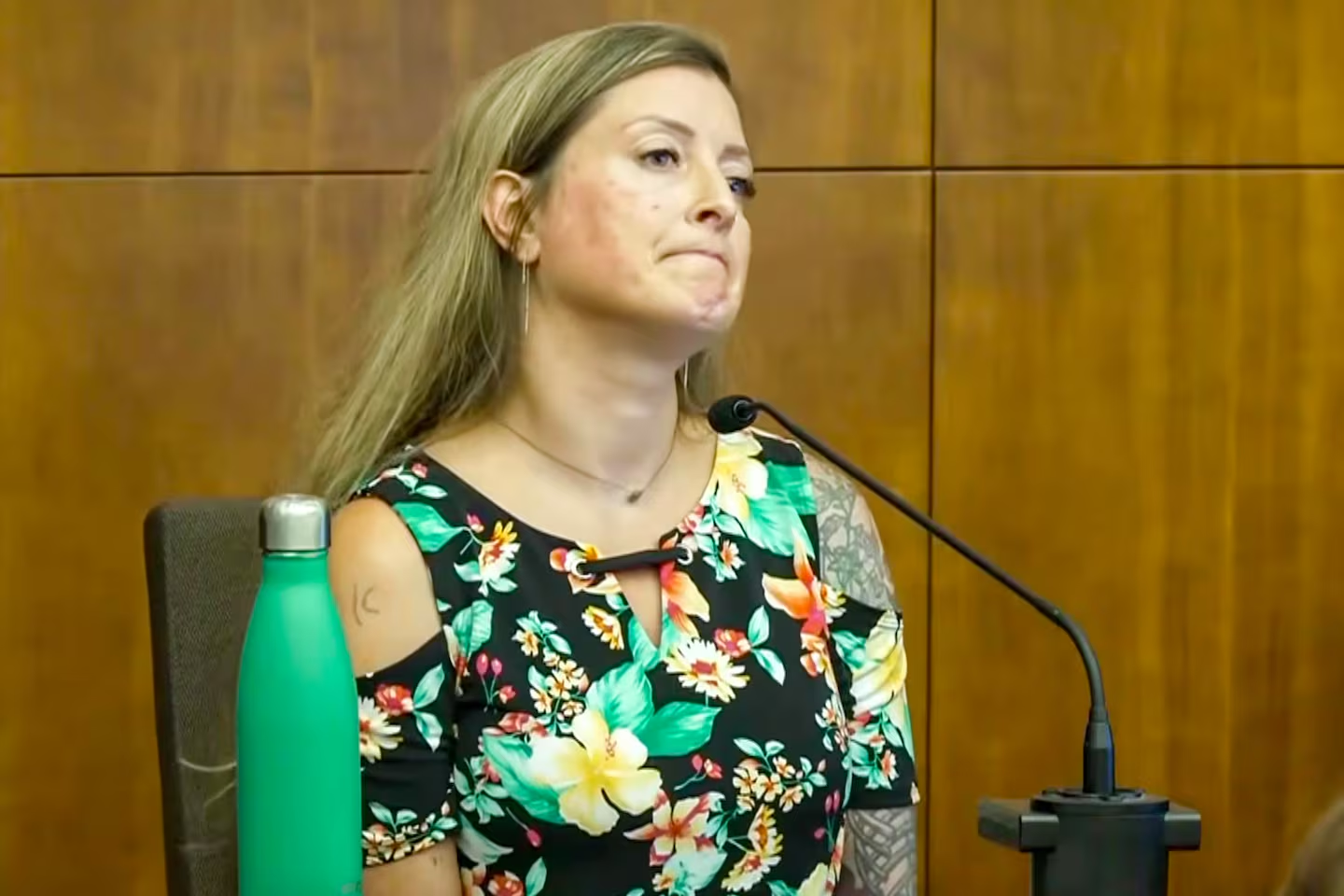
Jury reenters, with some levity — 2:30 p.m.
By Camilo Fonseca, Globe Staff
After a long delay, jurors returned to the courtroom at approximately 2:27 p.m.
“Thank you for your patience,” Judge William Sullivan said. “We gave you a couple extra minutes to look at the solar eclipse while you were out.”
That drew a laugh from the courtroom — a rare moment of levity in such a difficult trial.
Court back in session — 2:24 p.m.
By Camilo Fonseca, Globe Staff
Judge Sullivan entered the courtroom after the afternoon recess at around 2:10 p.m. before calling the attorneys to a sidebar.
As of 2:22 pm., the sidebar was still ongoing.
Prosecution calls Duxbury police officer who monitored Clancy after killings — 12:53 p.m.
By Camilo Fonseca, Globe Staff
The prosecution next called Cameron Daley, a Duxbury police patrolman who reported to Brigham and Women’s Hospital on Jan. 25, where Clancy was hospitalized in the aftermath of her children’s killings.
Daley said he was relieved by the State Police crime scene team at the end of his shift guarding Clancy on Jan. 25. He stepped down from the witness stand shortly thereafter.
Judge Sullivan then called an afternoon recess.
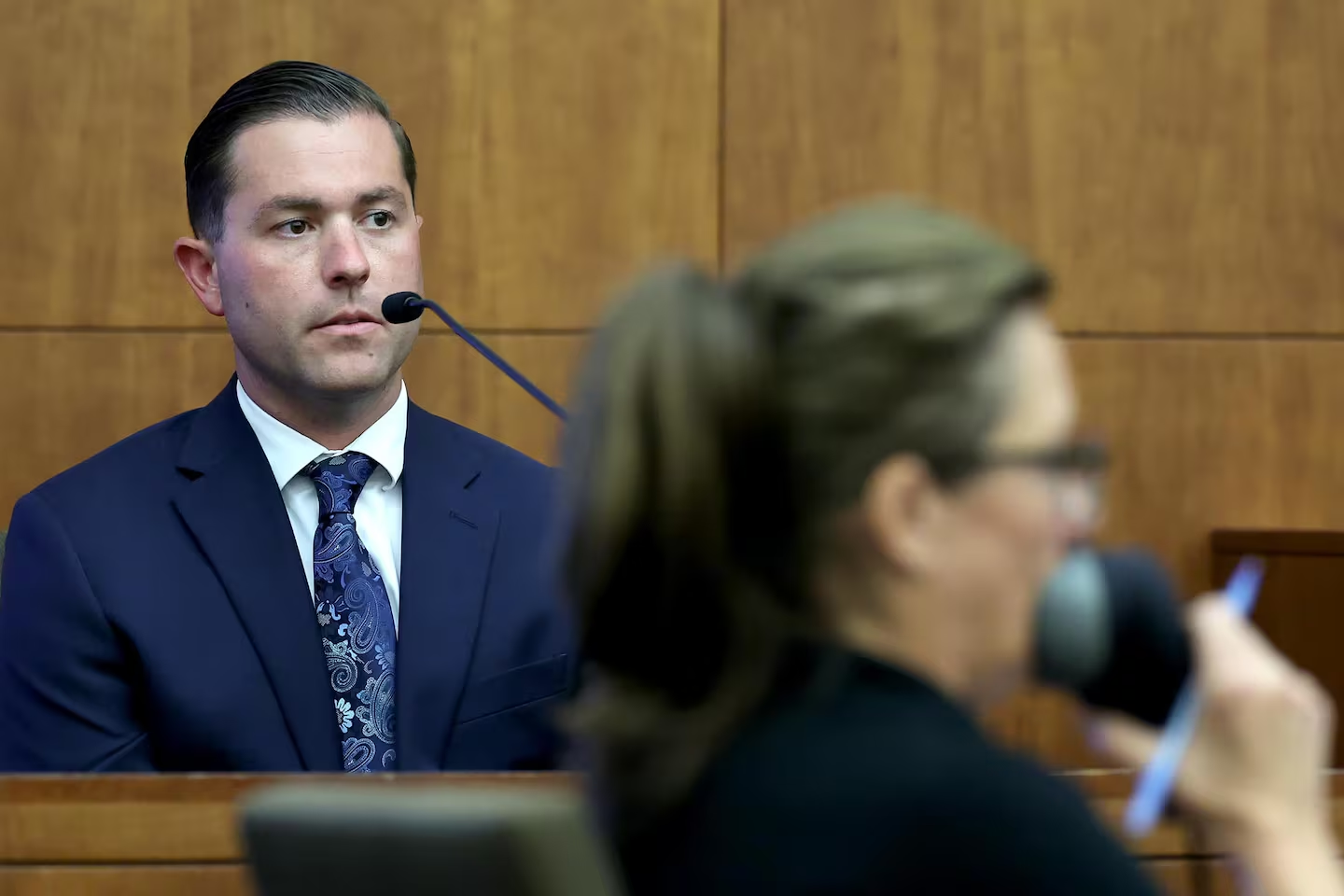
‘Was she laughing when she had numbness?’ Defense questions why therapist reported Clancy’s condition was improving — 12:50 p.m.
By Camilo Fonseca, Globe Staff
Defense lawyer Kevin Reddington pressed Latiesha Dukes, a therapist at the South Shore Health perinatal clinic, on her note from Dec. 19, the last time she interacted with Clancy, reporting that she was laughing and appeared in better spirits.
“Patient continues to have low mood and numbness,” Reddington said, quoting from the note. “Was she laughing when she had numbness?”
Dukes said the laugh was in reaction to part of the conversation, but that Clancy still reported having a low mood.
“We don’t write down everything that we talk about in the meeting,” she said, adding that the notes are merely “a summary of that visit.”
Dukes then stepped down from the stand.
Defense lawyer says Clancy was ‘turning in every direction she could for help’ — 12:41 p.m.
By Camilo Fonseca, Globe Staff
Defense attorney Kevin Reddington cited a study published by the MGH Center for Women’s Mental Health last year that dealt with several categories of postpartum psychiatric illness.
He asked Latiesha Dukes, a therapist at the South Shore Health perinatal clinic, about the typical symptomology of postpartum psychosis, noting that studies show that two in every 1,000 women receive diagnoses.
“Bottom line is, from your dealing with Lindsay, she appeared to be sincere? She appeared to be looking for help? She appeared to be hurting? Turning in every direction she could for help?” Reddington said.
“Correct,” Dukes said.
Dukes said she did not review the records of nurse practitioners Julie Paul and Rebecca Jollotta. She said it was “typical practice” for therapists like her to avoid looking at other records before conducting an intake appointment.
“I wanted to have a fresh set of eyes to look at the situation and to assess it when she came in for her visit,” she said.
“And while you can collaborate or speak with the providers about an overall treatment for the patient, your therapy is your therapy,” said prosecutor Shanan Buckingham.
Dukes answered in the affirmative.
Therapist did not know why Clancy was not admitted to program at Women and Infants Hospital — 12:32 p.m.
By Camilo Fonseca, Globe Staff
Latiesha Dukes, a therapist at the South Shore Health perinatal clinic, said she referred Clancy to a partial hospitalization program at Women and Infants Hospital on Dec. 20. After interviewing Clancy, the program chose not to admit her, citing concerns about her prescription regimen.
Dukes, who previously said she had no input into Clancy’s medication, said she did not know why the hospital said no or that the hospital had tried to contact Clancy’s nurse practitioner, Rebecca Jollotta.
“Would it surprise you to know that they indicated that they couldn’t treat her as a woman with postpartum psychosis or postpartum depression or postpartum anxiety or any of that, because their opinion was that she was suffering from overmedication?” Reddington asked.
“It would surprise me,” Dukes said.
The connection between sleep deprivation and mental illness — 12:25 p.m.
By Jason Laughlin, Globe Staff
Repeatedly, Lindsay Clancy told her providers that she was being plagued with insomnia.
“I really need help,” she wrote one provider in December 2022 describing, among her symptoms, interrupted sleep.
Chronic insomnia is more than an irritation. Over time, sleep deprivation can be mentally and emotionally crippling and can worsen existing mental health conditions. One 2024 review of journal articles about the mental health consequences of poor sleep found strong connections to increased anxiety, less expression of positive emotions, and overall reduced response to emotional stimuli. There were also some signs that certain kinds of sleep deprivation can contribute to greater expression of negative emotions and depressive symptoms.
A 2011 study found people without depression who develop insomnia are twice as likely to develop depression.For new mothers, disrupted sleep is almost impossible to avoid, particularly for the first six months of a baby’s life. Giving birth has physical and psychological effects on a woman’s sleep patterns as does the demands of infants who sleep irregularly.
Sleep disturbances and poor sleep quality appear associated with postpartum depression, a condition clinicians found Clancy had, according to a 2016 study.
The relationship is similar to a chicken and egg scenario, where both conditions can reinforce each other.
“The relationship between poor postpartum sleep and [postpartum depression] is likely bidirectional, with each increasing the risk of the other,” one 2024 study in Seminars in Perinatology stated.
Conversely, good sleep is a treatment for postpartum mental health issues.
Dr. Uruj Haider, director of the Massachusetts Child Psychiatry Access Program, described sleep as an important component of treatment for postpartum psychosis, a severe mental illness that can cause hallucinations, delusions, and both homicidal and suicidal behavior.
In early December, Clancy reported being anxious that something would happen to her children, therapist says — 12:17 p.m.
By Camilo Fonseca, Globe Staff
Latiesha Dukes, a therapist at the South Shore Health perinatal clinic, said that based on their conversation at Clancy’s Dec. 2 intake appointment, she did not consider Clancy to have substance abuse issues.
Defense lawyer Kevin Reddington, though, said that Clancy drank “one to two glasses” a night in October 2019. Dukes said that experience was “to cope with anxiety.”
Clancy also reported lack of sleep and numbness, as well as anxiety that something would happen to her children, Dukes said.
How addictive are benzodiazepines? — 12:07 p.m.
By Jason Laughlin, Globe Staff
A repeated concern Lindsay Clancy raised, according to testimony from her providers, was a fear that she would become addicted to the benzodiazepines she was prescribed to help her sleep.
Two providers, Rebecca Jollotta, a psychiatric-mental health nurse practitioner, and Latiesha Dukes, a therapist, both testified that they considered her fears unwarranted.
These drugs, which include Ativan, Klonopin, and Valium, all of which were taken by Clancy at different times, are effective treatments for people with anxiety and difficulty sleeping, and are well tested. They have been used since the 1960s, according to the Cleveland Clinic.
There is a risk of addiction, though, and they should not be used without a doctor’s oversight. An article this year in the International Journal of Molecular Sciences states that these drugs should not be used for longer than eight to 12 consecutive weeks, and doses should be gradually increased or decreased, not changed abruptly.
Using benzodiazepines for too long can cause excessive sedation, cognitive impairment, loss of motor coordination, and long-term health consequences, including addiction, the article said.
Therapist who treated Lindsay Clancy testifies she didn’t show signs of psychosis
Defense begins cross-examination of therapist — 11:57 a.m.
By Camilo Fonseca, Globe Staff
Just before 11:55 a.m., jurors returned to the courtroom and Kevin Reddington began his cross-examination of Latiesha Dukes, a therapist at the South Shore Health perinatal clinic.
Therapist says Clancy appeared more positive during last in-person visit on Dec. 19, 2022 — 11:30 a.m.
By Camilo Fonseca, Globe Staff
Latiesha Dukes, a therapist at the South Shore Health perinatal clinic, said her last in-person visit with Clancy was on Dec. 19, adding that Clancy seemed “more engaged” and appeared visibly more positive.
She told jurors that, despite Clancy’s reported low mood, at no point did she have any concerns about her physical wellbeing or those of others in her presence, nor did she have concerns about Clancy reporting anything accurately.
Judge William Sullivan then called a morning recess.
Therapist describes Clancy’s willingness for partial hospitalization programs — 11:23 a.m.
By Camilo Fonseca, Globe Staff
Latiesha Dukes, a therapist at the South Shore Health perinatal clinic, said she had four visits with Clancy before the killings, adding that she did not see signs of mania, delusions, paranoia, or psychosis.
At an appointment on Dec. 12, 2022, Clancy indicated she would be starting a partial hospitalization program in Norwell. Dukes recommended a different program at Women and Infants Hospital in Rhode Island.
“I was recommending this higher level of care because of continued passive suicidal ideation, even with crisis intervention,” she said. “As Women and Infants was more so for postpartum women, and the infant would be able to come to the program with her.”
‘She had a lot of anxiety about most things,’ therapist testifies — 11:11 a.m.
By Camilo Fonseca, Globe Staff
Latiesha Dukes, a therapist at the South Shore Health perinatal clinic, said her first intake appointment with Clancy was on Dec. 2, 2023, after she was referred for postpartum anxiety and depression symptoms. Clancy told her she was suffering from anxiety, lack of sleep, and “frequent, passive suicidal ideation.”
She said she was aware Clancy was taking medication but said her role as a mental health counselor did not involve prescribing medication or addressing dosages.
Dukes told jurors that, despite Clancy’s reported mental state, her mood at the appointment appeared “normal.”
At the Dec. 2 appointment, Dukes said she diagnosed Clancy with postpartum anxiety “because she had a lot of anxiety about most things.”
She said she recommended intensive outpatient therapy, such as partial hospitalization.
In another appointment three days later, Clancy reported contacting a crisis hotline over the weekend and having intrusive suicidal thoughts.
Prosecutor Shanan Buckingham asked whether, at their second appointment, Clancy showed “any signs of psychosis or signs of mania or homicidal ideation?”
Dukes said she did not.
What to know about Latiesha Dukes — 10:55 a.m.
By Travis Andersen, Globe Staff
Latiesha Dukes, a therapist who treated Lindsay Clancy at the South Shore Health perinatal clinic, is testifying at Clancy’s triple murder trial.
Dukes, now a therapist at the Boston Public Health Commission, had an appointment with Clancy soon after a nurse practitioner at the clinic had prescribed her Seroquel on Nov. 30, 2022, according to a lawsuit filed by Patrick Clancy, Lindsay’s former husband.
Lindsay Clancy “quickly reported” the negative effect the drug had on her mental health, the lawsuit stated.
She also told Dukes “that she had ‘an addiction to Ativan, and that is why she can’t sleep,’” the suit said. “She reported weight loss, a lack of appetite, panic attacks, and a feeling of numbness. She also reported for the first time that she had suicidal ideation.”
The suit said Clancy on Dec. 5, 2022, also “reported to Ms. Dukes that she had experienced intrusive thoughts of wanting to die and had contacted ASPIRE Crisis support, an emergency service for those at risk of self-harm, over the weekend.”
Therapist who treated Clancy takes the stand — 10:50 a.m.
By Camilo Fonseca, Globe Staff
The prosecution next called Latiesha Dukes to the stand. Dukes, a therapist at the South Shore Health perinatal clinic, treated Clancy shortly before the killings.
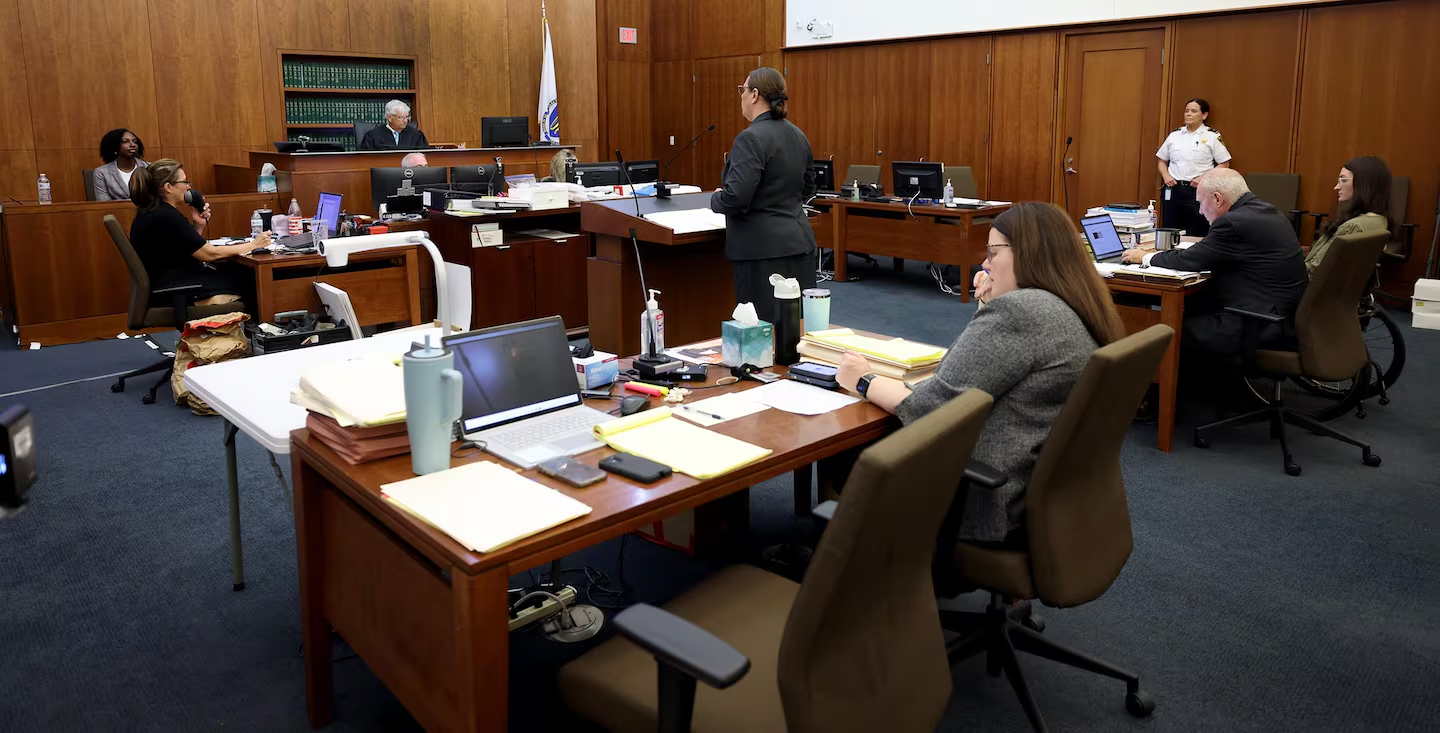
State Police investigator says he never heard Clancy’s conversation with psychologist, husband — 10:47 a.m.
By Shelley Murphy, Globe Staff
Once jurors returned to the courtroom, State Police investigator Daniel Lawlor acknowledged that investigators floated the theory that a psychologist told Clancy to pretend that she heard voices when she killed her children, but found no evidence to support it.
Lawlor told jurors that he was sitting outside Clancy’s hospital room when she spoke to the psychologist and never overheard their conversation, or the phone call she placed to her husband.
Jury returns as State Police investigator faces cross-examination — 10:46 a.m.
By Camilo Fonseca, Globe Staff
Defense lawyer Kevin Reddington resumed his questioning of State Police investigator Daniel Lawlor, focusing on the conversation he had with Joshua McKelligan, a fellow investigator on the Clancy case.
Lawlor acknowledged that he and McKelligan had discussed the theory that Dr. Paul Zeizel, a psychologist, was “the reason that she told her husband that she heard voices.”
“There’s no investigative basis for that, that’s McKelligan’s speculation, is that correct?”
“Correct,” Lawlor said.
On redirect, prosecutors asked whether that conversation was abnormal.
“In your experience working in the detectives unit as a trooper, is it fair to say you oftentimes will have conversations as investigations are unfolding with other investigators that you’re working on a case with about the case, potential evidence, theories of the case?” prosecutor Shanan Buckingham asked.
“Yes,” Lawlor said.
“And it’s also fair to say that theories change over time based on your investigation and what evidence you find?” she asked.
“Correct,” he answered.
Lawlor left the stand a short time later.
Judge holds brief recess — 10:37 a.m.
By Shelley Murphy, Globe Staff
Judge William F. Sullivan sent jurors out of the courtroom, then held a voir dire in which the defense and prosecutors were allowed to question State Police investigator Daniel Lawlor about whether prosecutors had suggested that a psychologist told Lindsay Clancy to tell her husband she heard voices when she killed their children.
Lawlor testified during the hearing, out of the presence of the jury, that he knew that Dr. Paul Zeizel allowed Clancy to use his cellphone to call her then-husband Patrick and that she told him “that she heard voices.”
Lawlor acknowledged he later had a conversation with the lead State Police detective on the case about whether Zeizel planted the theory that she heard voices in her mind.
“That would be the theory,” Lawlor said in response to questions from Clancy’s lawyer, Kevin Reddington. But he said he never discussed that theory with prosecutors and didn’t overhear the conversation Clancy had with the psychologist or her husband as he sat outside her hospital room.
The judge held a brief recess, and a sidebar, but has yet to announce his ruling.
Defense presses State Police investigator on Lindsay Clancy’s phone call to Patrick Clancy — 10:34 a.m.
By Camilo Fonseca, Globe Staff
Without the jury present, Kevin Reddington asked Daniel Lawlor whether he had discussed Clancy’s phone call to her husband, Patrick, in which she told him that she had been hearing voices, with other State Police investigators.
Reddington suggested that investigators had theorized that Dr. Paul Zeizel, a psychologist who evaluated Clancy, “was basically the one that planted that idea in her head.”
“When she told Patrick that she heard that on the phone call, the prosecution determined that it was Zeizel [who] told her to say that for some type of a defense, right?” Reddington said.
“I don’t know what the prosecution determined,” Lawlor said.
Prosecutor Shanan Buckingham asked Lawlor whether he had had any conversations with the prosecution about their theory of the case, to which he said he did not.
“In fact, you don’t know anything about whether there’s any evidence about Dr. Zeizel giving or prompting the defendant to have that conversation with her husband, do you?” she asked.
“No,” he answered.
Jurors leave courtroom for questioning of witness — 10:18 a.m.
By Camilo Fonseca, Globe Staff
Judge William Sullivan asked the jury to leave the courtroom for a voir dire hearing, allowing him to evaluate whether the testimony of a State Police investigator can be admitted without risking unfair prejudice to the jury.
“Like I said to you, I think a couple weeks ago, sometimes I’ve got to talk to the lawyers for a little bit longer than it takes over here at the sidebar,” Sullivan said. “This is one of those situations.”
By Shelley Murphy, Globe Staff
Lindsay Clancy’s defense lawyer asked a State Police sergeant if he knew that the Plymouth District Attorney’s office contends that a psychologist hired by the defense told her to call her then-husband, Patrick, from her hospital bed days after she killed their three children and tell him she “heard voices.”
But Daniel Lawlor was not allowed to answer, as prosecutors quickly objected and the judge has now called a sidebar.
This is a key point for the defense because Clancy’s lawyer, Kevin Reddington, is arguing that she had a psychotic break when she strangled her children and couldn’t resist voices telling her to kill them and herself.
Lindsay Clancy trial: Sidebar called after prosecution objects to question from Clancy’s lawyer
The forensic psychologist who was only allowed to visit Clancy in the hospital after her lawyer obtained a court order is Dr. Paul Zeizel, one of the defense experts who will be testifying at the trial. He has been a constant presence in the courtroom but is not here on Wednesday.
Clancy’s parents are also a constant presence and have not missed a day of the trial.
Lawlor was called to the stand by the prosecution today and told jurors he was sent to stand guard outside Clancy’s room in the intensive care unit at Brigham and Women’s Hospital some days after the slayings on Jan. 24, 2023, but he couldn’t recall the exact date.
Nobody was allowed in or out to visit her, except Zeizel, but only after getting the court order.
Prosecution reviews prescription pill bottles found at Clancy home — 9:55 a.m.
By Camilo Fonseca, Globe Staff
State Police investigator Dan Lawlor said he found several bottles of prescription pills at Clancy’s home, including Trazodone, Diazepam, and Amitriptyline.

He also said he found a baby monitor and a Google Nest camera in the master bedroom.
Defense attorney Kevin Reddington began his cross-examination of Lawlor by asking him about the nature of his assignment to the Plymouth County district attorney’s office.
“Correct, sir,” Lawlor said.
“You don’t have to call me sir,” Reddington replied.
Reddington asked whether Lawlor had taken possession of Clancy’s shoes at the hospital. Lawlor said it was unclear whether she had been wearing shoes, and that he did not take any into his possession.
Reddington also asked whether Lawlor had found an Apple Watch while searching her home; Lawlor said he had not.
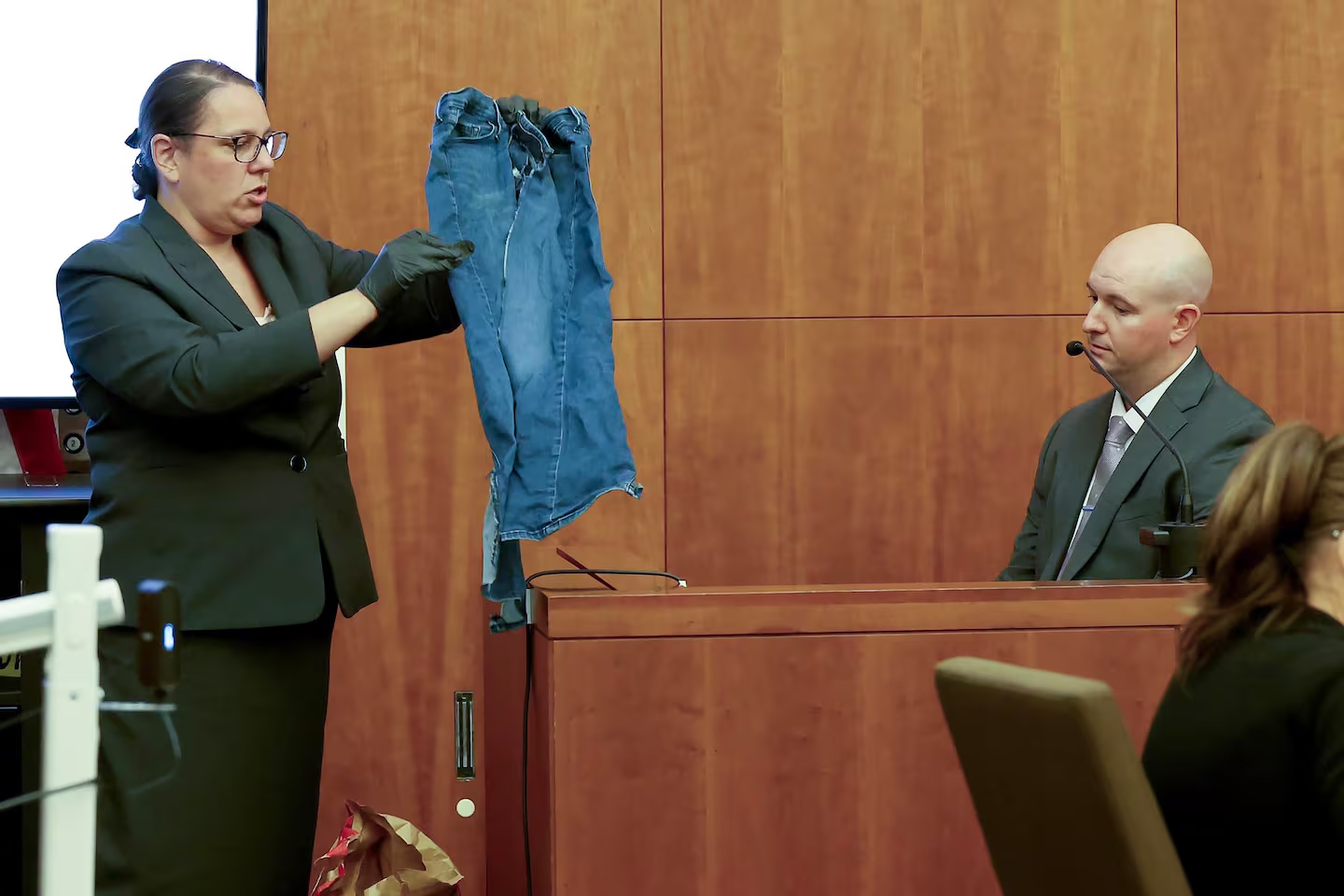
Clancy’s clothes shown to jury — 9:41 a.m.
By Camilo Fonseca, Globe Staff
Prosecutor Shanan Buckingham showed the court the clothing that Clancy was wearing at the time of the killings: a dark tank top and jeans, both of which were removed from her by emergency medical staff.
State Police investigator Dan Lawlor said he had taken possession of both items. He was the evidence officer who supervised law enforcement’s search of Clancy’s Duxbury home.
Prosecution calls State Police Sergeant to the stand — 9:33 a.m.
By Camilo Fonseca, Globe Staff
Jurors entered the courtroom at approximately 9:25 a.m., and Judge William Sullivan asked them his standard list of questions.
The prosecution called State Police Sgt. Dan Lawlor to the stand; Lawlor responded to South Shore Hospital in January 2023 after Clancy was hospitalized, shortly after she was found severely injured at her Duxbury home.
Lawlor said he observed Clancy being treated and saw she had suffered visible injuries.
He also served the hospital with a preservation notice to ensure that samples of Clancy’s blood were saved for future investigation.
He also collected her clothing, wedding ring, and wedding band.
Court is in session — 9:19 a.m.
By Camilo Fonseca, Globe Staff
Judge William Sullivan entered the courtroom just after 9:15 a.m. and called the parties to a sidebar. Jurors have yet to enter the courtroom.
5 takeaways from prosecution’s questioning of Rebecca Jollotta — 8:49 a.m.
By Jason Laughlin, Globe Staff
Jollotta testified at length about the difficulties Clancy faced, but also discussed her challenges getting Clancy to stick to the treatment regimen they discussed. Here are five takeaways from Jollotta’s testimony under questioning from the prosecution:
- Jollotta repeatedly raised concerns about the possibility Clancy was suffering from a form of bipolar disorder. In her testimony, she said Clancy’s didn’t have enough of the symptoms of the condition to qualify for a diagnosis, but it remained a concern as she treated Clancy because her patient had such strong adverse reactions to some of the antidepressants she had been prescribed. She proposed Clancy may have suffered from manic mixed state bipolar disorder, which could also include symptoms of depression.
- Clancy’s then-husband, Patrick Clancy, did not agree that his wife was bipolar.
- Clancy had a lot of anxiety about taking her medications, Jollotta reported. She worried the drugs were contributing to her symptoms of depression, emotional numbness, and anxiety and repeatedly expressed concerns about becoming addicted to benzodiazepines she took for sleep, such as Ativan. These drugs can become addictive but Jollotta said she would rather Clancy get sleep than worry in the moment about becoming dependent.
- Clancy had a history of not following through on her prescriptions. Jollotta noted Clancy had decided to stop taking Zoloft and Trazodone, two antidepressants, shortly after beginning to take them. Jollotta experienced that behavior herself after prescribing Remeron, another antidepressant. Clancy asked if she could stop taking it after five nights at one point, Jollotta testified. Such drugs typically take weeks to show results.
- By December 2022, Jollotta “strongly” recommended Clancy seek partial hospitalization for postpartum depression. This came as Clancy told a nurse she wanted to stop taking any medications.
Here’s how Tuesday’s testimony unfolded — 8:32 a.m.
By Travis Andersen and Camilo Fonseca, Globe Staff
A psychiatric nurse practitioner who treated Lindsay Clancy while the Duxbury woman struggled with her postpartum mental health gave jurors in Clancy’s murder trial an inside look at Clancy’s desperation to improve as she struggled with symptoms of depression and anxiety.
Rebecca Jollotta, who treated Clancy at South Shore Health in the months before Clancy killed her three children in January 2023, testified that Clancy repeatedly attributed her depression symptoms to the medication she was taking and feared becoming dependent on certain drugs. She also described Clancy’s tendency to take medications for a shorter time period than was prescribed.
Rebecca Jollotta testifies that she believed Lindsay Clancy suffered from bipolar disorder
While Clancy was shifting medications in late 2022, she was desperate for relief.
In messages to Jollotta in early December 2022, Clancy wrote that she really needs help, was willing to “try anything,” and that she felt numb and was experiencing “intrusive thoughts.”
Jollotta testified that during an appointment with Clancy and her former husband, Patrick Clancy, she suggested Clancy may have “an underlying bipolar disorder,” but Patrick disagreed with that diagnosis.
Camilo Fonseca can be reached at camilo.fonseca@globe.com. Follow him on X @fonseca_esq and on Instagram @camilo_fonseca.reports. Jenna Reyes can be reached at jenna.reyes@globe.com. Follow her @jennaelaney and Instagram @jennaelaney. Shelley Murphy can be reached at shelley.murphy@globe.com. Follow her @shelleymurph. Jason Laughlin can be reached at jason.laughlin@globe.com. Follow him @jasmlaughlin.