
Three people have been taken to hospital and a cleanup effort is underway in east-central Alberta after a vicious storm tore through the area Wednesday night.
On Thursday afternoon, Environment and Climate Change Canada (ECCC) posted a weather summary on its website in which the agency confirmed two tornadoes touched down.
ECCC said “two separate tornadoes were observed over eastern Alberta between Edgerton through to Dillberry Provincial Park.”
Emergency workers responded to Dillberry Lake Provincial Park, located about 290 kilometres southeast of Edmonton. RCMP said a tornado touched down in the area on Wednesday evening and forced a campground to be evacuated.
In an email to CBC News, Emergency Health Services Alberta said its personnel arrived at the scene and transported three adults to hospital, one with life-threatening injuries.
RCMP spokesperson Const. Sandra Geiger told CBC News Thursday morning that everyone at the Dillberry Lake Provincial Park campground had been accounted for and evacuees were at the Chauvin rec centre.
She confirmed some structures were damaged during the weather event.
Sgt. Michael Miller, the Wainwright RCMP detachment commander, was among a number of officials who provided more information about what happened at a news conference held on Thursday afternoon. He said 42 campsites were occupied when the storm hit and added that “multiple” camping units sustained significant damage.
Six hours after receiving the initial call, Miller said RCMP were able to account for all the registered campers, but poor communications coverage in the area did stall progress.
Vermilion-Lloydminster-Wainwright MLA Garth Rowswell said his government has been working to help any way that it can.
He said he plans to pass concerns about poor communication coverage on to Premier Danielle Smith and Technology and Innovation Minister Nate Glubish.
“When you find a weakness, you try to fix it up,” he said. “I think we probably need to do something there.”
“It sure would be nice to have good connectivity when you need it the most.”
Camper Miranda Bardick was emotional as she recounted the experience she had trying to leave the park in her vehicle with her children.
“I went to go exit [the park] and there was a huge tornado in front of us,” she told CBC News.
Bardick said when she turned her truck around to take another exit, the storm appeared to surround them. She said trees were flying and one hit her truck.
“All that was going through my mind was saving my family,” she said.
Bardick said she is a volunteer firefighter and that she knew getting to safety was the first priority.
“I’ve been in emergency situations with the fire department, and when it’s happening to you and your family, it’s almost like, ‘I know why I do what I do,’” she said.
“There were people trapped under trees and I felt so bad leaving them there, but I had to get out.”
Bardick described seeing a football field-sized area around the tornado spinning and swirling around, and said experiencing the storm first-hand blew all her expectations away.
“Scariest thing ever,” she said.
Tornado expert says investigation continues
On Thursday morning, Western University’s Northern Tornadoes Project posted on social media that it had confirmed two tornadoes touched down in Alberta the night before: one southwest of Paradise Valley, which is located about 250 kilometres southeast of Edmonton, and another southeast of Chauvin, which is located about 265 kilometres southeast of Edmonton.
On Thursday afternoon, County of Vermilion River officials posted on social media that the tornado near Paradise Valley had not resulted in any reports of damage.
David Sills, director of the Northern Tornadoes Project, told CBC News that survey teams are still in the process of investigating at Dillberry Lake Provincial Park to determine the length of the tornado’s track, assess damage and to determine the strength of the storm.
He said this year has been an unusually busy tornado season for Alberta, Saskatchewan and Manitoba. Across Canada, Sills said 57 tornadoes have been recorded — 46 of which touched down in the Prairies.
“We haven’t seen that in a long time, maybe back to the 80’s,” Sills said. “It’s been that long since it’s been that active so early in the season.
“Why that is, is another question.”
He said connections between increased tornadoes and weather events like El Niño, or even climate change, can be hard to pinpoint.
Sills said the danger is even greater in areas like provincial campgrounds with temporary or moveable structures.
“The pictures I’m seeing coming out of the park are trailers destroyed — so even a trailer wasn’t a great shelter in this case,” he said.
ECCC is collaborating with the Northern Tornadoes Project as it continues to investigate.
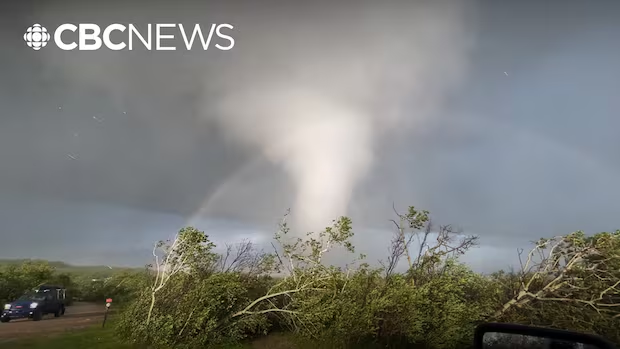
RCMP say a tornado touched down near Dillberry Lake Provincial Park on Wednesday evening and forced the evacuation of a campground.
In a news release issued Thursday, the Municipal District of Wainwright said RCMP were allowing registered campers to access the damaged campground to gather personal belongings. The municipality said not all sites were immediately accessible and that trailers were not permitted to be removed yet.
Katy Delves, parkland area manager with Alberta Parks, said the park has been closed indefinitely to allow for safety inspections and repairs, and all impacted camping reservations will be cancelled and refunded.
“Our focus right now is to restore power and our critical infrastructure,” she said. “We’re doing our best to reopen at a reasonable timeline, but until we know scale and scope, we’re not going to be able to give a timeline.”
How the storm developed
A critical alert was issued by Environment Canada at 7:23 p.m. Residents were warned to take cover after meteorologists reported a tornado was forming near Paradise Valley, a village southwest of Lloydminster.
Geiger told CBC News that RCMP officers were called to the area at around 8:30 p.m. following reports of a tornado.
The storm later moved east into Saskatchewan and the warning in Alberta was lifted at 8:48 p.m.
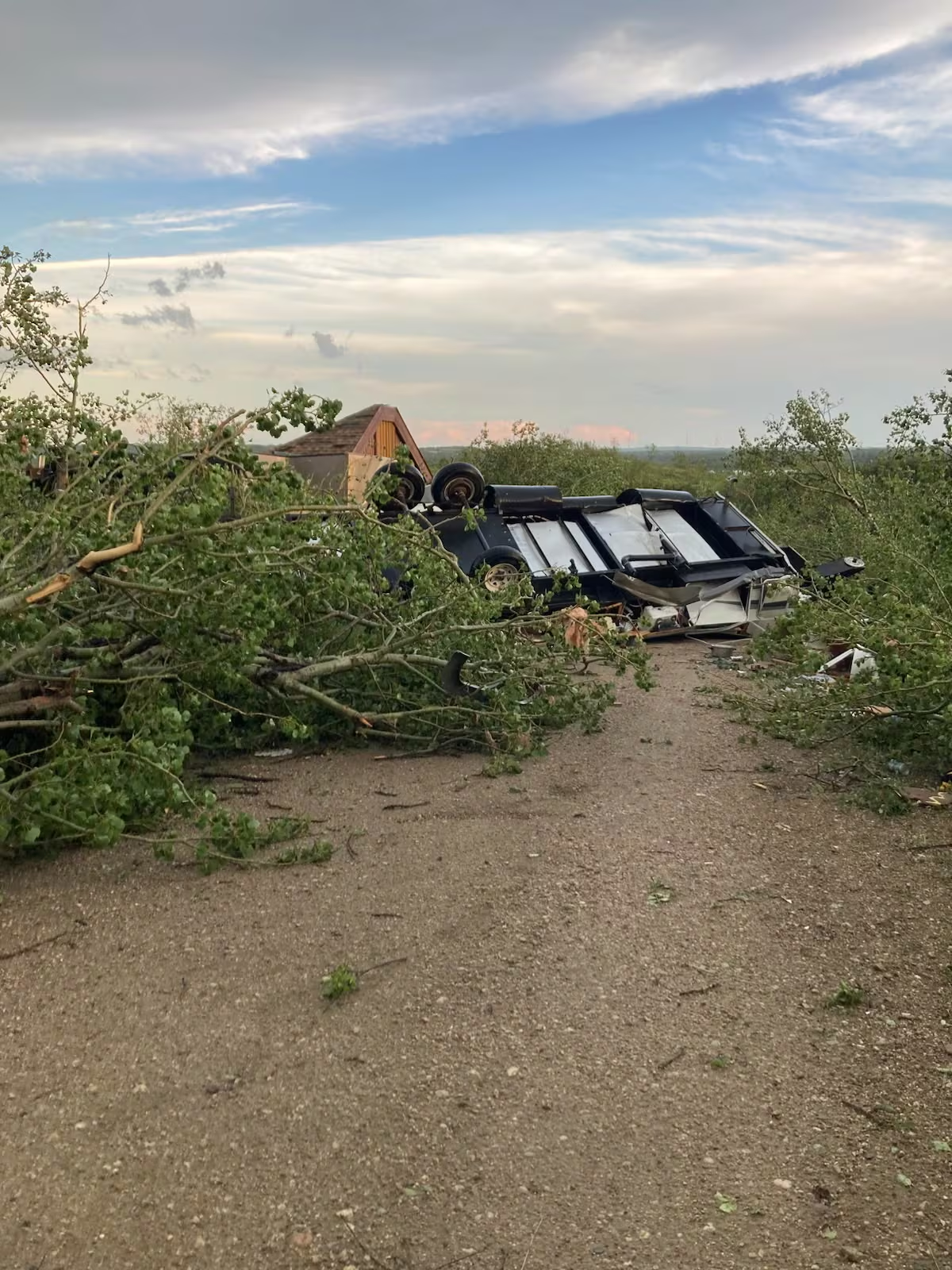
Benjamin Hager said he was camping with his family in the park when the storm hit and that he started noticing weird weather just moments before.
“It was only like 15 minutes before everything turned terrible,” he told CBC’s Edmonton AM.
“There was clear skies coming. We looked at the radar, the major stuff was all in the north, like over an hour north.”
Hager said even when the funnel cloud was visible, he thought it was clear of the park.
“Then it took a turn to the northeast and came right straight through the campground.”
Hager said he and his family left once the weather turned but came back shortly after the storm passed through and the windows in his truck were smashed, his family’s camper was on its side and he saw fallen trees all around.
He said he and his family returned with saws and a tractor to help clear the trees from roads and debris to allow paramedics to access the site.
Laurie Penner, who lives in the village of Chauvin, about kilometres northwest of Dillberry Lake, said she watched the rotation of what she believed to be a tornado forming near her front deck.
“That was mesmerizing … almost hypnotic,” she said. “Just even watching it form that way.”
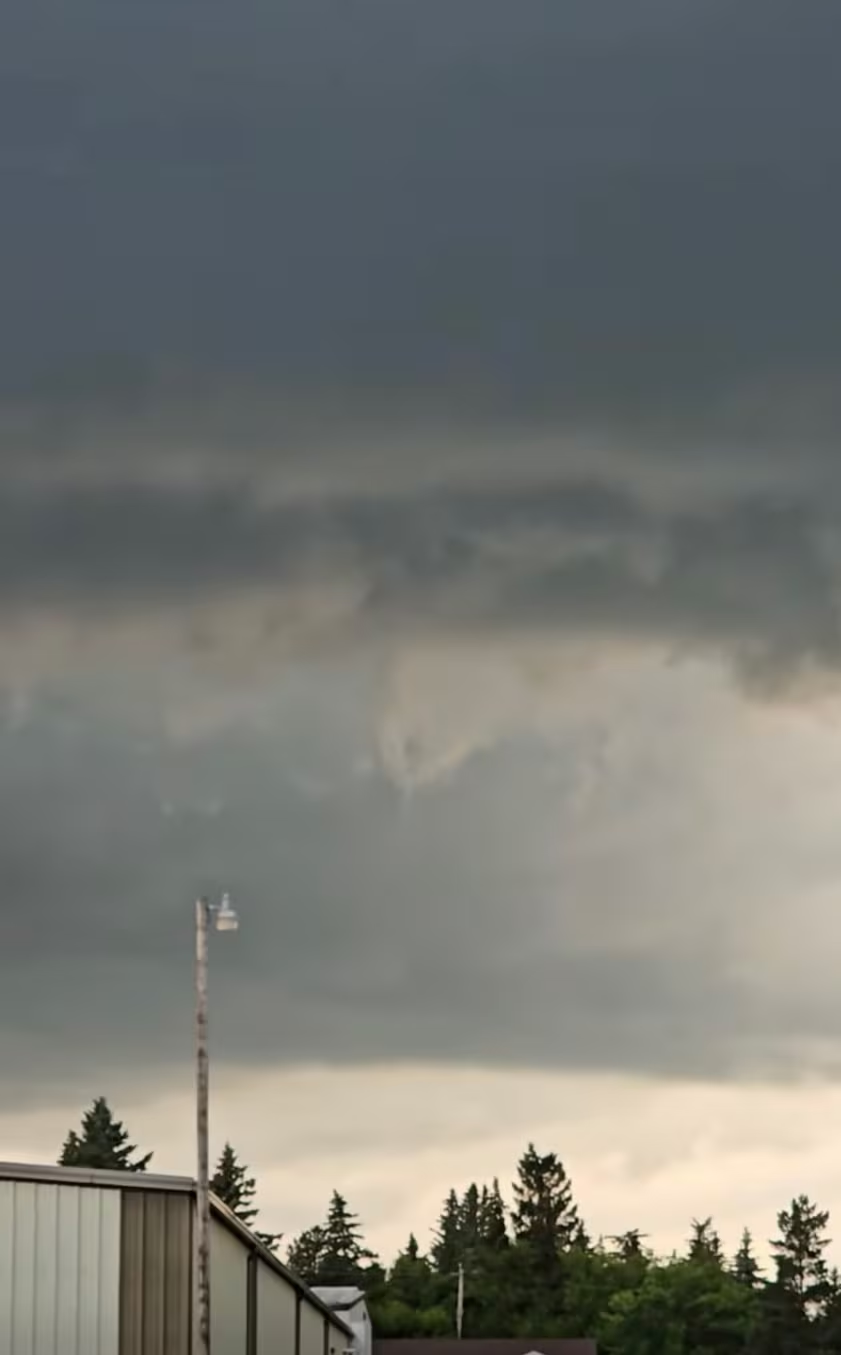
Penner noted the weather turned quickly after lightning struck close enough to her home to temporarily blind her and send her back inside her home.
“Then we did get the rain and we had probably quarter-sized hail — not for very long … and then the wind came up. But it was very brief,” she said.
“When things are rumbling, get to a safe place.”
Sills warned that people should take tornado warnings seriously, and said severe storms can evolve quickly with little visible warning.
“It’s a common misconception that the funnel cloud has to touch the ground in order for a tornado to happen,” he said.