
Too often over the course of the past five weeks, Billy Donovan found himself forgetting.
It happened in quiet moments, a too-rare phenomenon since the trade deadline upended the Chicago Bulls roster. The team was struggling. Most of the players whom Donovan had spent the last four years pouring into were scattered across the country in new jerseys. The Bulls slumped into an 11-game losing streak.
The last month was one of the hardest of Donovan’s life. It had nothing and everything to do with basketball.
In those hard moments — as always — Donovan reflexively went to call his father, Billy Sr.
And then he’d remember.
The last day Donovan called his father was Feb. 13. It was a Friday, the second day of the All-Star break. Billy Sr. didn’t feel great, but he didn’t want his son to worry. He believed his health was trending in the right direction. They swapped a few stories from the day, hung up with their typical goodbyes. The next morning, Donovan’s father died.
Donovan and his wife, Christine, drove from Chicago to Florida for his father’s funeral Mass and burial. Those days brought a peace, a welcome celebration of a man who injected joy and faith into every aspect of his life. But they weren’t the end.
As the couple drove back to Chicago on Feb. 19, Christine received a panicked phone call from her father — he had found her mother, Patricia, unresponsive in their home. Christine took the car back to Jupiter, Fla. Billy flew home to Chicago. Patricia died three days later, eight days after Billy Sr.
The family gathered again for Patricia’s funeral on Feb. 28. That same morning, Billy’s mother, Joan, began to suffer circulation issues that required hospitalization and eventually the amputation of her leg. Donovan’s sisters stayed with their mother while Billy returned to Chicago once again, trusting his family to relay updates and take point on Joan’s recovery.
Sitting on a folding chair at the Mo Ostin Basketball Center after a shootaround in Los Angeles, Donovan recited this onslaught of tragedy and turmoil in a matter-of-fact tone.
It’s not that Donovan has turned numb to the pain of these losses. There just simply hasn’t been enough time or space for the grief to settle in.
“I don’t think I’ve had time to really process or digest any of it,” Donovan told the Tribune. “It’s been too much.”
Donovan missed only one game during the span, a Feb. 19 home tilt against the Toronto Raptors that served as the team’s reintroduction after the All-Star break. He was absent for three practices in total — two before his father’s funeral, one before Patricia’s.
The Bulls front office and ownership encouraged Donovan to take as much time as he needed. But that was an easier edict to give than receive. Donovan felt trapped between two urgent situations — caring for his family and guiding a Bulls roster through the turmoil of trading eight players and gaining seven new ones at the deadline.
Donovan repeatedly used two words to describe the week of the trade deadline: “chaos” and “unprecedented.”
On the evening of the Feb. 5 trade deadline, new additions such as Guerschon Yabusele had to introduce themselves to the coaching staff barely a half-hour before their Bulls debut in Toronto. Donovan spent the ensuing week ripping his system down to the bare bones while attempting to learn the personalities and tendencies of eight men he barely had met or scouted before.
Perhaps a different team in a different scenario could have managed for a week without their coach. Donovan felt the Bulls needed him. But that didn’t negate the fact his family needed him too. At times, Donovan felt frozen by all this need. He couldn’t be the coach and father and brother and son and husband he wanted to be all at once.
“Quite honestly, there’s a — I don’t want to say guilt — but there’s a responsibility that we feel to support our family and then we also have a job to do,” Donovan said. “I struggle with that balance. Am I doing the right thing? Do I need to be there for somebody else? Does my wife or my sisters or my kids need me? Those are the conversations I’m having every day.”
This month was hard for reasons much bigger than basketball. But the basketball didn’t make things any easier. The All-Star break was supposed to offer both a moment of reprieve and recalculation. Instead, Donovan spent nearly two weeks trying to catch up.
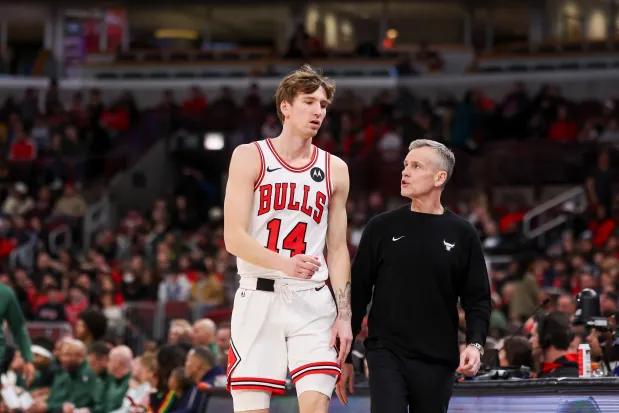
Bulls players quickly become accustomed to Donovan’s relentless style of work. Forward Matas Buzelis often finds Donovan in his office when he steps into the Advocate Center in the evenings after dinner to put up shots. The coach is hard to beat to the gym, even harder to outlast in the evenings, a regular fixture on the treadmill and in the film room.
That didn’t change in the days after his father’s death. If anything, Donovan dove into the work with a heightened urgency.
“This guy, man,” Buzelis told the Tribune, shaking his head. “He shows up the next day. It’s honestly incredible what he’s done. He really loves basketball. He’s always bought in. No matter what — win, lose, draw — he’s there. He’s really bought into this team.”
Donovan is known for his approach as a player-first coach who invests deeply in the development of individuals on and off the court. He’s hardest on the guys he sees the most potential in, leaning on talented youngsters such as Buzelis to expand their perspective beyond the score-first instincts that carried them to the league. He takes players on trips to meet with mentality coaches and flies abroad to connect with players in their home countries.
This would be the easiest part of the job to lay aside. The Bulls mostly acquired players on expiring contracts at the deadline, short-term loans who will be out of contract before they have the time to learn the team’s full system. But guard Collin Sexton was struck by Donovan’s engagement in his personal development from the moment he arrived in Chicago. Even amid personal chaos, the coach sought out Sexton for individual conversations, pushing and prodding the eighth-year guard to challenge himself as a playmaker and defender.
“I respect him so much for him just being here for the team,” Sexton said. “For him to put certain things aside and still push forward every day — I’m truly grateful to have him as a coach and truly grateful for him to teach me.”
This is still the most natural — and the most important — aspect of coaching for Donovan. That makes sense. It’s the part his dad taught him.
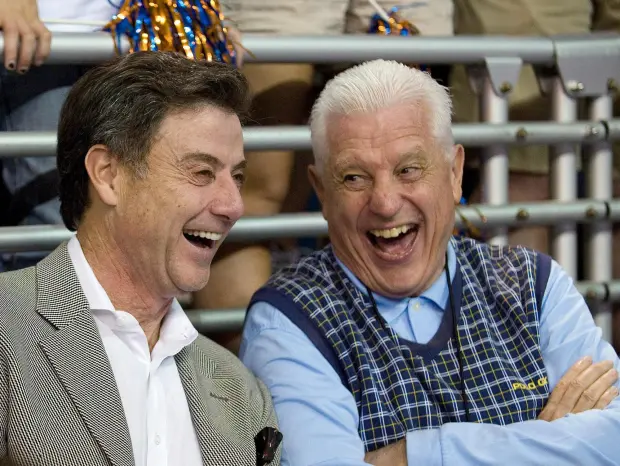
For most of his life, basketball was a language Donovan shared with his father. Billy Sr. was an anxious attendee of his son’s games, typically standing away from the crowd in a doorway or quiet corner to watch the action. He flew to most Florida road games, joined the celebration on the court after both NCAA championships. He coached both of Billy’s sons on their youth basketball teams. Just last summer, he helped Billy into his orange sports jacket as he was inducted into the Naismith Hall of Fame.
Basketball was a cornerstone, but it also was just a conduit. When Donovan spoke to his father about basketball, they mostly talked about life. How to compete without becoming cruel. How to push a young man to grow into the best version of himself. How to accept failure and success with equivalent grace.
“He loved basketball,” Donovan said. “We talked basketball all the time. But if there was anything that he said complimentary about people, about me, it was always predicated on how you treated other people. That was really way more important than individual accolades, success, championships, all that stuff.”
Donovan learned from his father that consistency was a greater measure of character than any win or loss.
Billy Sr. showed up for his wife and son and daughters and all 11 of his grandkids. He was direct and honest. He didn’t BS anyone. He went to Mass every day. He let his faith lead. He was always there.
This trait drove Donovan in the weeks since his father’s death. He can’t call anymore, but he can hear his father’s guidance, the same as it had been for the last six decades. Show up. Be the same man every day. The rest will follow.