
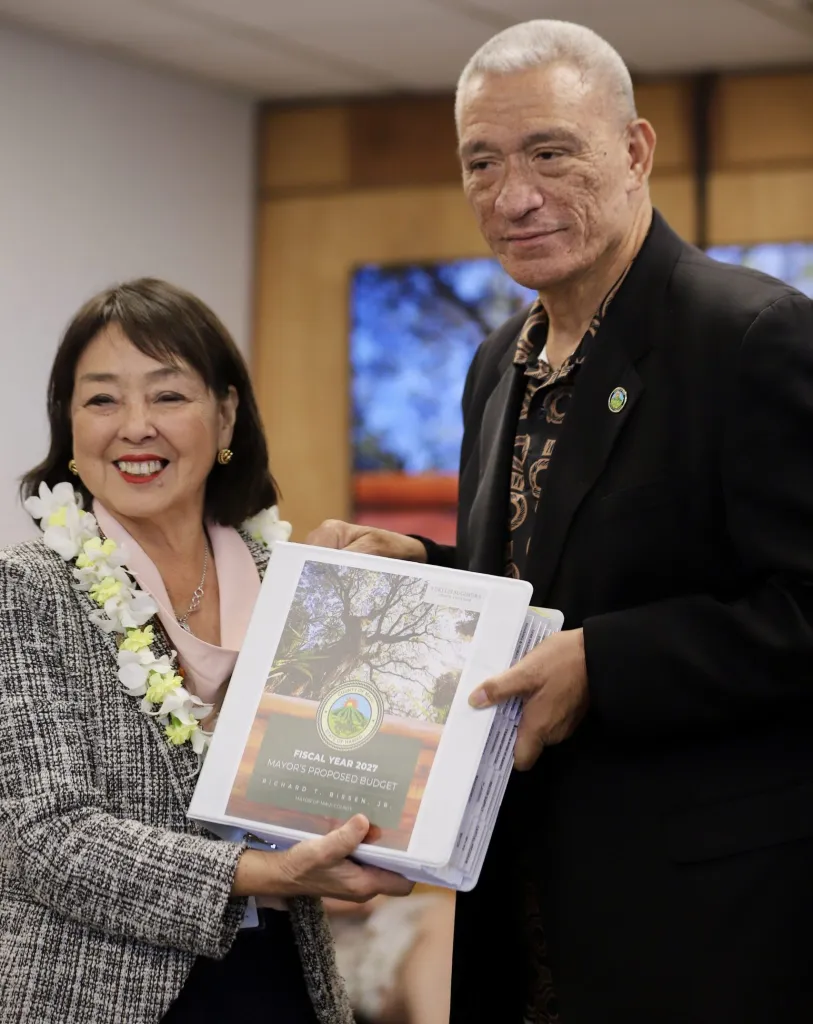
Maui Mayor Richard Bissen was poised to secure reelection on Tuesday, with preliminary results showing the incumbent ahead of council member Yuki Lei Sugimura in a high-profile race defined by the candidates’ opposing views on how to approach the county’s housing shortage and long-term ownership of local water infrastructure.
Bissen, 64, was leading with 53.8% of the vote, and Sugimura, 72, had 43.7%, according to preliminary results.
Since the beginning of the campaign season, political observers have said the Maui mayoral race was likely to be one of the most consequential elections in the state. It is also the first mayoral election since the deadly 2023 wildfires, and therefore the first opportunity for residents to voice who they want to lead the county as it continues to navigate ongoing post-disaster recovery efforts.
While incumbents typically have a significant advantage over their opponents, political observers had said Sugimura’s bid posed a serious threat to Bissen’s campaign for reelection. A win by Sugimura would mark the second time in four years that Maui voters opted not to back a sitting mayor — Bissen, a former judge, ousted then-Mayor Mike Victorino in the 2024 election.
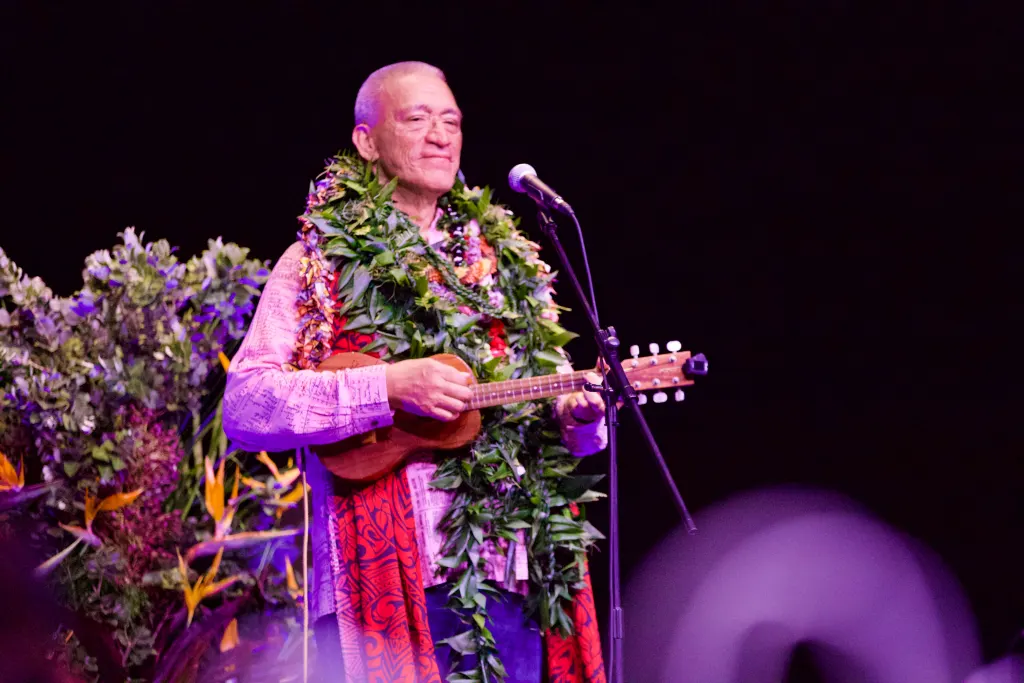
Just before 7 p.m., hundreds of people were gathered in the courtyard at the Maui Arts & Cultural Center in Kahului for Bissen’s election results watch party. They sat around round tables covered in navy blue table cloths and topped with bags bearing Bissen’s campaign slogan: “Not pau yet.” Blue and white light shone down on dancers wearing white lei and flowing floral dresses as they performed a hula. A small band played Hawaiian music behind them.
The crowd at the MACC erupted into a loud “whooo” as the first results were announced a little after 8 p.m. Bissen stood smiling softly in the corner by the stage, accepting hugs from his campaign staff and family before jumping right into interviews with media outlets. Some members of his staff became emotional, smiling and kissing each others’ foreheads.
Despite some polls and comments by political analysts predicting favorable results for Sugimura in the August primary election, Bissen had come out ahead with 46% of the vote, compared to her 33%. P. Denise La Costa, who was critical of both candidates during her campaign, finished third with 11%.
Sugimura closed the gap between the primary and general, but was still trailing by 2,827 votes in early returns Tuesday.
Political action committees and other donors invested big money in Sugimura’s campaign. For A Better Tomorrow, the super PAC affiliated with the influential Hawaiʻi Regional Council of Carpenters, ramped up its support for Sugimura, spending nearly $1.8 million on radio and television ads, social media posts and mailers supporting her bid for mayor in the month before the election, according to electioneering reports filed with the Campaign Spending Commission. That is in addition to the approximately $565,000 that the group spent supporting her campaign prior to Sept. 26.
HIVision 2020, which is associated with the Plumbers and Pipefitters PAC, reported about $19,000 in independent expenditures supporting Sugimura.
Bissen received some support from PACs in the weeks leading up the the election, including just under $40,000 from Hawaiʻi Workers Strong — a PAC tied to the Hawaii State AFL-CIO and the Hawaiʻi Government Employees Association — and $11,570 from Working Families First, which is run by the International Longshore and Warehouse Union, according to recent electioneering reports.
At least some of Sugimura’s support was likely tied to her longstanding criticism of Bill 9, the legislation that lays out Bissen’s plan to create more long-term housing by phasing out thousands of short-term vacation rentals. She received notable contributions from individuals and organizations with financial interest in the local real estate and tourism industries, including Maui-based and out-of-state real estate companies, luxury property developers, the Hawaii Realtors PAC and a group funded by the vacation rental platform Airbnb.
At Sugimura’s campaign headquarters in Kahului, a few dozen of her supporters were filling their plates with food from the buffet and sitting in white folding chairs around long rectangular tables with plastic purple table clothes. Each table was topped with small bouquets of pink and yellow roses and baby’s breath. The room was decorated with gold and purple balloons, paper lanterns and garland featuring photos of Sugimura. A playlist featuring various classic rock and folk songs played while a live musician tuned his guitar.
County Council Election Results
In Upcountry and Central Maui, where Sugimura’s mayoral bid and Council Chair Alice Lee’s retirement left open seats, well-known Native Hawaiian kalo farmer Bobby Pahia and longtime airports manager Marvin Moniz pulled way ahead of their opponents, business owner Jon Yokouchi and former planning commissioner Ashley Awakea Lindsey.

Pahia has 59.3% of the vote, early results show, and Yokouchi had 26.53%. Moniz had 52.6% over Lindsey’s 31.3%.
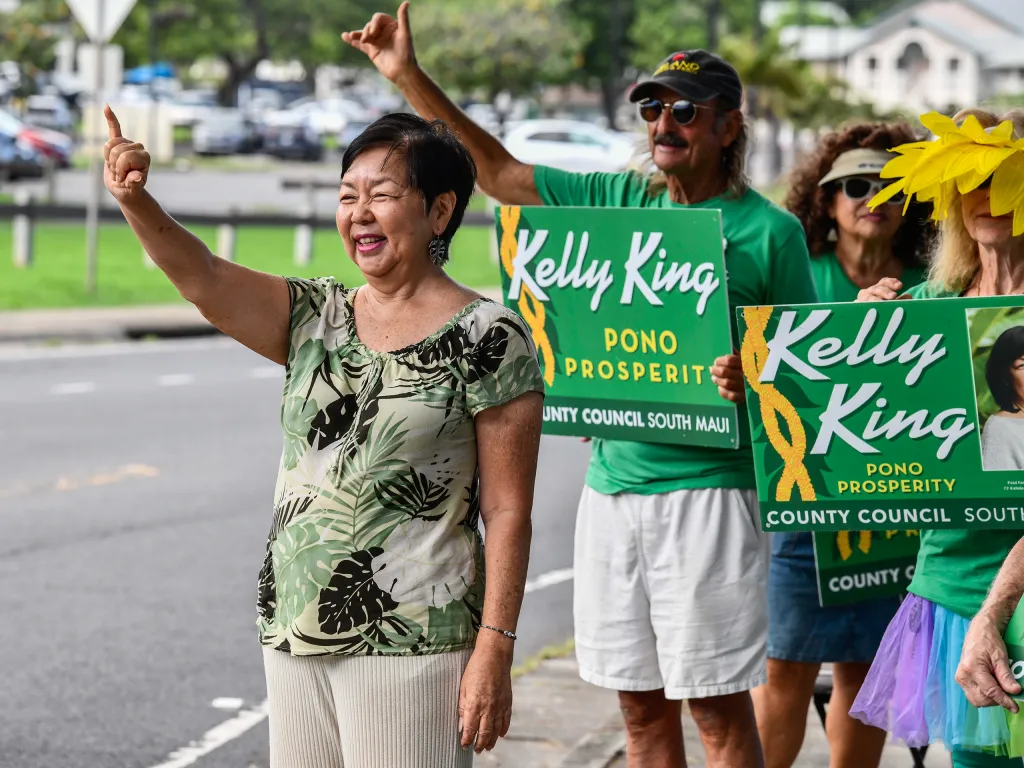
In South Maui, Councilman Tom Cook was trailing Kelly King, 42.8% to 46.2%, according to preliminary results Tuesday. He narrowly defeated the former councilwoman in 2024.
In the race to represent East Maui, Shane Sinenci beat Claire Kamalu Carroll, 49.7% to 32.9%. And in the West Maui race, Tamara Paltin won against Mark Tillman, 60.5% to 24.6%.
The incumbent was also on track to win the Makawao-Haiku-Pāʻia seat, with Councilwoman Nohe U‘u-Hodgins topping Stevie Kathryn Chung, 52.5% to 29.9%. Gabe Johnson of Lānaʻi and Keani Rawlins-Fernandez of Molokaʻi ran unopposed.
In Kahului, council member Kauanoe Batangan, who was appointed to the seat after the death of former council member Tasha Kama, was leading with 45.3% of the vote against Carol Lee Kamekona, who lost to Kama by 9 percentage points in 2024. Kamekona had 39.5%, according to Tuesday’s preliminary returns.
