
Kristen Stewart is telling me how she has learnt to keep her cool. “I was talking to a male actor I really love,” she begins. “And I said there are no female Method actors because Method acting is an acrobatic performance to make acting seem like a feat that it is not. I think acting is just playing pretend; you don’t have to do 50 press-ups before a take. As soon as I made the distinction between male and female actors, he became defensive and said he had never met an actress that wasn’t crazy.”
Stewart shrugs and pulls a sceptical face. “A couple of years ago a comment like that would have made me turn red in the face, my ears would have started steaming and I would have seemed exactly like what he wanted me to seem like — an angry woman. Instead I just continued and got to the end of my thought. Getting older is great because you can achieve a calm,” she says proudly. She speaks in long sentences, barely pausing for breath.
Stewart at the SCAD Savannah Film Festival last year
DIA DIPASUPIL/GETTY IMAGES FOR SCAD
At 35, Stewart, dressed in matching black leather trousers and a boxy black leather shirt, has spent years reinventing herself. She’s hardly old, but then she started acting as a nine-year-old, growing up in Los Angeles and getting her first big role at 12, playing Jodie Foster’s daughter in Panic Room.
By 18 she was a global megastar thanks to her role in the Twilight saga, which brought in nearly $3.4 billion at the box office worldwide and dominated her life for five films (she also went out with her co-star Robert Pattinson, which brought her even more attention). She has said that being so famous so young meant that she “didn’t have a fully lived life”.
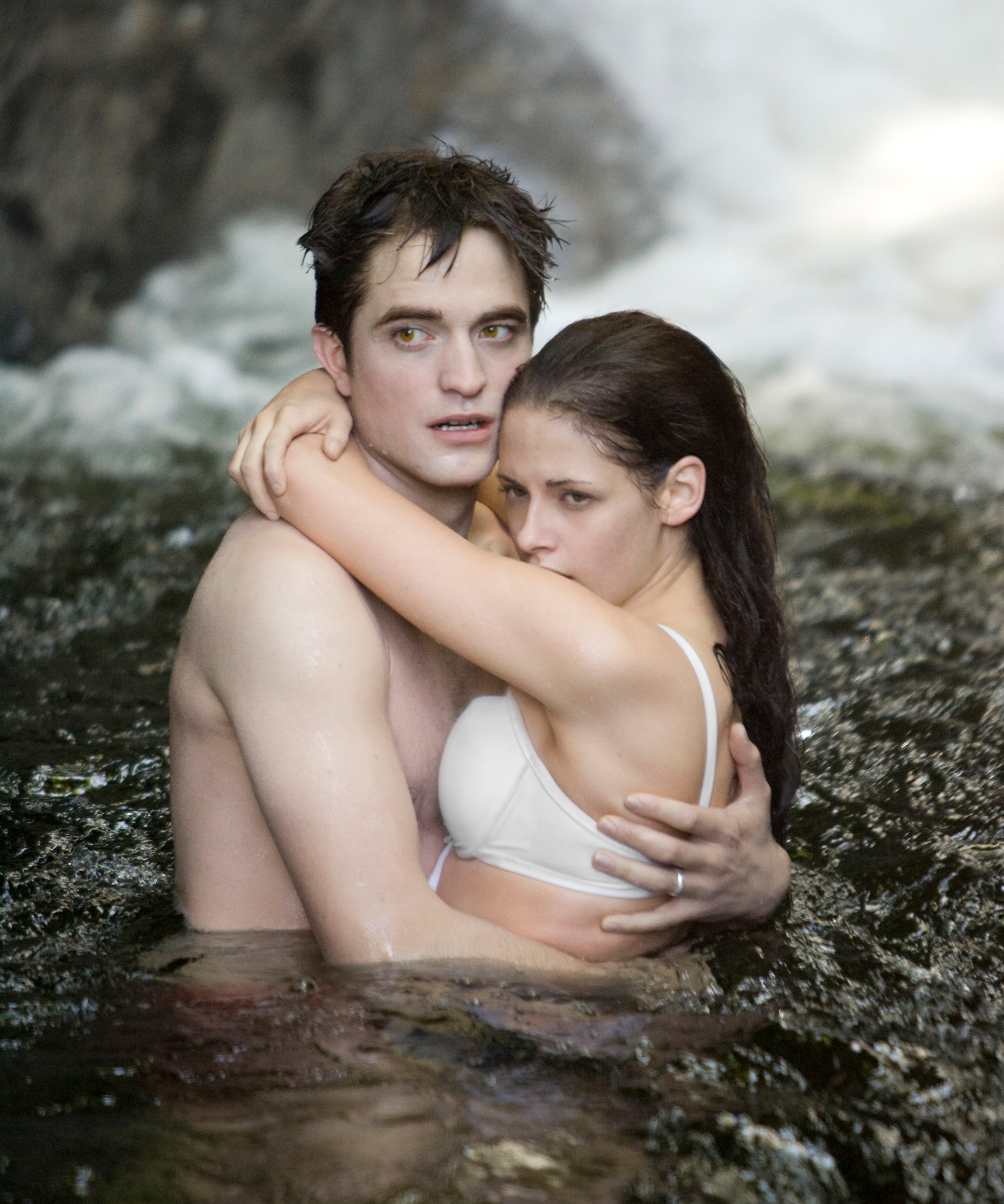
With Robert Pattinson in The Twilight Saga: Breaking Dawn, 2011
HANDOUT
After four years playing Twilight’s agonised Bella Swan, however, her career took an unexpected turn. She went from tween idol to arthouse star, the first American woman to have won a César, the French equivalent of the Oscars, for her 2014 film Clouds of Sils Maria. In the psychological drama she held her own as a young woman who has a difficult relationship with her boss, an actress, played by Juliette Binoche. She was also nominated for a best actress Oscar for playing Princess Diana in the claustrophobic Spencer in 2022, a noirish, often surreal look at the Princess of Wales.
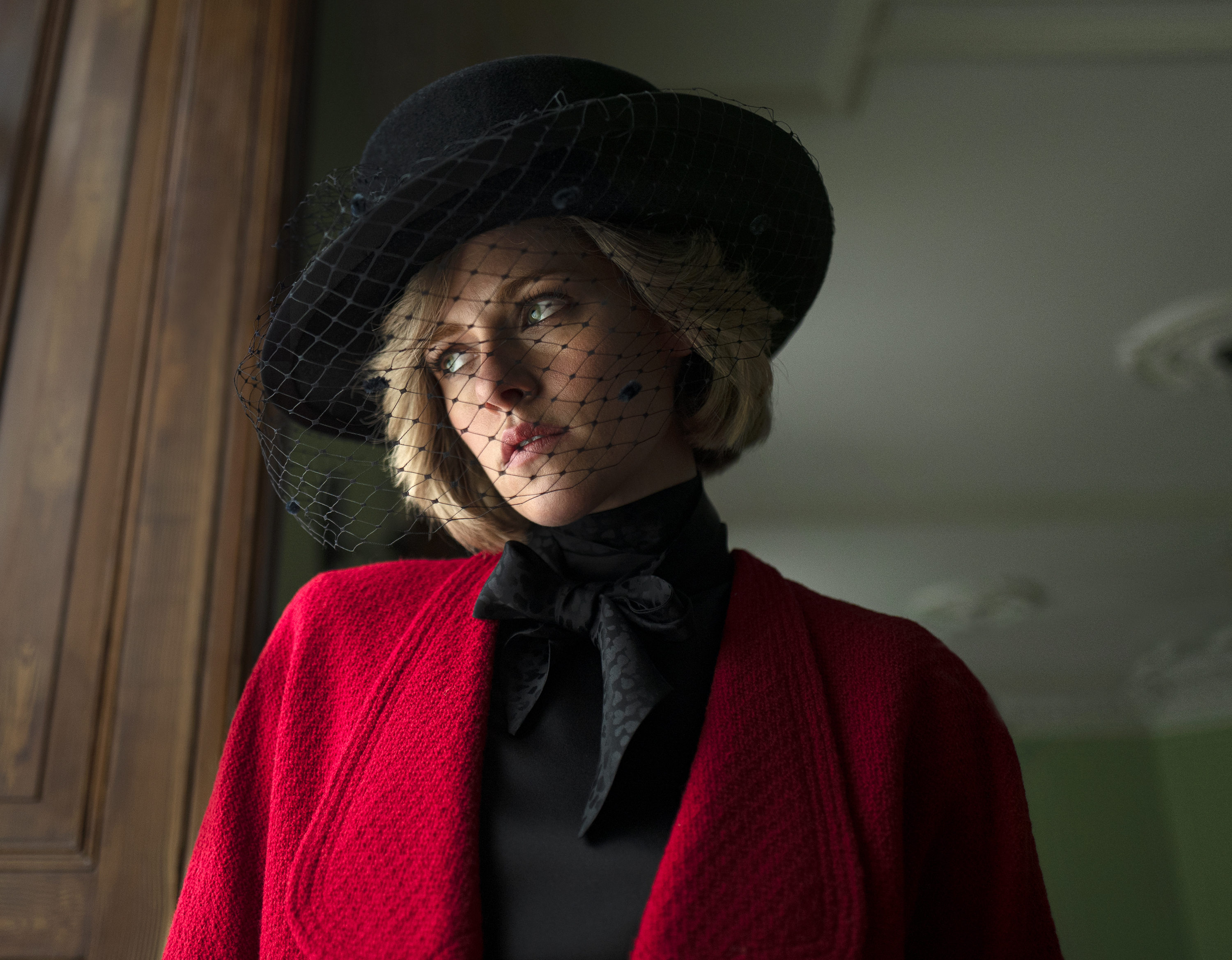
As Princess Diana in Spencer
PABLO LARRAIN/NEON VIA AP
Her personal life has taken twists and turns too. In 2012, when she was going out with Pattinson, she had an affair with the married Snow White and the Huntsman director, Rupert Sanders. He apologised, but Stewart was chastised by none other than the thrice-married Donald Trump, who posted a string of tweets about how “Robert Pattinson should not take back Kristen Stewart. She cheated on him like a dog & will do it again — just watch. He can do much better!”
In 2013, she came out as bisexual and last April she married the screenwriter and producer Dylan Meyer. Now she is forging another new path, as a director. Her feature film debut, The Chronology of Water, comes out next month.
When I arrive for our interview in a Soho members’ club, she is clowning around with the film’s star, Imogen Poots. “You remind me of Just William,” Poots tells Stewart, who laughs delightedly — then asks who he is. Once Poots heads off, Stewart turns more serious and spiky, getting fired up as she talks about her moody, off-beat film.
Based on a 2011 memoir by the American writer Lidia Yuknavitch, it’s about a young woman, Lidia (Poots), whose father (Michael Epp) sexually abuses her and her older sister (Thora Birch). Lidia copes by throwing herself into competitive swimming, but she has a dark secret — she has sexual fantasies while thinking about the abuse — and loathes her boyfriend (Earl Cave) because he is nice to her.
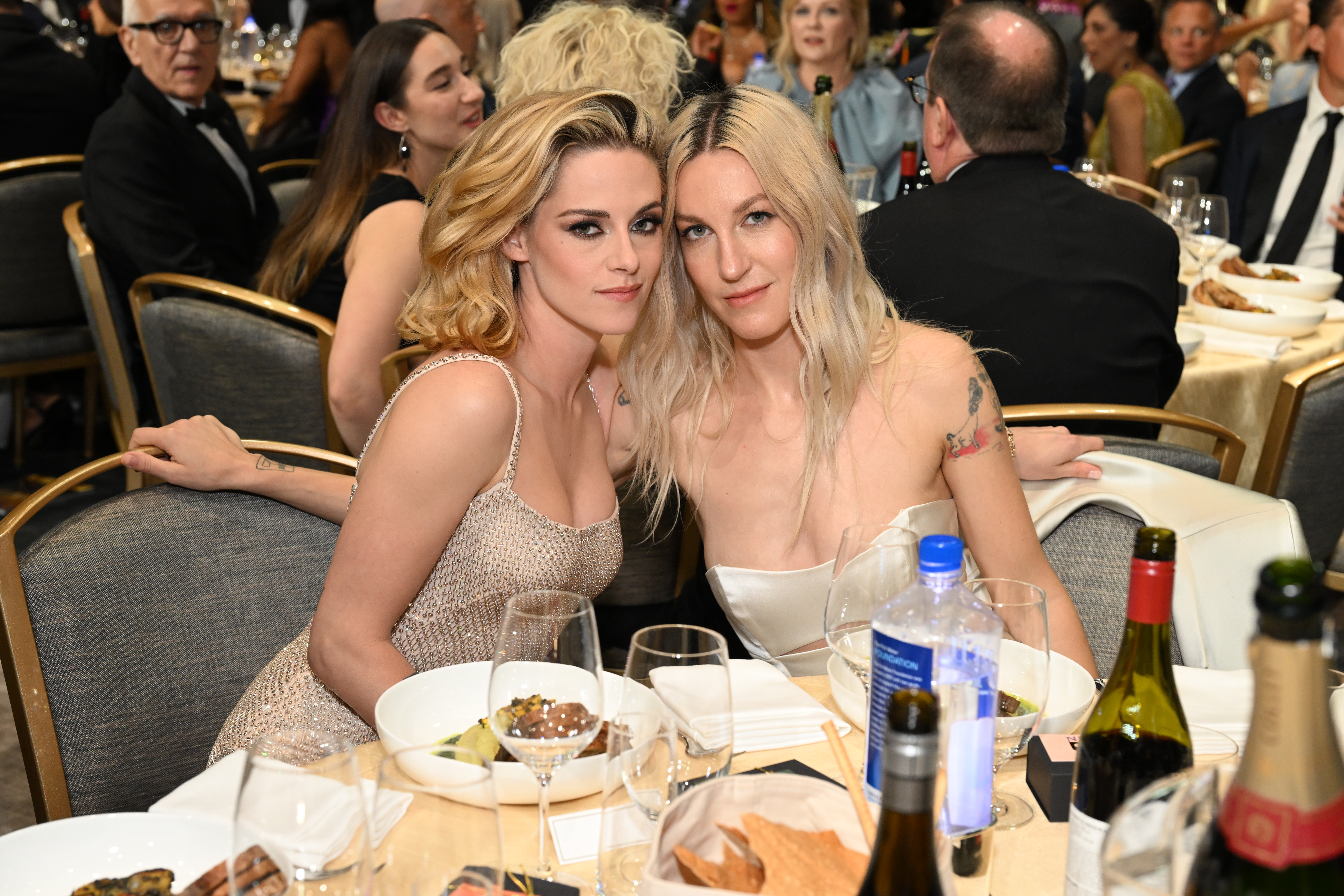
With her wife, Dylan Meyer
MICHAEL KOVAC/GETTY IMAGES
The New Yorker gave it a rave review, saying it “packs great emotional power into its boldly original form”, leaping around with flashbacks shot on Super-8 film. It’s certainly not your typical Hollywood production and I can see why it took Stewart eight years to get funding to make it (eventually Scott Free Productions, a company founded by Tony and Ridley Scott, backed it).
As well as being shot in a way that she says “feels like a DMT [psychedelic drug] trip”, it’s provocative and uncomfortably graphic, showing masturbation, ejaculation and birth. Even Stewart admits that “the movie feels like it’s barely dragging itself over the finish line, and I really love that about it. It feels a little bit adolescent.”
She sounds like she relishes a challenge, adding that “so many people said this was an impossible movie, but maybe it won’t be so hard to get funding next time because me and Imogen proved something”.
Would it have been easier to get the money if she were a man? “If I was a man I wouldn’t have made this movie.” She was drawn to the story because it shows the taboo side of being a woman. “We have to deny our physicality every single day and there is so much — like birth — that is so painful and also quite beautiful, but we don’t share it because it is uncomfortable and icky,” she says.
“We’ve been pushed out of the canon in terms of expression. I wanted to speak to a world designed to silence women. We have to push people out of the way to get our experience seen and that pisses people off.”
• The Chronology of Water review — Imogen Poots saves Kristen Stewart’s movie
I wonder where her feminist fury comes from. I expect her to talk about being in the public eye from a young age, but her answer goes back to family. “I mean, I’m a little sister. I have a bunch of brothers, it’s… f***ing hell.” Stewart’s father is a stage manager and her mother is a script supervisor; the couple adopted two boys as well having Stewart and her older brother.
Directing has been liberating. “Actresses get treated like shit, I’ve got to tell you,” she says. “People think anyone could be an actress, but the first time I sat down to talk about my movie as a director, I thought, wow, this is a different experience, they are talking to me like I’m somebody with a brain.
“There’s this idea that directors have otherworldly abilities, which is not true. It’s an idea perpetuated by men. Not to sound like I’m complaining all the time, but it’s worse for female actors than male ones — they get treated like puppets, but they are not. Imogen put her whole body and soul into this movie.”
She admits that she is intense. “Film is 100 per cent all-consuming. I was a maniac on this movie,” she says. “I barely existed outside of it, but I’ve never felt more alive.”
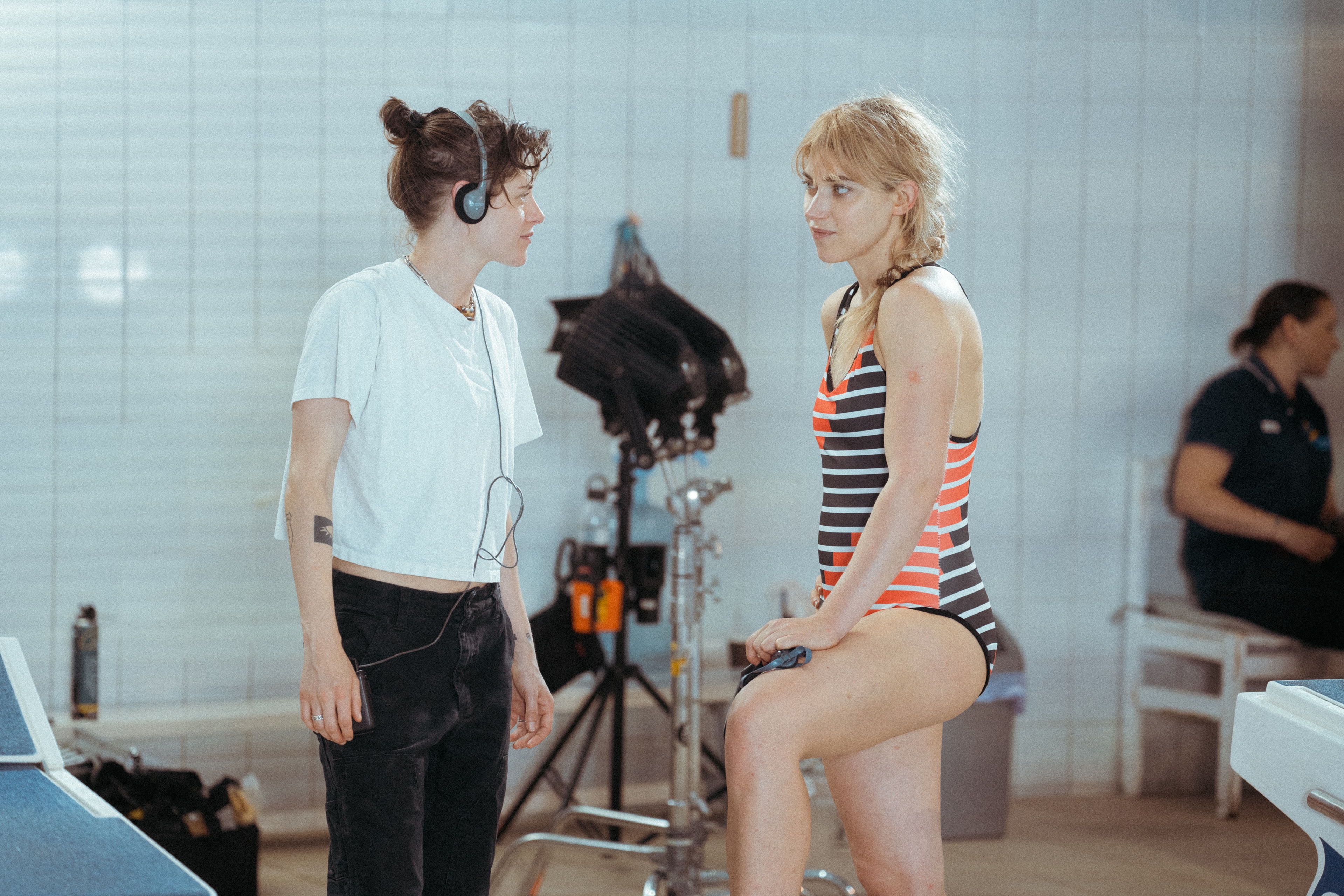
Directing Imogen Poots in The Chronology of Water
ANDREJS STROKINS
Ideally she wants people to watch the film in the cinema and seems upset to hear that I had to watch it on a laptop, which is fair enough given that she spent eight years getting it made. “The sonic experience is immense,” she says. When I say it’s a hard watch, she tells me: “I prefer the extreme. I don’t want to be neutralised by a tepid, measured life. If you know what it feels like to lose a lot, gaining is all the more satisfying and beautiful.”
Stewart is political and has said she wants her films to be too. When we’re talking about how the film shows a female point of view, she says this matters as a point of record. “Look at Mary Wollstonecraft, [the artist] Hilma af Klint — we only recently understood she came before Kandinsky. History really matters. It tells you you are either allowed to be here or not. The rewriting of history is happening because equality is becoming closer to a reality.”
She’s outspoken about Trump and not just because of their history with his tweets about her. The Chronology of Water was shot in Latvia because “it would have been impossible to do in the States”. She is withering about Trump’s threat of tariffs on films made outside the US, even though they appear to have stalled, and has said they are “terrifying” for the film industry.
• Read more film reviews, guides about what to watch and interviews
“Reality is breaking completely under Trump,” she says. “But we should take a page out of his book and create the reality we want to live in.” She lives in Los Angeles and New York — does she think she will stay in the US? “Probably not. I can’t work freely there. But I don’t want to give up completely. I’d like to make movies in Europe and then shove them down the throat of the American people.”
Having been in the industry since she was a child means she sees the world in cinematic terms: “It’s how I relate to the world. I’m always going, ‘How are we going to make that into a movie?’”
She is glad that she has worked since she was a child, after an agent saw her singing in a school Christmas show. Her father and mother warned her that it would be “hell”, but she was determined. “It beats school,” she says. And despite going down a more arthouse route, she isn’t snobby about Twilight and has even said that she would be open to directing another Twilight film. But it’s taken her a while to “not feel like I have to do everything perfectly and not feel like I need to satisfy others — not needing to have everyone love me. I love being a good student, a good girl.”
Her perfectionism means she thinks she has “probably only been in five movies that were top-to-bottom incredible” from a career of nearly 50 films. “But everything I’ve worked on did need to exist, in all its imperfections.” She isn’t giving up on acting, but seems more excited about directing at the moment.
“Even though I had to put myself on a leash around the actors to let them do their own thing. One thing I’ve learnt from my favourite directors is that they know how to light a fire, but then they know how to get out of the way.”
The Chronology of Water is in cinemas from Feb 6
What’s your favourite Kristen Stewart role? Let us know in the comments below
Four actresses turned directors
Kate Winslet
The Oscar-winning actress may have got her first acting job in her teens, but it wasn’t until she’d almost hit 50 that she decided to get behind the camera with Goodbye June (Netflix), a family film inspired by the death of her mother and written by her son Joe Anders.
Scarlett Johansson
One of Hollywood’s highest-grossing actresses said she had wanted to direct since she appeared in Robert Redford’s 1998 film The Horse Whisperer aged 12. Her directorial debut, Eleanor the Great (buy/rent), premiered at last year’s Cannes Film Festival and tells the story of a woman who pretends to be a Holocaust survivor to find purpose in later life.
Olivia Wilde
Wilde’s acting career was largely defined by roles in middling television series and films. It was her move behind the camera that transformed her profile: the sharp coming-of-age comedy Booksmart (Netflix) and the controversial drama Don’t Worry Darling (buy/rent), starring her former flame Harry Styles.
Greta Gerwig
The Barbie director was rejected for every one of her applications for playwriting courses in the early 2000s. She stumbled into acting instead and collaborating with others, including her husband, Noah Baumbach. Her first solo directorial film was Lady Bird (buy/rent), an impressive coming-of-age story starring Saoirse Ronan.