
After less than a week of testimony, the defense rested its case Friday in the murder trial of Lindsay Clancy.
Clancy’s attorney, Kevin Reddington, called 10 witnesses to testify about her mental state before she killed her three children in 2023. Reddington is defending his client with what’s known as the insanity defense, asking jurors to find Clancy not criminally responsible for the killings because she was in the throes of postpartum psychosis at the time.
The disorder is uncommon and considered a potentially dangerous psychiatric emergency if not properly treated.
Prosecutors argued that Clancy deliberately planned the killings and raised questions about the defense witnesses’ testimony. They called dozens of their own witnesses, including those who responded to the Clancy’s Duxbury home the night the children were killed, medical examiners, Clancy’s mental healthcare providers and her now former husband Patrick Clancy.
Forensic psychiatrist Dr. Philip Resnick, who consulted on several high profile criminal cases such as Jeffrey Dahmer and Andrea Yates, testified Friday that Clancy was experiencing postpartum psychosis. Resnick said he evaluated Clancy and interviewed her parents and found that she was severely depressed and had bipolar disorder that started after giving birth to Callan, her third child.
Resnick said Clancy had “command hallucinations” that told her to kill her children and then herself. He said the psychotic break caused Clancy to feel removed from her body and a lack of control over her actions.
Two of the defense witnesses who testified this week said they spoke with Clancy several times after the killings and both said she reported that a male voice ordered her to kill her children.
“She alluded to hearing a voice,” testified Sheila Cavanaugh, chaplain at Brigham and Women’s Hospital, where Lindsay was hospitalized after trying to kill herself. “And the voice, according to Lindsay, told her that if she did not follow the command, neither she nor her children would be safe.”
Cavanaugh said she has met with Clancy 200 times, including several visits to Tewksbury Hospital, where Clancy is now being held. Cavanaugh recalled the first time Clancy was able to speak with her after a breathing tube was removed.
“She said to me as I held her hand to comfort her, ‘I am so glad my children are safe,’ ” Cavanaugh testified.
Prosecutors went through Cavanaugh’s notes from her visits with Clancy and asked why her records never mentioned that Clancy said she heard a threatening voice.
“Chaplain notes are not verbatim transcripts of patient conversations,” Cavanaugh said. “I’m not there to evaluate the patient. I’m there to bear witness to their suffering.”
Forensic psychologist Dr. Paul Zeizel also testified about Clancy hearing voices, a key symptom of psychosis. Zeizel said in his first meetings with Clancy at the hospital, he allowed her to use his phone to call her now former husband Patrick.
“She expressed love for him and she had said that she had heard a male voice ordering her, telling her, that she didn’t have any choice but she had to kill her children and then kill herself,” Zeizel testified.
The prosecution questioned Zeizel about Clancy’s time at Tewksbury Hospital, where she has been held since she left Brigham and Women’s Hospital after her unsuccessful suicide attempt. Clancy is paralyzed from the waist down. Zeizel acknowledged that Clancy has not reported hearing voices since the killings and has not tried to harm herself.
Reading from nursing notes from Tewksbury Hospital, assistant district attorney Shanan Buckingham listed Clancy’s activities on the days of her children’s birthdays and the anniversaries of the killings, presumably suggesting that she was functioning normally despite the loss of her children. But Zeizel said Clancy still talks about her children.
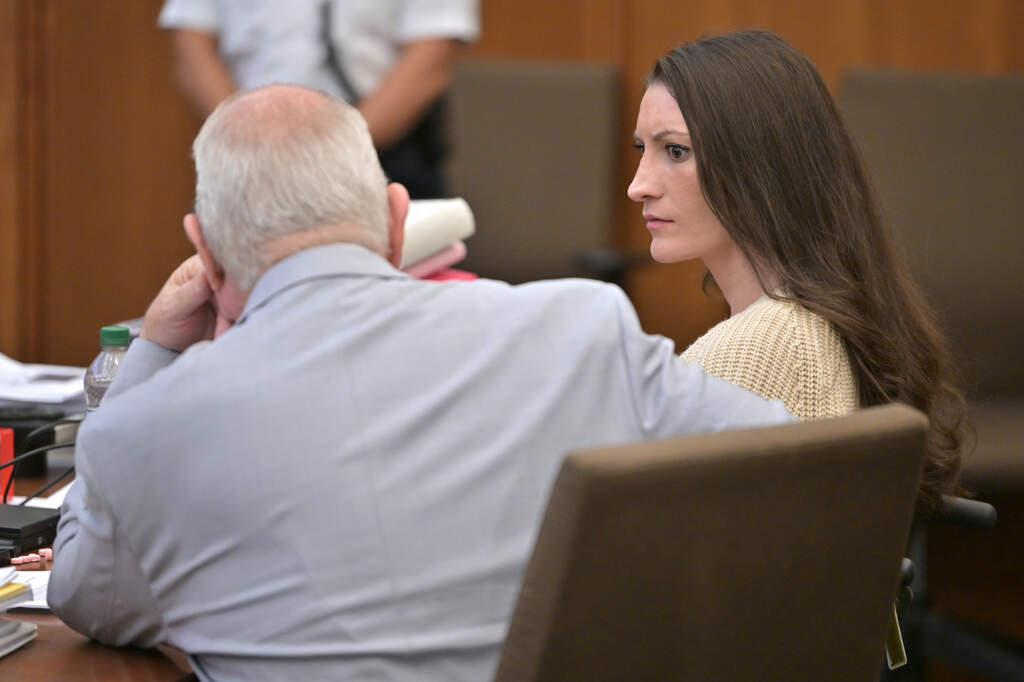
“She really loved them, misses them, and thinks of them every single day, almost every moment of the day,” Zeizel said, adding that she is still closely monitored by hospital staff so she does not try to harm herself.
Zeizel said that Clancy had been to several mental health clinicians seeking help. She reported that she was depressed, anxious, couldn’t sleep and had thoughts about taking her life, which he said all point to postpartum psychosis.
“She had bipolar disorder with postpartum psychosis,” Zeizel said. “In addition, she was unable to conform her behaviors to the rule of law and she had no appreciation for the wrongfulness of her act.”
That language about not being able to follow the law and not knowing right from wrong are key parts of Massachusetts law about whether someone can be held criminally responsible. In Massachusetts, prosecutors must prove that a defendant’s mental health issues did not prevent them from realizing what they did was wrong or from abiding by the law.
Medical records show that Clancy had been seeking help for months — going to various psychiatric clinicians and the emergency room, calling suicide hotlines, and being admitted to an inpatient psychiatric hospital just three weeks before the killings. Her attorney argues that she was overprescribed and took several medications, but her care was disjointed.
Prosecutors said Clancy often didn’t take the psychiatric medications as prescribed and most were a low dose.
Other defense witnesses were Clancy’s mother, sister, and her former mother-in-law who all testified that Clancy’s mental health was declining starting in the fall of 2022. They said that she told them she was seeking help, but she wasn’t herself and was increasingly anxious, paranoid and suicidal.
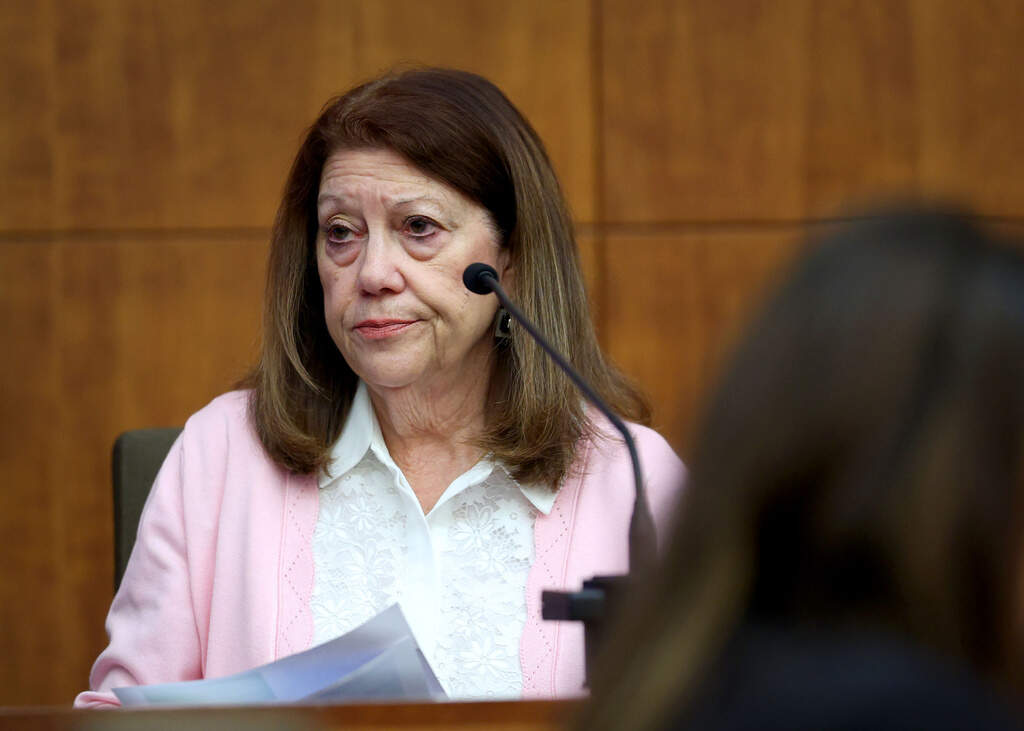
Clancy’s mother Paula Musgrove said she often stayed at Clancy’s Duxbury home to help with the children and at one point Clancy admitted to having thoughts of harming the children.
Susan Clancy, her former mother-in-law, described Lindsay Clancy as a loving and nurturing mother.
“She was begging for help,” Susan Clancy said.
Both Lindsay and Patrick Clancy have filed separate medical malpractice lawsuits against her health care providers. Several clinicians who treated Clancy testified for the prosecution. They testified that they never saw her exhibit signs of psychosis.
Clancy’s trial has become a matter of intense interest. Though the proceedings have been livestreamed, crowds have been lining up to get into the courtroom. On Thursday, hundreds of demonstrators wearing pink shirts rallied in front of the Plymouth courthouse in support of Clancy. Many of the demonstrators said the trial shows the gaps in mental healthcare for new mothers.
Prosecutors are expected to call three medical experts to rebut the defense experts testimony. Closing statements are expected next week.
If Clancy is found not criminally responsible for the killings, she would remain committed to a state mental health facility with periodic reviews as to whether she could be released.