
Silicon Valley wants its moneymaker-in-chief back.
Jensen Huang, forced to resign from Nvidia last week in the midst of multiple scandals, has found a groundswell of support for his unlikely return. Among the cheerleaders for Huang’s comeback: several prominent Big Tech executives and the president of the United States.
Huang on Tuesday in a statement thanked his supporters, apologized for “serious mistakes” and said he would return as CEO if the board asked him – which it has not and reportedly has no plans to do.
The support for Huang’s reinstatement is plain: Nvidia is the AI industry’s financier, and Jensen Huang the top dealmaker. Nvidia’s willingness to lend gobs of money to AI companies to help make their massive ambitions possible turned Huang into the king of AI.
Still, some of Huang’s more questionable deals – and his questionable behavior – also put the company at risk.
Huang’s actions punctured massive holes in the myth of his singular and irreplaceable leadership, surfacing some significant preexisting doubts about the viability of the company’s long-term business strategy.
A more conservative Nvidia – one that plays by the rules – may be painful for AI companies that relied on Huang’s risktaking in the near term. But it could set Nvidia and the broader industry on a more sustainable course in the long run.
Around 200,000 signatories of a #standwithjensen open letter argued Huang deserves to come back to Nvidia, at least while an independent investigation continues. Many of the comments defended Huang as indispensable and the linchpin of the AI industry’s success. Nvidia declined to comment.
Huang engendered support from the industry by spearheading complicated financing deals – often called circular financing – that gave many AI companies access to Nvidia’s powerful chips and computing power that they wouldn’t otherwise be able to afford or access.
The amount of money involved in those deals is astounding: Nvidia last quarter listed $164.5 billion in land and power guarantees and AI cloud infrastructure agreements, including $20 billion worth of leases for data centers that haven’t broken ground yet.
Nvidia isn’t just financing small companies: Included in that sum is $105 billion in leases to SB Energy, a company with backing from SoftBank that is building a massive Ohio data center for OpenAI.
In turn, that massive funding secured demand for Nvidia’s own products – and stakes in the companies that bought or leased its chips: Nvidia owns about $3 billion worth of SB Energy’s shares – and $45 billion worth of other companies’ stock.
Huang’s ouster could take $50 billion out of the circular financing system, according to Tim Arcuri, analyst at UBS.
Another risk of Huang’s ouster: New leadership will probably be more cautious about where and with whom it does business, particularly in Southeast Asia.
Huang knew the company needed the region to support Nvidia’s ambitious growth targets. He championed Nvidia’s ability to continue selling its chips to China, despite US export restrictions – ultimately gaining the Trump administration’s support to carve out a path for the company to sell powerful, but not top-tier, AI chips there.
Ironically, Huang’s scandal may put some of Nvidia’s access to the region at risk. Treasury Secretary Scott Bessent on Sunday told Fox News that the company’s international sales merit more scrutiny.
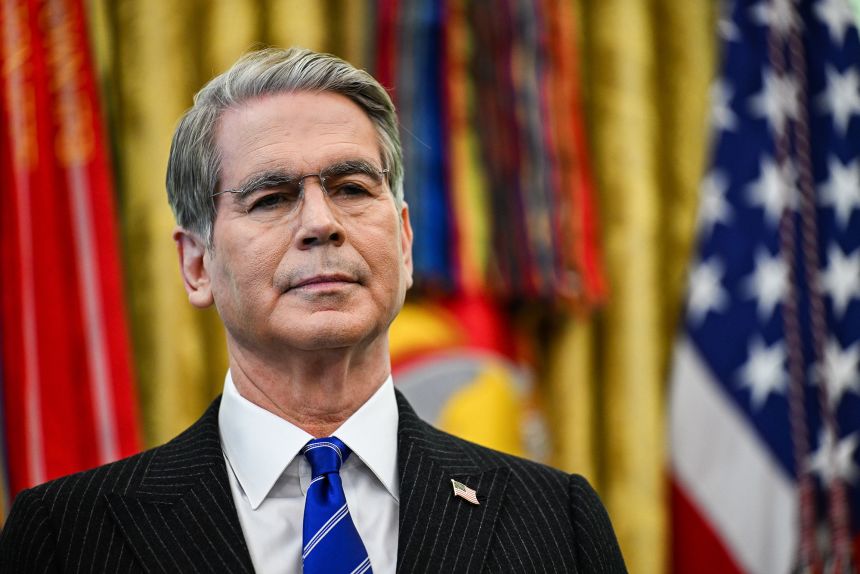
“Were they pressing these seemingly illicit sales to goose their revenues and their earnings?” Bessent wondered aloud.
The dynamics of Jensen Huang’s relationship to Megaspeed’s Alice Huang remain uncertain, as is her potential role as a Chinese intelligence asset. But the Singaporean government and US officials have been scrutinizing Megaspeed for potentially reselling Nvidia’s chips to unauthorized Chinese buyers.
Nvidia’s board on Tuesday said it had established a new national security and export control oversight committee that will meet at least quarterly and ensure the company is abiding by global trade regulations. It will also beef up its internal national security and compliance initiatives. The US Commerce Department on Monday proposed tightened restrictions on sales of high-end AI chips to Singapore following the scandal.
Reduced sales to Singapore and other Southeast Asian countries could risk as much as a 10% reduction to Nvidia’s revenue in the long term, said Arcuri.
Despite those risks, Huang’s ouster may ultimately make for a strong Nvidia.
Those so-called circular financing deals are controversial for a reason: The deals can leave Nvidia on the hook if a borrower defaults, a data center project is severely delayed or demand for AI falls through.
Across the industry, the value of those off-balance-sheet debt obligations, including long-term contracts and lease guarantees, exceeds $3 trillion, said Federal Reserve Governor Michael Barr in a speech Monday. He noted rising bond yields for smaller AI companies led to increasingly complex deals that warrant particularly close scrutiny and could mess with the market.
“This financial complexity can be opaque,” Barr said. “That opacity can exacerbate selloffs when investor sentiment shifts, as it is hard to know where risk resides.”
Nvidia’s interim CEO Colette Kress, who is the company’s chief financial officer, had challenged Huang on some of the more audacious funding efforts, including increasingly controversial and highly leveraged neocloud companies, noted Jeffrey Sonnenfeld, senior associate dean for leadership studies at the Yale School of Management. He believes Kress, with the support of a more cautious board, will be tempted to rein in some of Nvidia’s riskier financing operations.
Tech bros and President Donald Trump may be advocating for Huang to stick around, but fears about a management shakeup impact on Nvidia are overblown, a number of industry analysts argue. Kress predicted in August that the company’s sales will grow 70% next year, and demand for Nvidia’s AI chips remains so high, the company will maintain a backlog of orders that lasts well into 2028.
“Leadership does matter, particularly when you’re talking about someone as influential as Jensen Huang who has been at the helm for 33 years and is seen as a tech visionary,” said Ken Mahoney, CEO of Mahoney Asset Management. “So this is no joke, but the company certainly is not going out of business from this and investors needed to keep that in mind.”
And it’s not like Huang’s scandals shine a positive light on him and his decision making. Keeping Huang in power (or bringing him back) would have been a bigger risk than letting him walk, said Nell Minow, chair of corporate governance advisory firm ValueEdge Advisors.
No one can sustain the hockey stick-like growth Nvidia had exhibited over the past several years. When companies start growing exponentially, that’s when CEOs tend to start grasping at straws for new growth paths – and that’s when they often get into trouble, noted Minow.
So a more discerning Nvidia adds short-term volatility but could put it on the path to greater sustainability.
And it may have a better chance of achieving that without Huang.
“Sad about Jensen. Shakespearean,” said former Goldman Sachs CEO Lloyd Blankfein in a post on X. “But as de Gaulle said, ‘The graveyards are filled with indispensable men.’”