
Alaska Airlines (AS) is a US carrier headquartered in Seattle, Washington, with a strong West Coast presence and operations that extend into Hawaii and Alaska.
The airline focuses on high-quality service, strong regional connections, and a pilot group backed by a recently negotiated contract with significant pay improvements. As Alaska modernises its fleet and integrates with other carriers, pilot recruitment and career development remain key priorities.

Alaska Airlines Pilot Salary
Alaska Airlines First Officer Salary
In 2025, first officers at Alaska Airlines begin with hourly rates around US$119.92 per hour in their first year. Based on a typical monthly credit of about 75 flight hours, this would equate roughly to US$107,900 per year in base pay.
With increased seniority, experience, and larger aircraft assignments, first officers may reach hourly rates of about US$171 per hour, which translates to roughly US$153,000 per year in base pay before allowances and bonuses.
Alaska Airlines Captain Salary
Captains at Alaska Airlines in 2025 receive top-of-scale hourly rates of around US$361.29 per hour according to the latest contract terms. If a captain flies approximately 75 hours monthly at this rate, the base annual pay comes to about US$324,000 per year.
With add-ons such as layover pay, premium segments, instructor/examiner duties, and profit sharing, many captains will see total compensation exceeding US$350,000 per year, with some highly senior captains reaching beyond US$400,000 per year in total compensation.
ALSO READ: American Airlines Pilot Salary in 2025

Benefits Enjoyed by Alaska Airlines Pilots
Alaska’s pilots enjoy the following benefits during their employment with the airline.
- Travel Privileges – Pilots and their eligible family members receive heavily discounted or standby travel on Alaska Airlines and affiliated carriers, facilitating personal and leisure travel at significantly reduced cost.
- Overnight and Layover Allowances – Whenever pilots operate flights that require them to stay away from their home base overnight, Alaska compensates them with allowances for hotel, meals and incidental expenses associated with the layover.
- Health And Retirement Benefits – The airline offers comprehensive medical, dental and life insurance coverage for pilots and their dependents, along with strong employer contributions to retirement plans and a profit-sharing element, supporting long-term financial well-being.
- Loss of Licence Protection – In the event a pilot becomes medically unfit to continue flying, Alaska provides income-protection or reassignment mechanisms to help maintain financial stability during recovery or transition.
- Training and Career Advancement – Pilots have access to recurrent training, simulator upgrades and clear pathways from first officer to captain, including opportunities for instructor or examiner roles, enhancing both skill and pay progression.
- Work-Life Balance Support – Roster design at Alaska emphasises rest-period protections and scheduling flexibility, enabling pilots to maintain a meaningful personal life alongside their professional commitments.
- Additional Income Opportunities – Senior pilots can increase their earnings through instructor duties, check-airman responsibilities, flying premium sequences during peak demand, and participation in profit-sharing.
- Wellness And Mental Health Support – Alaska provides wellness programmes, peer-support networks and mental-health resources tailored to its pilot workforce, acknowledging the demands of airline operations and promoting overall pilot wellbeing.
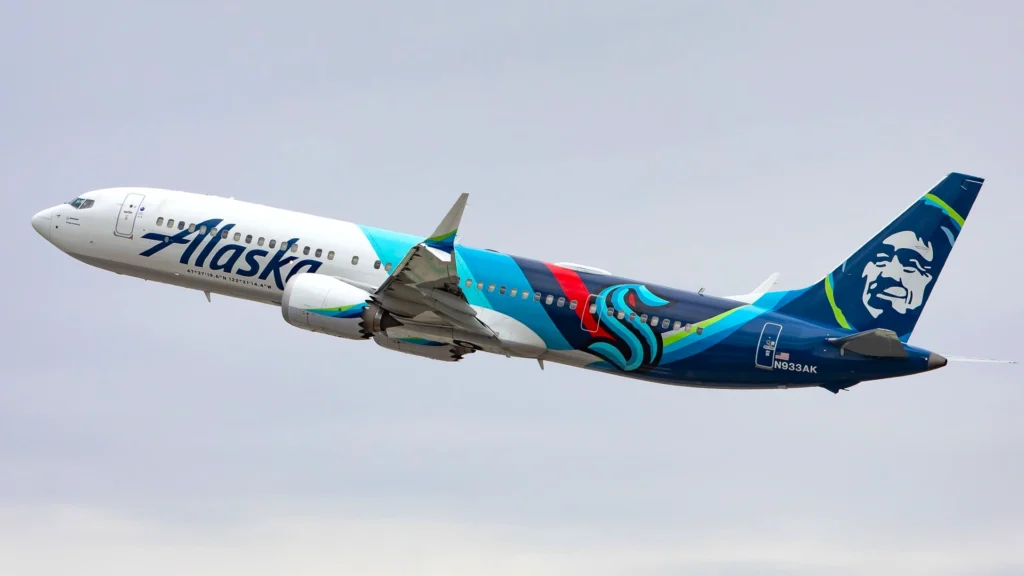
Aircraft Flown by Alaska Airlines Pilots
Alaska Airlines has the following aircraft currently in its fleet.
- Boeing 737-700 – 11
- Boeing 737-800 – 59
- Boeing 737-900ER – 79
- Boeing 737 MAX 8 – 14
- Boeing 737 MAX 9 – 80
- Boeing 787-9 – 2
Besides its existing fleet, the carrier has the following planes on order.
- Boeing 737 MAX 8 – 6
- Boeing 737 MAX 10 – 168
- Boeing 787-9 – 10
- Boeing 787-10 – 5

Requirements To Become A Pilot For Alaska Airlines
Alaska Airlines pilots are required to fulfill the requirements below as a bare minimum, with experience by hours advertised on the vacancy the carrier needs to fill.
- Applicants must hold a valid Airline Transport Pilot Licence issued by the Federal Aviation Administration and meet Alaska Airlines’ minimum flight-hour and experience thresholds.
- Candidates must possess a valid Class 1 medical certificate confirming full physical and mental fitness for commercial pilot duties.
- Strong proficiency in English, both spoken and written, is required to ensure clear communication with air traffic control and crew.
- Applicants must have legal authorization to live and work in the United States without restriction at the time of hire.
- Prior experience flying commercial jets in a multi-crew environment is highly preferred; alternatively, completion of a recognised structured training programme may be acceptable.
- Candidates must demonstrate excellent decision-making, leadership, and teamwork skills, and the ability to perform under operational pressure.
- Flexibility to work irregular hours, the willingness to adapt to changing schedules, and alignment Hiring Process For Alaska Airlines Pilotswith Alaska Airlines’ values of safety, reliability, and customer focus are essential.
- Successful candidates must reflect the airline’s pilot culture and uphold its standards of professionalism, integrity, and customer service.
ALSO READ: United Airlines Pilot Salary in 2025

Hiring Process
Alaska Airlines has the following steps in its hiring process for pilots
- Application – Prospective pilots submit an online application via Alaska Airlines’ careers portal, providing licence documentation, logbook summaries, a valid medical certificate, and a résumé outlining prior experience.
- Initial Screening – The recruitment team reviews all applications to verify that candidates meet the minimum eligibility criteria, including licence validity, medical certification, and required flight hours.
- Online Assessments – Short-listed applicants complete technical and aptitude tests covering aviation knowledge, reasoning ability, and situational awareness relevant to airline operations.
- Simulator Assessment – Candidates who pass the testing stage are invited to a simulator evaluation where flying proficiency, crew coordination, decision-making, and response to non-normal situations are assessed.
- Interview Stage – Applicants meet with senior pilots and human resources staff for interviews focusing on operational understanding, communication skills, motivation, and cultural fit with Alaska Airlines.
- Medical and Background Checks – Final candidates must pass a detailed FAA Class 1 medical examination and complete background, security, and regulatory checks before receiving a formal employment offer.

Bottom Line
In 2025, Alaska Airlines offered pilots competitive compensation that is among the strongest in the U.S. regional and legacy airline market. First officers start with strong earnings and clear progression potential, while captains enjoy high hourly rates and significant total compensation, inclusive of allowances and profit-sharing.
With a recent contract that substantially improved wages, focus on career development, and a strong West Coast operational base, Alaska presents a compelling career option for pilots seeking both reward and quality of life.

Alaska Airlines Pilot Salary FAQs
First officers typically earn around US$107,900 per year in entry-level base pay and may approach US$153,000 per year or more with experience before allowances. Captains may earn approximately US$324,000 per year in base pay at top hourly rates, with total compensation often exceeding US$350,000 per year and potentially reaching US$400,000 or more once extras are included.
Pilots based at Alaska Airlines operate primarily out of the airline’s hubs in Seattle, Anchorage, and other West Coast locations, with both domestic and Hawaii/Alaska routes included in the network.
Yes. Alaska Airlines continues to recruit pilots in 2026 to support fleet renewal, expanding operations, and senior-pilot transitions. Openings and eligibility information are available on the Alaska Airlines careers website.
Stay tuned with us. Further, follow us on social media for the latest updates.
Join us on Telegram Group for the Latest Aviation Updates. Subsequently, follow us on Google News