
There are bad wrestling ideas. There are doomed wrestling ideas. Then there are the kind of ideas so aggressively stupid that fans immediately begin fantasy booking the apology tweet before the character even debuts.
That was El Grande Americano.
Advertisement
Yet what started as a one-note parody gimmick tied to Chad Gable has somehow transformed into one of the wildest success stories in modern professional wrestling. Over a span of 14 increasingly improbable months, a character that originally felt like WWE trying way too hard to chase cheap heat during last year’s “Gulf of America” saga eventually became something nobody saw coming: a legitimate lucha libre megastar.
Not ironically. Not as a meme. But earned the old-fashioned way.
Because by the start of 2026, El Grande Americano wasn’t just surviving. He was headlining full-blown AAA cards, cutting fluent Spanish promos, selling masks across Mexico, getting serenaded by arena crowds and becoming one of the two most popular luchadors in the world alongside Místico.
Which makes the journey even more absurd. Because none of this was supposed to happen.
Against the odds, El Grande Americano (center) has become one of the biggest success stories in professional wrestling.
‘Are we really doing this?’
The original El Grande Americano run in early 2025 felt like WWE playing with fire. The company leaned heavily into the hyper-patriotic “Gulf of America” branding that was floating around pop culture at the time, and the joke was obvious from Day 1. El Grande Americano wasn’t presented as a celebration of lucha libre culture. He was presented as a parody of it. The fake accent. The exaggerated entrance graphics. The intentionally butchered Spanish. Commentary constantly winking at the audience while pretending it didn’t know it was Chad Gable underneath the mask.
Advertisement
For months, the character existed as little more than a loud, polarizing parody attached to Gable during a strange period of WWE programming where nationalism, satire and cheap heat often blurred together in ways that made audiences visibly uneasy. The mask looked intentionally over-designed, the presentation leaned into exaggerated stereotypes and the entire act felt like it belonged to a different era of wrestling, one most fans believed would vanish with the ousting of Vince McMahon.
Then the backlash started.
Was the joke supposed to be Chad Gable pretending to be Mexican? Was the audience supposed to boo him because he was an arrogant fraud or because the gimmick itself felt tone-deaf? Wrestling fans have seen enough historically bad nationality gimmicks to recognize when something feels dangerous creatively, and El Grande Americano immediately triggered memories of the worst kind of caricatures wrestling has produced over the decades.
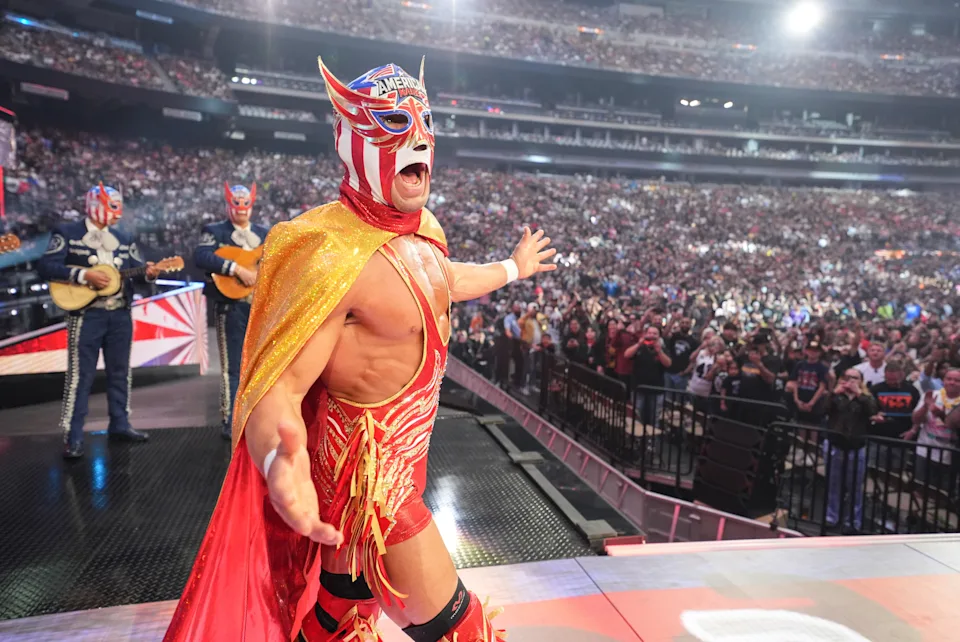
Chad Gable, the original El Grande Americano, makes his WrestleMania 41 entrance in April 2025.
Yet underneath all the criticism sat one undeniable truth: Gable was incredible in the ring.
Advertisement
That became the first crack in the audience’s perception of the character. No matter how uncomfortable the presentation felt, the matches were impossible to dismiss. Gable didn’t wrestle like somebody mocking lucha libre. He wrestled like somebody obsessed with proving he belonged in that world. Every moonsault was crisp. Every transition flowed smoothly. The pace of his matches against Dragon Lee and later Rey Fenix felt dramatically different from standard WWE television wrestling. Somewhere beneath the satire, Gable accidentally created something compelling: A delusional outsider desperately trying to earn respect through performance.
That distinction mattered more than anybody realized at the time.
The turning point for the original version of El Grande Americano came at WrestleMania 41. The initial plan reportedly involved a match against Rey Mysterio before injury forced WWE to pivot toward Rey Fenix on short notice. What could have been a throwaway comedy attraction instead became one of the strangest emotional experiences of the weekend. Fenix wrestled with visible pride, almost like a defender of lucha libre culture trying to embarrass an imposter on the biggest stage possible. Gable, meanwhile, leaned fully into the absurdity of the character. His version of El Grande Americano suddenly felt less like a parody and more like a fraud, terrified of being exposed publicly.
When Gable eventually cheated to win using the loaded mask head-butt that had become the character’s signature, the audience reaction felt different than before. The boos no longer sounded directed solely at the gimmick itself. Fans were finally reacting to the character as intended. For the first time, El Grande Americano worked not because audiences accepted the concept, but because the story evolved beyond cheap parody. The audience hated him because he represented a man trying to force himself into a culture he hadn’t earned the right to represent.
Advertisement
Ironically, that subtle shift laid the groundwork for everything that followed.
Then the injury happened.
An unlikely rebirth
When Gable went down with a legitimate shoulder injury during the summer of 2025, most fans assumed WWE would quietly retire El Grande Americano forever. It felt like the perfect opportunity to abandon a controversial gimmick that had generated more discourse than actual momentum. Instead, WWE made one of the strangest creative decisions in recent memory: keeping the character alive through veteran German wrestler Ludwig Kaiser.
Initially, the transition wasn’t even acknowledged openly on television. El Grande Americano simply returned looking a bit more slender, noticeably taller and acting entirely different. The movement looked smoother. The body language changed overnight. Gone was Gable’s frantic insecurity. Kaiser carried himself with elegance and arrogance. The matches became more fluid, more theatrical and far more authentic to traditional lucha structure. Kaiser was slowly winning fans over.
Advertisement
Not because fans suddenly forgot the uncomfortable origins of the character, but because Kaiser approached El Grande Americano from a completely different emotional perspective. Gable portrayed the gimmick like an American parody of lucha culture. Kaiser portrayed it like a man genuinely in love with lucha libre history. He referenced legendary masked wrestlers during promos. He spoke passionately about masks, lineage and honor. His matches stopped feeling like WWE comedy segments dressed in lucha aesthetics and instead resembled genuine attempts to honor the style itself.
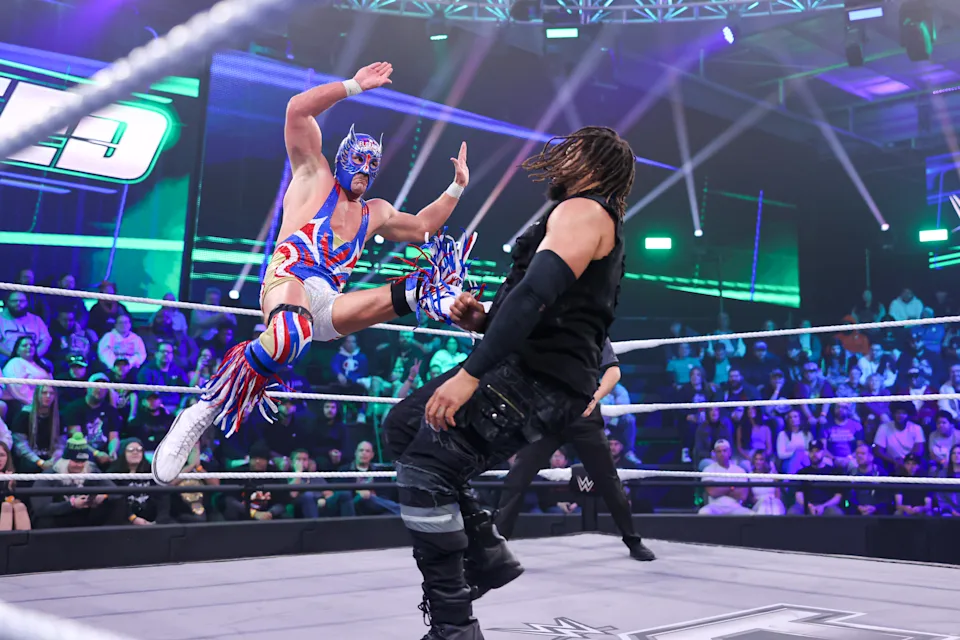
El Grande Americano in action against Jasper Troy during NXT on Nov. 11, 2025.
That sincerity immediately resonated once WWE deepened its working relationship with Mexican lucha libre giant AAA. Suddenly, El Grande Americano wasn’t confined to WWE television anymore. Kaiser began appearing regularly in Mexico, often receiving brutally hostile reactions at first. Fans openly rejected him. Crowds showered him with boos before he even entered the ring. Online criticism intensified because many assumed WWE was trying to manufacture a corporate crossover star by forcing an outsider into one of wrestling’s most culturally sacred traditions.
Then came the promos.
Advertisement
The moment Kaiser began speaking fluent Spanish in promos, the audience’s relationship with the gimmick changed. Between appearances, he reportedly trained extensively in Mexico while continuing to improve his Spanish fluency. His in-ring style adapted specifically for Mexican crowds rather than American television pacing. More importantly, his version of El Grande Americano stopped behaving like somebody entitled to acceptance. Kaiser portrayed the character as somebody actively chasing respect, somebody who understood he had to earn his place rather than simply declare himself part of lucha culture.
That emotional nuance completely transformed the audience response over time.
Slowly, resistance turned into curiosity. Curiosity became respect. Respect eventually evolved into genuine admiration. By late 2025, El Grande Americano masks had become unavoidable at wrestling events throughout Mexico and the United States. What started as ironic purchases turned into genuine fandom. Children wore the masks proudly. Crowds sang along during his entrances. AAA audiences that once rejected Kaiser completely were now treating him like one of the company’s centerpiece attractions.
El Grande Americano was no longer a joke. He was one of the biggest luchadors on the planet.
Americano vs. Americano
The most fascinating part of the story remains how organically it all happened. Modern wrestling audiences rarely allow characters the time necessary to evolve. Internet discourse typically locks gimmicks into permanent first impressions almost immediately. If fans decide something is bad, the character usually dies before meaningful growth can happen. El Grande Americano somehow escaped that fate because Kaiser understood the assignment better than anyone expected.
Advertisement
Rather than pretending to be Mexican, Kaiser played somebody seeking acceptance within lucha culture. That difference sounds small on paper, but changed everything emotionally. His promos consistently framed lucha libre as sacred rather than comedic. He treated masks with reverence. He carried himself like somebody aware of the responsibility attached to representing the style publicly. Wrestling fans respond to authenticity above almost anything else, and eventually, audiences recognized Kaiser’s commitment as genuine.
Then, the story reached another level at the 2026 Royal Rumble when Chad Gable returned as “The Original El Grande Americano.”
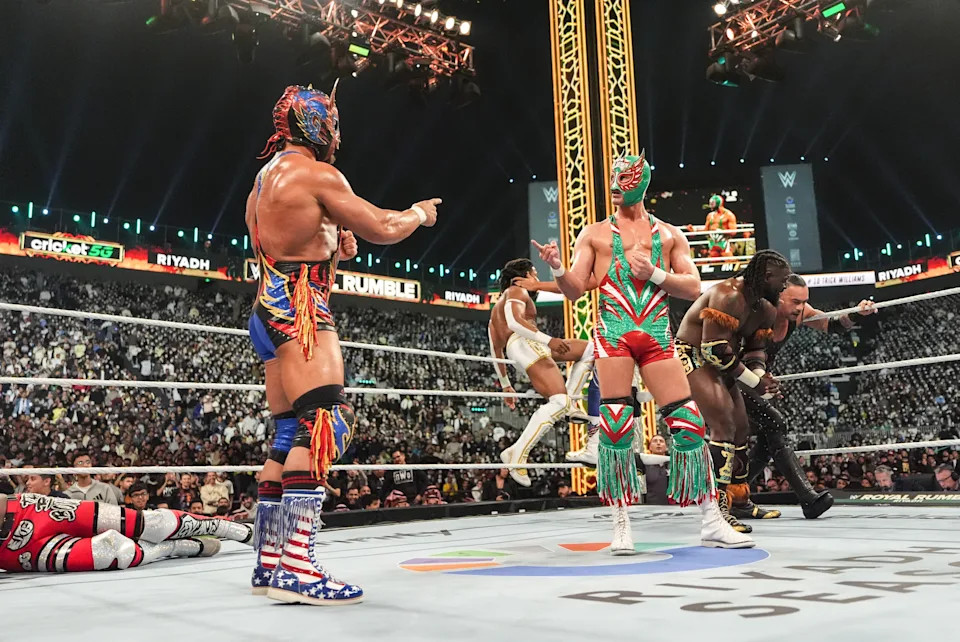
The two El Grande Americanos, Chad Gable and Ludwig Kaiser, meet face-to-face at the 2026 Royal Rumble.
In lesser hands, the angle could have collapsed under its own absurdity.
Advertisement
Instead, it added fascinating emotional complexity.
Gable suddenly looked like the bitter architect of an idea somebody else perfected. Kaiser, meanwhile, had become the version audiences truly connected with. For the first time, fans openly sided against Gable, not because they disliked him as a wrestler, but because Kaiser had become the “real” El Grande Americano in their eyes.
That dynamic transformed the entire saga into something weirdly meta about identity, ownership and evolution within wrestling itself. Somewhere along the way, the parody disappeared entirely. WWE didn’t intentionally create one of the most compelling long-form character evolutions of the modern era. If anything, the company accidentally stumbled into it while trying to generate easy heat during one of its strangest creative periods.
But wrestling has always worked best when performers take flawed concepts and force audiences to believe in them anyway. That’s exactly what Ludwig Kaiser accomplished.
Advertisement
The once-mocked parody gimmick tied to Gable ultimately became one of the defining lucha libre stars of the generation, not because WWE planned the arc perfectly, but because Kaiser cared enough to transform ridicule into authenticity. In an industry built on reinvention, El Grande Americano somehow became the ultimate example of wrestling’s strangest truth: Sometimes the worst ideas evolve into the most unforgettable stories.
That’s why the only ending that truly makes sense for this feud is a mask vs. mask match between the Original El Grande Americano and El Grande Americano, set for this Saturday at AAA: Noche De Los Grandes at Mexico’s Arena Monterrey. Not a gimmick cage match. Not a cinematic spectacle. Not some overbooked WWE-style chaos with 10 run-ins and a dusty finish. This saga deserves the kind of stipulation deeply rooted in lucha libre tradition, because the entire story ultimately became about respect for that culture. Máscara contra máscara is the highest possible personal stake in lucha libre.
Identity. Legacy. Humiliation.
Advertisement
There’s no championship in wrestling that carries the same emotional weight as forcing another masked wrestler to publicly reveal himself after defeat. More importantly, it perfectly ties together every chapter of the El Grande Americano story. The mask stopped being a costume long ago.
And if WWE and AAA truly want to cement Kaiser as a generational crossover star, he has to win cleanly in the center of the ring before unmasking Gable in front of a rabid Mexican crowd. That image alone would instantly become one of the defining wrestling visuals of the year. The once-ridiculed outsider standing victorious while the original fraud is exposed publicly — it’s the natural emotional climax to this entire saga. Wrestling rarely lands the ending on stories this layered, but this one practically writes itself.
From there, the next step becomes obvious: The AAA Mega Championship.
Advertisement
A feud with Dominik Mysterio feels like the perfect evolution for El Grande Americano because Dominik represents another complicated modern lucha figure in his own way. He carries one of the most legendary names in wrestling history while constantly fighting accusations that he inherited his spot rather than earning it. Kaiser, meanwhile, spent the past year literally earning acceptance from audiences who initially rejected him completely. The contrast between those two characters creates instant intrigue before the bell even rings.
More importantly, chasing the AAA Mega Championship finally elevates El Grande Americano beyond the story of Chad Gable entirely. That’s crucial.
The character can’t remain trapped in its own origin forever. No longer the controversial parody act. No longer the replacement under the mask. No longer the outsider begging for acceptance. After the weekend, El Grande Americano could become exactly what once sounded impossible: The face of modern lucha libre, standing across the ring from Dominik Mysterio with AAA’s richest prize in sight.
That’s how legends are made.