
-
Myron Medcalf
Close
Myron Medcalf
ESPN Staff Writer
- Covers college basketball
- Joined ESPN.com in 2011
- Graduate of Minnesota State University, Mankato
Multiple Authors
The NCAA tournament is as defined by players as it is by filling out brackets.
Superstars can carry their teams to a national championship the way Carmelo Anthony did for Syracuse in 2003 and Kemba Walker did for UConn in 2011. NBA draft prospects can raise their stock the way Walter Clayton Jr. did last season, boosting his projection from the second round to the first round after leading Florida to the title.
That’s why we’ve ranked the top 50 players to watch this March Madness not just by who is the most talented. The best of the best — the All-Americans and the future lottery picks — are still at the top. But players’ expected impact on their teams’ trajectory in the tournament also is factored in, meaning talented players who are unlikely to survive more than a game or two were given lower rankings (or left out) in favor of others we expect to make deeper runs.
We also made a point to feature potential first-weekend Cinderella breakout stars on mid-major teams with double-digit seeding who could enter the national spotlight by the end of the week.
Five teams had three players make the cut: Arizona, Florida, Iowa State, Michigan and UConn. And another six teams had two players make the cut: Duke, BYU, Arkansas, Kansas, Tennessee and Louisville.
Jump to:
50-41 | 40-31 | 30-21 | 20-11 | 10-1

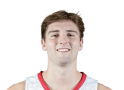
Miami (Ohio) | G | Sr.
After the RedHawks lost to Akron in the MAC tournament final last season, Suder told coach Travis Steele that he had decided to reject NIL offers from power programs in favor of staying with Miami. That decision compelled other key players to return, setting the stage for Suder and his teammates to become just the fifth Division I men’s college basketball team of this century to finish the regular season with a perfect record. Suder is averaging 14.6 points and 4.0 assists while shooting 42.9% from 3. — Myron Medcalf
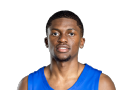
Hofstra | G | Jr.
Davis started his career with stops at Iona then St. John’s, but he didn’t truly find his footing until transferring to Hofstra to play for coach Speedy Claxton. Davis has established himself as one of the premier mid-major scorers in the country, averaging 20.2 points this season while shooting nearly 40% from 3 on 6.0 attempts per game. He is capable of eruption performances, as evidenced by averaging 29.0 points in wins at Pitt and Syracuse in December. — Jeff Borzello
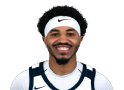
California Baptist | G | Sr.
If you’re looking for a player to score 30 or 40 points in a 4-13 matchup, Daniels is your guy. He is fifth in the country in scoring at 23.2 points per game. He put up 41 points in the WAC semifinals and hit the winning shot in the conference title game. He also had 47 points against regular-season league champ Utah Valley earlier this season and put up 31 against Utah in December. Daniels is an absolute bucket-getter. — Borzello
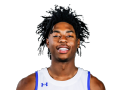
McNeese | G | Fr.
Billy Armstrong captured the Southland tournament title in his first season at the helm — a year after former coach Will Wade achieved the same feat — with the help of Johnson. The redshirt freshman who transferred from Creighton averaged 17.5 points for a Cowboys team that has a similar profile as last season’s squad that reached the second round of the tournament. — Medcalf
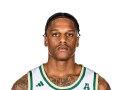
South Florida | F | Sr.
Nelson followed coach Bryan Hodgson from Arkansas State to South Florida and became arguably the best mid-major big man in the country. The American Conference player of the year is averaging 15.7 points and 9.6 rebounds while shooting better than 56% from the field. And he hasn’t just racked those numbers up against inferior competition: He registered 25 points and 12 boards at Alabama, 16 points and 12 boards against VCU, and another double-double versus Utah State. — Borzello
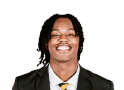
Missouri | G | Sr.
Dennis Gates turned to Mitchell throughout Missouri’s campaign in securing another NCAA tournament berth. When his team’s dreams of going dancing needed a boost, Mitchell scored 23 points in a win over Tennessee in February. He had 35 combined points in back-to-back wins over Kentucky and Florida in January too. He has delivered when the Tigers have needed him to. — Medcalf
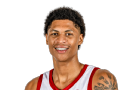
Arkansas | G | Fr.
With Darius Acuff Jr. struggling in the SEC tournament semifinals (7-for-21 shooting), Thomas stepped up to finish with 29 points in the overtime win against Ole Miss. Thomas has had similar performances throughout the season, including 30 points in the regular-season finale at Missouri among his eight games with 20 or more points this season. He also led the SEC with 49% shooting from beyond the arc in conference play. — Medcalf
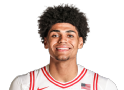
Arizona | F | Fr.
The Wildcats’ star freshman announced his arrival with a tremendous effort — 30 points, seven rebounds and five assists — in a season-opening win over reigning champion Florida. The 6-foot-8 NBA prospect went on to have an up-and-down season while contending with a lower leg injury and typical freshman growing pains. But since Jan. 1, he has scored 20 or more points in five games, including in his 21-point, six-rebound effort in the Big 12 tournament championship win over Houston. — Medcalf
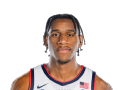
UConn | C | Sr.
Dan Hurley has made no secret that Reed’s play could determine UConn’s ceiling. The 6-foot-11 center is averaging career highs in scoring (13.7) and rebounding (8.1), punctuated by huge performances: He had 20 points, 11 rebounds and six blocks against St. John’s; 21 points and nine rebounds against Seton Hall; and 21 points and eight rebounds against BYU. Reed also had four double-doubles over his final six regular-season games. — Borzello
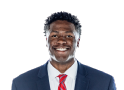
Kansas | F | So.
Amid the uncertainty surrounding Darryn Peterson’s freshman season, Bidunga gave Kansas the stability it needed. The Jayhawks were a top-10 defensive team throughout because of Bidunga, one of the most imposing players in the nation at 6-foot-10. The Jayhawks are 19.5 points per 100 possessions better when the sophomore is on the court, per advanced analytics site EvanMiya. He’s averaging 13.5 points, 9.2 rebounds and 2.6 blocks. — Medcalf

UCLA | G | Sr.
Dent was one of the most sought-after point guards in the portal last spring, and for most of the season, it didn’t look as if he would live up to that hype. The senior transfer from New Mexico is having his worst scoring season since his freshman year but emerged as one of the nation’s elite point guards in the final few weeks before the tournament. In the final eight games of the regular season, Dent totaled 78 assists to only six turnovers. He also recorded the first triple-double in Big Ten tournament history with 12 points, 10 rebounds and 12 assists against Rutgers in the quarterfinals. — Borzello

Iowa State | G | Sr.
After Lipsey led Iowa State to a 15-0 start, head coach T.J. Otzelberger declared the Cyclones had the “best point guard in the country.” Lipsey spent the bulk of last season not feeling like himself because of a variety of ailments. Now at 100%, he established career highs in points (13.3) and assists (5.0) this season. He’s also rated as a “very good” defender by Synergy Sports. — Medcalf

Kentucky | G | Sr.
As injuries mounted in Lexington, Oweh’s outsized role in the Wildcats’ offense grew until he became the clear alpha in SEC play. He’s averaging 18.2 points on the season, but that increased to more than 21 in SEC play. His downhill driving style is nearly impossible to stop in transition, making him a factor in late-game situations. He has become more dangerous from the perimeter this season, too, averaging 3.6 attempts on 33.6% shooting from 3. — Borzello

Duke | G | So.
Jon Scheyer turned to his bench instead of the portal as he prepared Duke for the departures of Cooper Flagg and Kon Knueppel. The growth of Evans — from 6.8 to 14.9 points per game with a 39% 3-point shooting rate in ACC play — allowed the Blue Devils to return to the top of college basketball’s hierarchy despite losing two players who are currently competing for NBA Rookie of the Year. — Medcalf
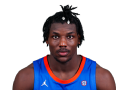
Florida | C | Jr.
Chinyelu is in the running for National Defensive Player of the Year, leading efforts on that end of the court for a Florida team that’s top 10 in adjusted defensive efficiency. At 6-foot-10, opponents have registered an adjusted offensive efficiency of just 82 points per 100 possessions against him — the equivalent of UConn’s subpar production in a 20-point loss to St. John’s in the Big East tournament championship. The junior is averaging career highs in scoring (11.2) and rebounding (11.5). — Medcalf

BYU | G | So.
When BYU’s Big 3 became a Big 2 following the loss of Richie Saunders to a season-ending ACL tear, Wright’s role in BYU’s postseason success increased exponentially. He’s now the Robin to AJ Dybantsa’s Batman, and will have to come up with huge offensive performances if the Cougars are to advance. Wright is more than capable, scoring at least 25 points six times this season, including a 39-point performance against Colorado on Valentine’s Day. He’s averaging 18.2 points and 4.7 assists. — Borzello

Miami | F | Sr.
At Indiana, the 6-foot-9 forward had a promising junior season under former head coach Mike Woodson. Now under Jai Lucas at Miami, Reneau has played to his full potential averaging 18.8 points, 6.6 rebounds and 59% shooting inside the arc. A string of strong performances from Reneau — 24 points against Louisville, 26 against NC State, 16 against North Carolina — were critical to the Hurricanes earning their first NCAA tournament berth since 2023. — Medcalf
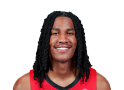
UConn | G | Jr.
UConn entered last offseason in desperate need of a point guard and landed Demary, who has transformed the Huskies at both ends of the court and made them a Final Four contender again. He’s among the best perimeter defenders in the Big East and has emerged as an excellent distributor, ranking near the top 20 nationally in assists (6.2). His demeanor and improving 3-point shot are true assets against the stiffer defenses of March. — Borzello
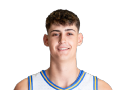
Michigan | C | Jr.
After starting only nine games in two seasons at UCLA, Mara transferred to Michigan, where he immediately cemented himself as the starting center for a national championship contender. He’s one of the elite rim-protectors in the country, blocking 2.6 shots per game while also anchoring a Wolverines defense that ranks third in 2-point percentage defense, third in block rate and first average 2-point attempt distance allowed. On top of that, Mara is averaging 11.6 points on 67.4% shooting from the field. — Borzello
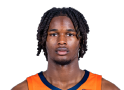
Michigan | F | So.
Johnson had to find a role with the strongest frontcourt in America, anchored by Mara and Yaxel Lendeborg. That’s no easy task, but the Illinois transfer managed to pull it off. He has made 67% of his shots around the rim and has held opposing players to a 46% clip on the same field goal attempts. That two-way excellence has been a cornerstone for a Michigan team that enters the NCAA tournament with the nation’s best defense. — Medcalf

Louisville | G | Sr.
Conwell is at his fourth school in four years, but he’s finishing his senior season with the best scoring numbers of his career. The Indianapolis native is averaging 18.7 points and really filled up the stat sheet with Mikel Brown Jr. sidelined for the final four games of the season, scoring at least 22 points in three of those four games. If Brown is healthy, Pat Kelsey will have one of the elite offensive backcourts in the country. — Borzello
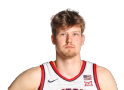
North Carolina | C | Jr.
After Caleb Wilson suffered a left hand fracture that preceded a season-ending injury on his right thumb, Veesaar became the leader of a North Carolina squad that needed one. He has averaged 18.1 points, 7.3 rebounds and 1.3 blocks in the past six games. The Tar Heels have been top 35 in adjusted offensive efficiency in those games, too — far from a collapse with their best player sidelined. — Medcalf
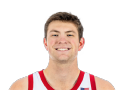
Nebraska | F | Jr.
A year ago, Sandfort scored double figures in Iowa’s win over Nebraska in Big Ten tournament. This season, he joined the Cornhuskers, who opened 2025-26 on a 20-0 run. He has started every game of the season for Fred Hoiberg’s squad, making 62% of his shots inside the arc and 40% of his 3-point attempts. His 32-point effort in a Dec. 13 win over Illinois forced any doubters to take Nebraska seriously. — Medcalf

Tennessee | G | Sr.
Gillespie moved into a starring role as a senior, and he responded with career highs in scoring (18.0) and assists (5.5) to establish himself as one of the best guards in the SEC. He had a shooting slump from the perimeter late in the season but had 21 points with three 3-pointers in the Vols’ SEC semifinal loss to Vanderbilt, so we’re banking on him finding form in the tournament. — -Borzello

Iowa | G | Sr.
Stirtz’s production hasn’t missed a beat since following coach Ben McCollum from Drake to Iowa. Stirtz is still the same high-usage, uber-productive playmaker he always has been, averaging 20.0 points and 4.5 assists while shooting nearly 38% from 3-point range. He really hit his stride in Big Ten play, scoring 30 points three times over a four-game stretch, and ranking third in scoring during the conference schedule at 22.2 points on 50% shooting from the field. — Borzello
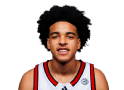
Louisville | G | Fr.
The big question is whether Brown will be healthy for the NCAA tournament. The freshman guard sat out the last four games of the season because of back issues after sitting out eight games earlier in the season with the same injury. When he’s on the court, Brown is one of the most dynamic guards in the country, averaging 18.2 points and 4.7 assists. Had a 45-point performance against NC State in February, making 10 3-pointers. — Borzello
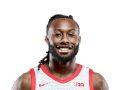
Ohio State | G | Sr.
Pound-for-pound, Thornton is one of the best players in the country. The 6-foot-2 guard was the difference between the Buckeyes sweating Selection Sunday vs. confidently tracking to make the field — he averaged 21.0 points over a five-game stretch to end the regular season, which included a pivotal win over Purdue. — Medcalf
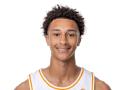
Tennessee | F | Fr.
We had seen flashes of the five-star freshman’s potential, but he took the next step in his development once the calendar turned to 2026. Starting with a 29-point effort in a win at Alabama on Jan. 24, Ament has averaged 20.4 points over the 13 games since. The 6-foot-10 projected NBA draft lottery pick is one of the most perplexing matchups in the NCAA tournament thanks to his rare combination of elite talent and size. — Medcalf
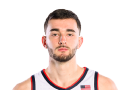
UConn | F | Sr.
Karaban gets a bump for being a key player on two national championship teams in his career. He’s someone who has taken — and made — big shots in high-leverage situations. His stats have been inconsistent in Big East play, but Dan Hurley knows he will need to count on Karaban in the NCAA tournament. And we’re expecting the senior forward to respond. — Borzello

Florida | F | Jr.
For all the talk about how Condon has taken a step back from last season, the Aussie big man is third in KenPom’s SEC Player of the Year ranking and averaging career highs in scoring (15.0), rebounding (7.7) and assists (3.5) while shooting nearly 55% from the field. He has been as productive as any frontcourt player in the SEC since the start of February in particular, averaging more than 18 points and shooting nearly 63% from the field over the latest stretch. — Borzello
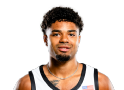
Wisconsin | G | Jr.
Boyd has surged up this list in recent weeks, as the San Diego State transfer is operating at an incredibly high level on the offensive end down the stretch of the season. He had a fantastic performance against Illinois in the Big Ten tournament, scoring 38 points and dishing out six assists, and has scored at least 20 points in 15 of 21 games since the calendar turned to 2026. In Big Ten play, Boyd ranks fourth in scoring and 10th in assists, averaging 20.6 points for the season. — Borzello
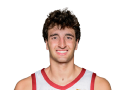
Iowa State | F | Jr.
The Cyclones star is on pace to have one of the most prolific 3-point shooting seasons in recent college basketball history. Since 1992-93, only 15 players have made 50% of their 3-point attempts (minimum 2.5 per game); Momcilovich is averaging 49.6% from 3 heading into the tournament. Not even some of college basketball’s all-time best shooters such as Steph Curry, Reggie Miller and JJ Redick matched that level of production from beyond the arc. — Medcalf
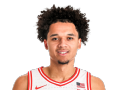
Arizona | G | Fr.
The Wildcats have seven players averaging at least 9.0 points, but Burries is their leading scorer at 15.9 on 36.7% shooting from 3. The freshman has proved where he stands on a talented roster by rising to the occasion in big matchups, scoring 28 points in a December win over Alabama and 20 in a February win over Kansas. He also had 10 points in the first half of the Big 12 tournament championship against Houston. — Medcalf
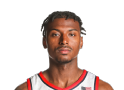
Arizona | G | Sr.
You saw his winning shot at the buzzer to beat Iowa State in the Big 12 tournament, right? That’s just about all that needs to be said for the Big 12 Player of the Year, one of the best two-way players and one of the best late-game players in the country. His numbers — 13.3 points, 3.6 rebounds, 4.5 assists — don’t jump off the page, but he consistently makes winning plays when it matters. — Borzello
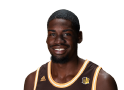
Gonzaga | F | Sr.
Since Braden Huff (17.8 PPG) suffered a left knee injury in January, Ike has successfully carried the additional weight for a short-handed Gonzaga team. He has averaged 22.5 points with Huff sidelined, better than his season mark of 19.7, and the Bulldogs have been a top-10 defensive team over that stretch. — Medcalf
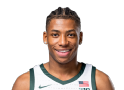
Michigan State | G | So.
Fears is enjoying a breakout season as a redshirt sophomore, leading the nation in assists per game at 9.2. He has also more than doubled his scoring average, going from 7.2 last season to 15.7 this season. He has become even more aggressive as a scorer in Big Ten play, averaging nearly 18 points in conference games. Fears puts immense pressure on the defense with the ball in his hands and is also the leader of one of the nation’s elite defenses. — Borzello

Florida | F | Jr.
Haugh was an important part of the rotation for Florida’s national title run last season. Now, he’s the Gators’ top scorer (17.1), nearly doubling his offensive output from a season ago (9.8). He has made 59% of his shots around the rim, according to Synergy Sports, and has scored 20 or more points in five games over a 12-game winning streak that ended with a loss to Vanderbilt in the SEC tournament semifinals. — Medcalf
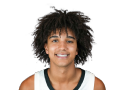
Vanderbilt | G | So.
One of the most electric players in college basketball, Tanner is the two-way tone-setter for a Vanderbilt team with hopes of a deep NCAA tournament run. The local Tennessee product ranks right around the top 50 nationally in scoring (19.1) and assists (5.1); he’s also top 10 in steals (2.4). The sophomore breakout proved he could put the Commodores on his back when backcourt mate Duke Miles was sidelined earlier this season. — Borzello
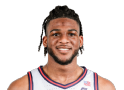
St. John’s | F | Sr.
A unanimous All-Big East selection, Ejiofor did his best work in the second half of the season when the Red Storm were nearly unbeatable, going 19-1 in the final 20 games to finish with a Big East tournament title. He had 21 points, 10 rebounds and seven assists in St. John’s 81-72 win over UConn on Feb. 6, which was the decisive victory in their second regular-season Big East championship run in a row. He’s averaging 16.3 points, 7.1 rebounds and 2.1 blocks. — Medcalf
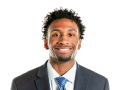
Kansas | G | Fr.
Peterson is one of the most polarizing college basketball players in recent memory. The projected No. 1 NBA draft pick has sat out 11 games and failed to finish others because of injuries and cramping, with questions about his availability overshadowing one of the most efficient freshman seasons of late: 19.8 points and 38.4% shooting from 3 in 28.4 minutes per game. The 6-foot-6 guard is an effortless scorer when he’s available. — Medcalf

Purdue | G | Sr.
Smith is two assists away from breaking Bobby Hurley’s all-time NCAA assists record (1,076) and is having the most efficient offensive season of his career. Though Purdue hasn’t lived up to its preseason No. 1 ranking, and Smith won’t win National Player of the Year as was billed before the season started, he has still shown many times why he’s as good a point guard as there is in college basketball. He’s averaging 14.0 points and is second nationally in assists at 9.1 per game. — Borzello
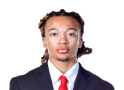
Houston | G | Fr.
The lowest-ranked recruit of Houston’s three top-25 freshmen, Flemings has been one of the best guards in college basketball and the catalyst for the Cougars on offense. He has emerged as their primary playmaker and go-to scorer despite the return of Milos Uzan and Emanuel Sharp, who both started in last season’s national title game. Flemings is averaging 16.4 points and 5.3 assists, and has broken out of a shooting slump that lasted for most of February. — Borzello
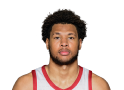
Iowa State | F | Sr.
On a team with both Lipsey (13.3 PPG) and Momcilovic (17.1 PPG), Jefferson is the most important player on the roster. The Cyclones have been 20.5 points better per 100 possessions with the 6-foot-9 forward on the court, per EvanMiya. He is averaging 16.9 points, 7.6 rebounds, 4.9 assists and 1.7 steals. — Medcalf
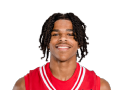
Texas Tech | G | So.
It was clear within minutes of this season tipping off that Anderson was in for an enormous season, opening with 34 points and 11 assists against Lindenwood. He was already one of the highest-usage guards in the Big 12 before JT Toppin’s season-ending injury, and has taken on an even bigger role without his All-American partner. Anderson is averaging 18.9 points and ranks third nationally with 7.6 assists; he has also tallied five games of 20 points and 10 assists. — Borzello
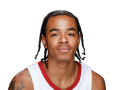
Alabama | G | So.
Last season, the 6-foot-4 guard made just 31.5% of his shots from 3. This season, he has connected on 40.2% of those same attempts. Philon has also graduated from a “good” to “excellent” offensive player, per Synergy Sports, which has allowed an Alabama team that lost 2024-25 All-American Mark Sears to maintain its top-five mark in offensive efficiency. — Medcalf

Illinois | G | Fr.
Wagler is one of the season’s best stories, exiting high school as an under-the-radar recruit before transforming himself into an All-American and projected NBA draft lottery pick in only one season. The star freshman has had some of the best individual performances of any player in college basketball this season, including his 46-point outing at Purdue. Averaging 17.9 points and 4.4 assists this season, Wagler needs to regain some momentum in the tournament — he hasn’t shot 50% from the field in a game since Feb. 10. — Borzello

Michigan | F | Sr.
Lendeborg’s numbers aren’t as gaudy as most of the others on this list — 14.6 points, 7.0 rebounds, 3.2 assists — but he has been a foundational player for one of the national championship favorites and is arguably the best transfer in the country. He is capable of huge scoring outputs, can dominate the glass, make plays and is a defender. He has also added a consistent 3-point shot after moving from the center spot at UAB to the small forward position at Michigan. — Borzello
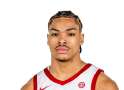
Arkansas | G | Fr.
No player in the country was more dominant than Acuff over the last month of the regular season. He has averaged 28.2 points on 50.7% shooting from beyond the arc to go with 7.2 assists since the start of February. He has built an argument as the best guard John Calipari has coached at this level. — Medcalf
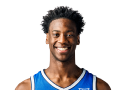
BYU | F | Fr.
In most college basketball seasons, a 6-foot-9 freshman who led the nation in scoring (25.3) and dominated arguably the strongest conference in the country would have the edge in the National Player of the Year race. Dybantsa had eight games with 28 or more points in the second half of the season, including a 43-point effort against rival Utah on Jan. 24. He’s also averaging 6.7 rebounds and 3.8 assists. — Medcalf
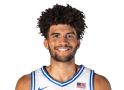
Duke Blue Devils | F | Fr.
The National Player of the Year favorite since the first few weeks of the season, Boozer has been one of the most consistent and dominant players in the sport. He ranks in the top 15 nationally in scoring (22.8) and rebounding (10.2), while also dishing out 4.1 assists and shooting nearly 58% from the field. He had one of the most decorated and successful high school careers in modern history, and has carried over that reputation into college. — Borzello
Just missed: Thijs De Ridder, Virginia; Boopie Miller, SMU; John Blackwell, Wisconsin; Dailyn Swain, Texas; Motiejus Krivas, Arizona; Emanuel Sharp, Houston; Trey Kaufman-Renn, Purdue