
Unpaid Transportation Security Administration workers are struggling to stay afloat — and on the job — amid a partial government shutdown that has frustrated travelers inching through security lines that stretch for hours, with wait times only expected to worsen this weekend.
“I feel bad for everyone except for the people in Washington, DC,” said Carlos Monroe, a traveler whose family waited for more than three hours at Hartsfield-Jackson Atlanta International Airport early Friday but still missed their 6 a.m. flight.
“It’s just not fair,” Monroe said, lamenting from the airport’s food court as his wife sat nearby with her head down. “The big people aren’t paying the price for the little people.”
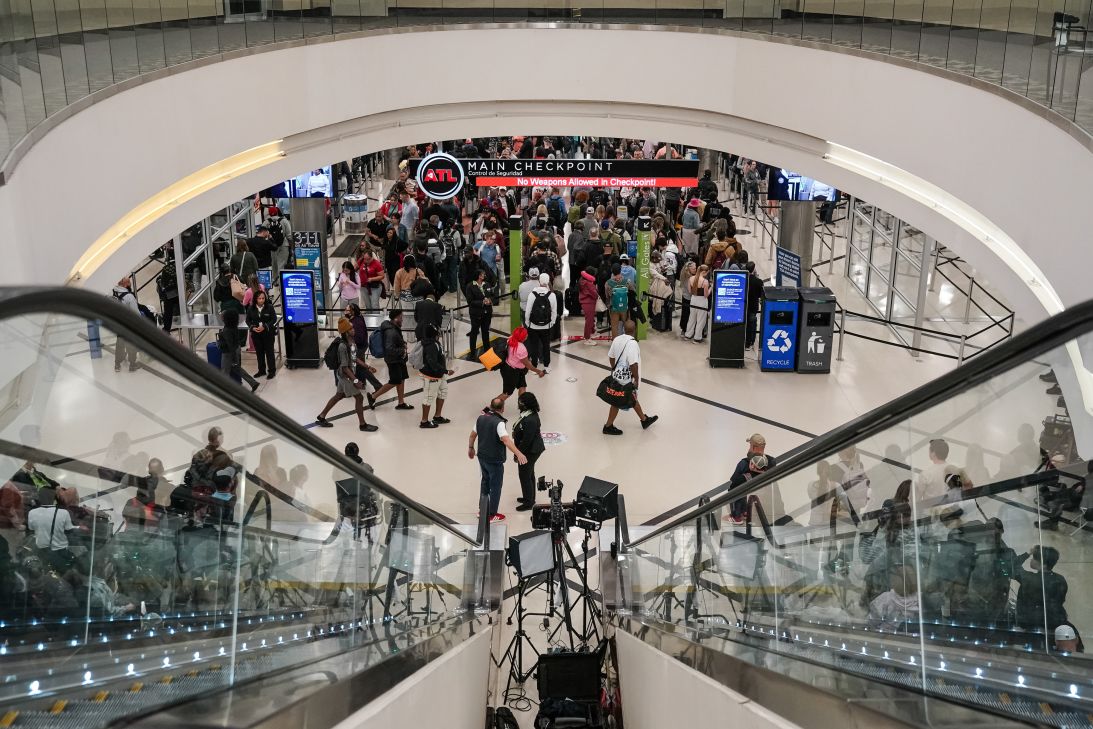
By early Saturday, the strain was already visible at Hartsfield-Jackson Atlanta International Airport, where the security wait time stretched to a little over two hours.
In Orlando, the wait time was approaching an hour, while at JFK airport in New York, travelers faced a wait of over half an hour — early signs of a weekend rush colliding with thin staffing.
The situation is poised to deteriorate even further as some TSA officers, who some lawmakers say are being treated as “political pawns,” continue working without pay since the shutdown began in mid-February, while others, pushed to the brink, are walking away from the job altogether.
In airports across the country, security lines are snaking through roped-off corridors and spilling into crowded atriums, while terminals buzz with restless, exasperated passengers clutching boarding passes and checking phones. Visibly strained officers in blue uniforms move travelers along as best they can, many carrying their own quiet anxiety about missed paychecks and an uncertain road ahead.
Officials warn this may only be the beginning. Transportation Secretary Sean Duffy said the current disruptions are “child’s play” compared to what could happen if TSA workers miss another paycheck, a scenario that could push an already strained system closer to collapse. And if the shutdown continues, some airports may be forced to close, other officials have said.
Airports are supposed to be places of motion, a steady current of departures and arrivals, of reunions and escapes. But this week, that rhythm is breaking down — and travelers are left wondering when they’ll make it to the people and places waiting on the other side.
Here’s what to know.
For more than a month, TSA officers have been showing up to airports across the country without getting fully paid.
For many, it’s become a familiar and frustrating routine. This marks the third funding lapse in just six months. As lawmakers remain deadlocked over Department of Homeland Security funding, this time over a broader immigration debate, more than 61,000 employees are affected.
Low morale and financial strain are pushing workers to their limits and, increasingly, off the job.
Nearly 10% of TSA workers didn’t show up Thursday, just below the record 10.22% absentee rate set earlier this week. For six straight days, call-out rates have hovered above 9% as employees continue working without pay. At least 366 officers have quit since the shutdown began, according to DHS.
The impact has been more severe in certain airports. More than a third of screeners at Hartsfield-Jackson Atlanta International Airport were absent earlier this week, forcing passengers to wait in security lines for up to two hours. On Friday, more than half of TSA workers called out at Houston’s William P. Hobby International Airport.
And the timing couldn’t be worse.
Friday was poised to become one of the busiest travel days of 2026, and this week has already seen the two highest TSA call-out days of the year.
The strain is deeply personal for many workers. Aaron Barker, a union leader representing TSA employees in Atlanta, told CNN officers are dealing with “eviction notices, vehicle repossessions, empty refrigerators and overdrawn bank accounts,” all while continuing to show up to keep airports running.
One TSA agent in Atlanta, who recently relocated for the job, told CNN he’s had to ask for extensions on rent and car payments as he braces for the possibility of missing another paycheck. When describing the pressure, he said it’s “more than I can express.”
Local support from free meals to parking assistance has helped, but only temporarily.
“At what point does the dam break for so many of us?” he asked.
Another TSA worker knows that pressure all too well. Growing up in poverty, Lakeya White said she saw her TSA job as a path toward stability and a future she had worked hard to build.
“Landing this job, I felt like I finally had that at one point,” she told CNN. “And then it was kind of taken away.”
Late last year, a 43-day government-wide shutdown, the longest in US history, ended after many TSA officers and Federal Aviation Administration air traffic controllers stopped showing up to work, disrupting travel.
After enduring repeated government shutdowns, White said the strain became too much. Two weeks ago, she ultimately left the agency after four years.
“Going to work knowing you should be paid, but then you check your account every two weeks and nothing is there, it’s devastating, honestly, because you know that now you have to work 10 times as hard to get caught back up, to rebuild your savings, and to feel comfortable again,” she said.
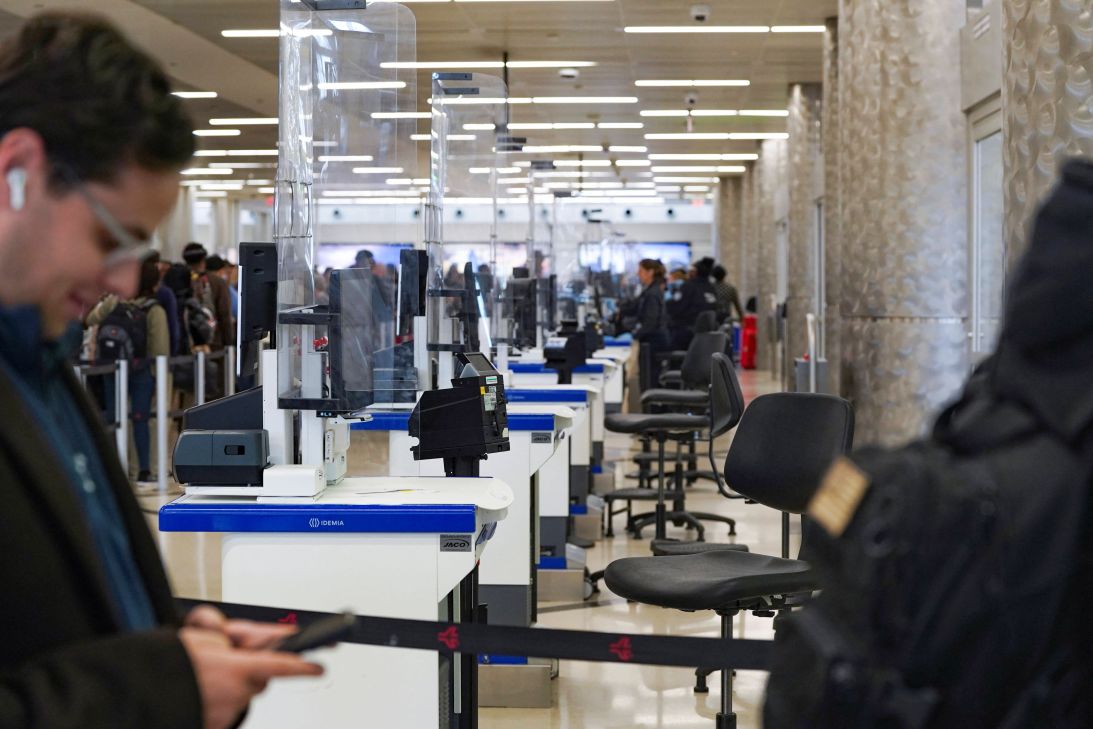
The delays and risk of airport operations under pressure
The strain on TSA staffing is now spilling directly into airport operations and, experts warn, into potential safety concerns.
The situation is unfolding during peak spring break travel — but the concern goes beyond inconvenience.
Former TSA Administrator John Pistole warned longer wait times and crowded security lines could create a dangerous vulnerability. Large groups of travelers gathered in slow-moving queues may present what he described as a potential “soft target.”
“From the standpoint of a suicide bomber, or a shooter … it’s a double problem,” Pistole told CNN, noting both the concentration of people and the strain on the system.
That strain extends to the officers still on the job. Pistole said TSA workers, many of whom are dealing with missed paychecks and financial stress, are likely “distracted” while trying to manage heavy passenger volumes without full staffing support.
The concern, Pistole suggested, is whether officers can maintain the level of focus needed to identify a potential threat — “that putative terrorist who might be trying to do something to exploit what they see as a vulnerability.”
“It is a situation that needs to be addressed,” Pistole said.
Compounding the problem is the weather. A string of storms earlier this week triggered thousands of delays and cancellations nationwide, adding to congestion inside airports. Another system is expected to bring severe weather risks across parts of the Ohio Valley this weekend, including damaging winds, hail and the possibility of isolated tornadoes.
Meanwhile, passengers in rolling chairs, parents with baby strollers and travelers needing extra assistance, whether due to disability or communication challenges, were being funneled into a separate line Friday morning at Atlanta’s main airport.
But even that queue, normally a brief detour before screening, snaked past the main security area and spilled into the airport’s atrium.
Ambria Britt, who has multiple sclerosis and cannot stand for long periods, was forced to pay a stranger to push her wheelchair through the jammed line.
“Normally, I just go straight through,” she told CNN. “I just don’t understand. Pay your workers, because we need them.”