
Tuesday brings one of the busiest primary days of the 2026 calendar year, with six states holding nominating contests.
Primaries will be held in Alabama, Georgia, Idaho, Kentucky, Oregon and Pennsylvania.
The biggest subplot will be President Donald Trump’s increasingly successful revenge tour against his GOP antagonists. But there are plenty of other things to watch.
Here’s what we have our eyes on.
It’s been a big month of payback for Trump. First, his political operation unseated five Indiana GOP state senators who had voted against an effort to eliminate two Democratic-held seats in the US House. Then Sen. Bill Cassidy of Louisiana, who voted to convict Trump at his 2021 impeachment trial, finished third in his primary Saturday and failed to even make the runoff after the president endorsed a challenger.
Now Trump will try to complete the set by defeating Rep. Thomas Massie of Kentucky in a primary.
The race is especially big for a couple reasons.
One is that Trump has targeted Massie with a remarkable amount of vitriol. That’s after Massie played a leading role in forcing the release of the Epstein files, but it also comes after he’s bucked Trump on a number of other issues. For a president like Trump who demands loyalty, defeating Massie would be more than symbolic – it would likely install one more reliable Republican vote in the House next year.
The race is also looking like it will be the most expensive House primary in history, with pro-Israel groups chipping in to defeat Massie and pushing overall spending north of $30 million.
Massie has proven pretty resilient in the past. He’s regularly been targeted by primary challengers, and they haven’t come close. In the Trump era, there have been a handful of politicians who have been able to craft strong personal brands independent of Trump, and Massie is one of them.
There probably hasn’t been a Trump-targeted House primary this significant since Liz Cheney’s lopsided 2022 loss. But while Cheney lost a lopsided race, Massie is thought to at least have a shot.
Speaking of people who have crafted successful brands in today’s GOP, Georgia Gov. Brian Kemp might be at the top of the list.
He destroyed Trump-backed Sen. David Perdue by more than 50 points in a 2022 primary after Trump targeted Kemp for refusing to go along with his claims of massive voter fraud.
And Kemp gambled big when he decided to endorse former University of Tennessee football coach Derek Dooley, who had never run for office before, for Senate.
Dooley faces more MAGA-aligned Reps. Mike Collins and Buddy Carter in the primary to face Democratic Sen. Jon Ossoff in November. Collins polled in first place in a recent Atlanta Journal-Constitution poll, but it’s very competitive.
The race is likely headed for a June 16 runoff, with no candidate expected to get a majority of the vote. But Dooley failing to make the runoff would be a major setback for Kemp. And the vote breakdown should prove clues about who has the upper hand.
Can other Trump-backed candidates get through big statewide primaries?
There are a few other big tests of Trump-back candidates in statewide races. And none of them appear to be shoo-ins.
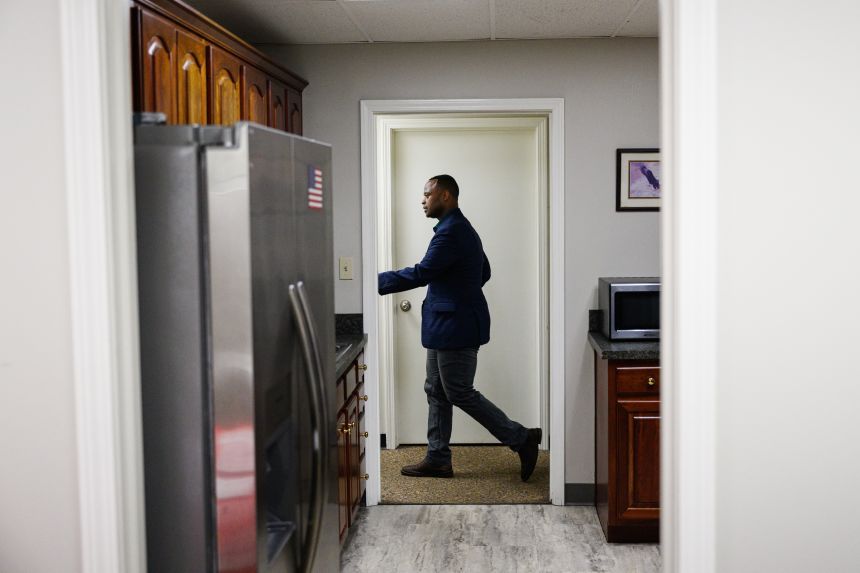
Kentucky Rep. Andy Barr is clearly favored to win the GOP nomination for retiring Sen. Mitch McConnell’s seat after the Trump administration gave one of the other candidates an ambassadorship to get him out of the race. But Barr still faces former state Attorney General Daniel Cameron, once considered a rising star in the GOP.
Georgia Lt. Gov. Burt Jones has faced a spirited challenge from businessman Rick Jackson with the Journal-Constitution poll showing them in a tight gubernatorial primary race. Georgia Secretary of State Brad Raffensperger and Attorney General Chris Carr are also running.
And Rep. Barry Moore is in a competitive race against Alabama Attorney General Steve Marshall in the race for Sen. Tommy Tuberville’s seat. (Tuberville is running for governor.)
The latter two races could well be headed to runoffs.
It’s very rare that Trump-backed candidates lose primaries. But it can happen. And even as Trump appears to be successfully exacting revenge in other places, it’s notable that some GOP voters don’t seem to be taking their cues from him.
While most of the key races Tuesday will be primaries, it’s also worth keeping an eye on a pair of statewide general election races in Georgia.
Democrats will try to flip a pair of state Supreme Court seats by defeating conservative-backed incumbents with liberal challengers.
The races are technically nonpartisan, but as in other states like Wisconsin, they’ve effectively become partisan contests. Former President Barack Obama has endorsed the challengers, while Kemp has spent money trying to save the incumbents.
The races won’t determine the balance of the court, which currently leans 8-1 conservative, but it could give liberals a chance at flipping it in 2028.
And if nothing else, the races could say something about the national political environment.
Two of the more shocking upsets of 2025 came in November when Democrats flipped a pair of statewide seats on the Georgia Public Service Commission.
They were not only the first statewide constitutional offices Georgia Democrats had won since 2006, but the Democratic candidates won each of them by 26 points.
Few Democrats have as much buzz surrounding their name ahead of the 2028 presidential contest as Pennsylvania Gov. Josh Shapiro. And Shapiro’s reelection bid this year is looking likely to be rather uneventful.
So Shapiro isn’t just looking to win; he’s looking to help his party to major wins in Pennsylvania this year and hopefully to win control of the state legislature so he can notch some signature achievements.
Perhaps the biggest test for Shapiro on that front Tuesday is if he can help get firefighter union head Bob Brooks through a competitive and crowded primary field in the swingy 7th Congressional District, currently held by GOP Rep. Ryan Mackenzie.
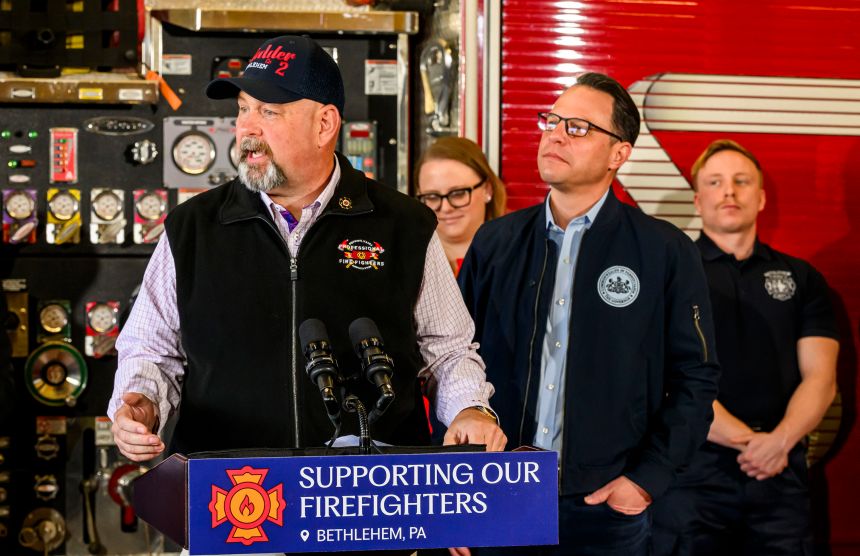
Brooks has plenty of big-name support, including from Sen. Bernie Sanders of Vermont and former Transportation Secretary Pete Buttigieg. But Shapiro figures especially large on his campaign – to the point where a loss would be a significant setback for the governor.
After the January 6, 2021, Capitol attack, Georgia stood out as perhaps the one state where Republicans like Kemp really stood up to Trump’s false voter fraud claims – and then, in the 2022 primaries, lived to tell the tale.
Kemp, Raffensperger, Carr and then-Lt. Gov. Geoff Duncan all declined to toe Trump’s line, and the first three all managed to win primaries against Trump-backed opponents. (Duncan didn’t seek reelection.)
But it’s looking like all of the big names who stood up to Trump could soon be out of office.
Kemp is term limited. Raffensperger and Carr are polling as also-rans in the GOP gubernatorial primary, and Duncan’s attempt to switch parties and run in the Democratic primary for governor hasn’t exactly gone to plan. He’s a big underdog against former Atlanta Mayor Keisha Lance Bottoms in a crowded field.
Kemp could still have a career in front of him, especially if he runs for president. But if these lawmakers can’t even extend their careers in Georgia, that says a lot about what really standing up to Trump does to your political prospects.
Speaking of Bottoms, she appears to be the front-runner in the Democratic primary for governor. The AJC poll showed her with a big lead in the primary over Duncan, former state Sen. Jason Esteves and former DeKalb County Chief Executive Mike Thurmond.

But the Democratic Party establishment isn’t exactly sanguine about her being the party’s nominee.
The big question for now is whether the field can hold Bottoms to 50% or less and force a runoff, where one of them could make it a more competitive race.