
President Donald Trump on Monday announced he would reduce tariffs on Indian goods in exchange for, among other things, a promise to stop buying Russian oil.
That will be a tall task: India has been importing roughly 1.5 million barrels of Russian oil each day — even months after Trump placed tariffs on Indian goods as punishment — according to Kpler, a global trade data provider. Russian oil makes up more than a third of India’s overall imports.
Trump said in a social media post that he spoke Monday morning with Indian Prime Minister Narendra Modi, who agreed to replace the country’s Russian crude imports with oil from Venezuela and the United States.
Modi welcomed the reduced tariffs in a post on X, but he did not mention cutting purchases of Russian oil.
Venezuelan oil is of the same quality as Russian oil — heavy, sour and perfect for making derivatives like fuel oil and diesel, which India’s refineries are already set up to process, noted Rob Thummel, senior portfolio manager at Tortoise Capital.
It’s not clear, however, how long that transition may take. Venezuela’s oil infrastructure is dilapidated and requires about a decade of work and tens of billions of investment dollars to return it to the more-than-3 million barrels a day output it had achieved before the country’s Socialist government took control in 1999.
India also buys more oil from Russia than Venezuela produces.
“Fully replacing Russian oil with oil from Venezuela or the US will take significant investment,” said Rob Haworth, senior investment strategy director at U.S. Bank Asset Management. “But. over time, this may create additional challenges for the Russian economy.”
India is a major purchaser of Russian oil, which has been sanctioned by most Western countries because of Russian President Vladimir Putin’s war with Ukraine. China buys significantly more Russian oil than India — and unlike India, China hasn’t faced additional tariffs for purchasing Russian oil. Turkey is a distant third.
Indian government officials have defended purchasing Russian oil previously, calling it essential to the country’s energy security. India is the world’s third-largest consumer of oil, and Russia is a close-by seller. India relies on its crude to support its fast-growing economy, fueled by the world’s largest population.
And Russian oil has traded at a significant discount – roughly $16 a barrel – to OPEC or US crude, making it hard for India to quit, noted Robert Yawger at Mizuho Securities. Even after this agreement with the United States, Yawger said he expected India may flout sanctions and purchase Russian oil, as it has throughout the past several years.
“There’s been a zillion different ways they have been able to outflank sanction authorities,” Yawger said. “They’ll find a way to go dark fleet and get those barrels moved.” (Dark fleets are ships that use murky tactics to transport oil for pariah states.)
But as oil prices have come down over the past several months, the difference in price between sanctioned oil and non-sanctioned oil eroded, allowing India to make a change.
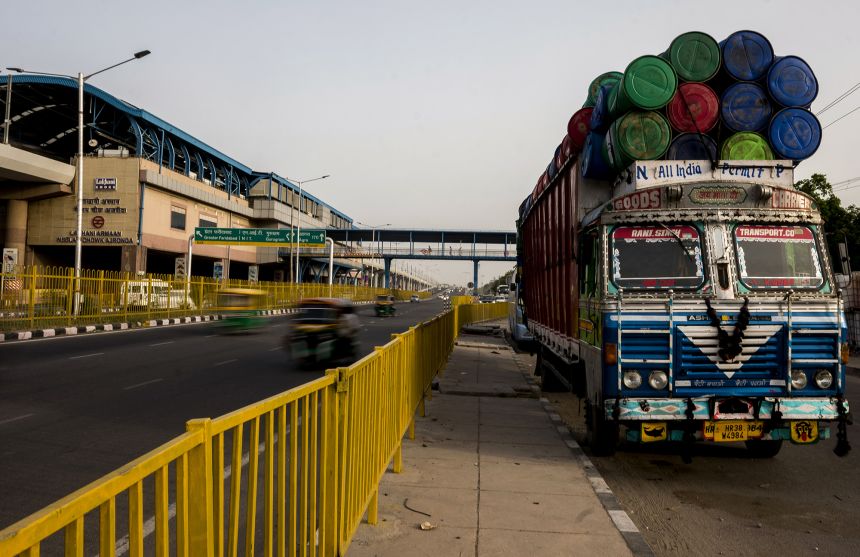
“When oil prices were high, that was big. But with oil prices coming down, that advantage is not so substantial,” noted Arvind Subramanian, a senior fellow at the Peterson Institute for International Economics and former chief economic adviser for India’s government. “If you throw into the calculus that Indian exporters were suffering from Trump tariffs, it became easier to stop buying Russian oil.”
US crude prices were down 5% to about $61 a barrel on Monday, but that was mostly unchanged from before Trump’s announcement. Oil fell sharply earlier in the day because traders were hopeful the United States would reach a deal with Iran without striking the crude-rich country.
That could imply the oil market remains skeptical that the Indian deal means much at all.
“India has been slow-walking these trade talks for months, and the terms here are so vague that they could be anything from major to nothingburger,” said Scott Lincicome, an economist at the Cato Institute.
Trump said Indian goods would immediately face an 18% tariff, down from a 50% – a rate that had included an additional 25% tariff Trump put in place in August to persuade India to stop purchasing Russian oil. A White House spokesperson told CNN that Trump will fully remove the additional tariff and reduce the so-called reciprocal tariff.
Indian goods had among highest tariff rates imposed by the Trump administration. Because of various exemptions, the effective tariff rate on Indian goods was roughly 35%, according to Subramanian.
Trump, calling Modi “one of my greatest friends,” also said India’s prime minister agreed to reduce India’s tariffs on US goods to zero, and to remove unspecified non-tariff barriers. Although Trump didn’t explain which barriers would be removed, those often include special taxes on US companies’ services or value-added taxes on goods.
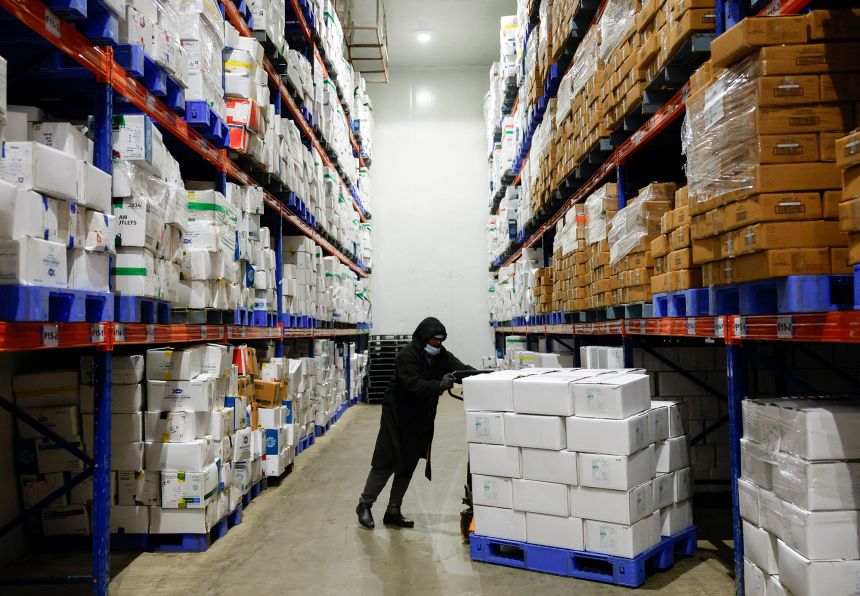
India also pledged to invest in American goods “at a much higher level” in addition to a $500 billion invesment in US energy, technology, agriculture and coal among other products, Trump said.
Trump may have been eager to cut a deal with India after the European Union signed a long-sought free trade agreement with India last week, noted Subramanian.
“If India gives preferential access to the EU, US business is affected,” he said. “There has been a domino effect.”
Although India isn’t one of America’s largest trading partners, the reduction in tariffs could nevertheless make a meaningful dent: The United States imported $95.5 billion in goods from India in 2025 as of November, 3% of the value of total imported goods, and it exported $42 billion of goods there over that time, according to the US Census Bureau.
Among the top goods the US imported from India last year are computers and other electronics, such as phones, pharmaceuticals, apparel and chemicals. Jewelry prices in the United States have risen in recent months in part because of tariffs on India. Meanwhile, India’s top imports from the US were oil, gas, airplanes and airplane parts.
Beyond goods, corporate America has grown increasingly reliant on India. Companies including American Express, JPMorgan Chase, Microsoft and Google have deepened their footprint in India, hiring workers there rather than sponsoring visas to work in the US and even opened new offices there.
This story has been updated with additional developments and context.
CNN’s Elisabeth Buchwald and Lex Harvey contributed to this report.