
A version of this article first appeared in the “Reliable Sources” newsletter. Sign up for free here.
Does bad news for CBS News translate to bad news for Paramount’s takeover of CNN and the rest of Warner Bros. Discovery?
Not directly, no. But the self-inflicted wounds at CBS News may raise a different question for Paramount CEO David Ellison: Has Bari Weiss become too much of a distraction?
The “60 Minutes” firings and now Scott Pelley’s “CBS News is on fire” interview have exploded in the press just weeks before Paramount would like to complete the blockbuster WBD deal.
“Legally speaking, it doesn’t matter,” an executive involved in the mega-merger said on condition of anonymity. That’s because regulators are examining the deal on antitrust grounds, not on journalism-ethics grounds. “But PR-wise, it might matter,” the source added.
Headlines like this one, from the Financial Times, are never helpful: “Inside the CBS mutiny against Bari Weiss and David Ellison.” The Los Angeles Times recently wrote that “In Hollywood, image is everything. And David Ellison has an image problem.”
And merger opponents are certainly citing the CBS News controversies in their campaigning. “The same Trump billionaire buddy behind the CBS MAGA makeover is now coming for CNN,” the Freedom of the Press Foundation said last week.
A cynic might say that a shake-up at “60 Minutes” is exactly what President Donald Trump and his appointees wanted to see while weighing whether to approve the Paramount-WBD deal.
But conventional wisdom holds that the Trump administration was already going to give the go-ahead. The real uncertainty remains at the state level, where a group of Democratic state attorneys general is likely to challenge the deal.
Several news outlets reported last Friday that multiple states are preparing a lawsuit, led by California attorney general Rob Bonta.
“The litigation would seek to challenge the proposed merger on antitrust grounds, arguing it would thwart competition, lower wages and lead to widespread job losses,” the Los Angeles Times reported.
Bonta and some of his counterparts, like New York AG Letitia James, are running for reelection this fall, and the Democratic base wants to see candidates taking on Trump.
In that sense, Paramount-WBD is a proxy fight. CBS News has not gone MAGA, contra to what many critics have claimed, but progressive voters certainly have seen a Trump-shaped cloud hovering over the deal.
State AG action is not the only wildcard. European Union regulators have a July 7 deadline “to clear the blockbuster deal or open an in-depth review,” Bloomberg’s Samuel Stolton noted in a story that revealed one possible concession: Paramount “is prepared — if necessary — to divest some children’s TV network assets” to help win approval.
Giving up the Cartoon Network, for example, is a small price to pay for a deal that feels existential to the parties involved. The amount of time, money and muscle that’s gone into this merger cannot be overstated.
Ellison “is, above all, battle hardened,” Charlie Gasparino wrote in the New York Post the other day. “He and his pops” – Oracle billionaire Larry Ellison – “believe they have earned their mandate to change CBS, and Scott Pelley can’t stand in their way.”
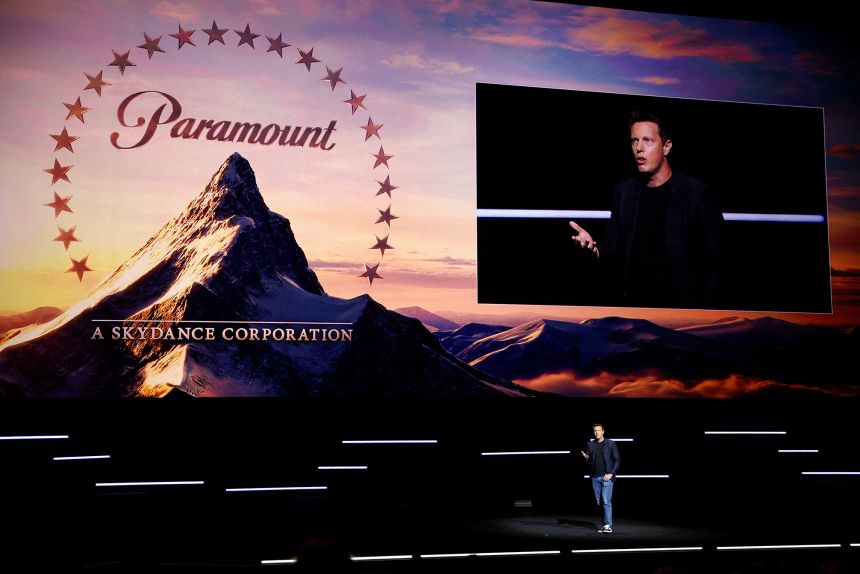
Friday’s reports about the looming state AG lawsuit, which Paramount executives believe would be meritless, pushed Paramount shares under the $10 mark, though the stock recovered somewhat on Monday. Analysts at Raymond James said in a memo to clients, “We still believe the deal is likely to close, although [third quarter 2026] closing guidance seems aggressive.”
On Monday a Paramount spokesperson told CNN, “Opposing this deal means opposing expanded consumer choice, new opportunities for creators and workers, and greater competition throughout the creative ecosystem — the opposite of what antitrust law is meant to achieve.”
On CNN Sunday evening, I suggested thinking about this period at CBS News as “the Bari Weiss experiment.” The problem is that no one can agree on what the experiment is about or whether it’s working.
A battery of critics say Weiss is there for political reasons. Pelley told New York Times interviewer Lulu Garcia-Navarro that Weiss has been “putting a thumb on the scale” on behalf of the Trump administration. (A CBS News spokesperson said Pelley’s argument is not credible.)
The bigger problem, Pelley said, was “not any kind of political influence. The problem was the incompetence.” That’s the part Ellison may be scrutinizing — not what Weiss has done, but how she has done it.
On Monday, TheWrap editor in chief Sharon Waxman wrote that Weiss has “fast become a liability for Ellison” and wondered if he’ll “make a move.”
When Ellison acquired The Free Press and put Weiss in charge of CBS News last fall, he talked about making the third-place network news division “the most trusted name in news.” Go back and re-read his memo: “Our goal is to broaden our reach while solidifying our position as a leading voice in American journalism,” Ellison wrote. “Every step of the way, trust and facts will remain our guiding principles as we work every day to strengthen and deepen our connection with our audience.”
Obviously, the overhaul of “60 Minutes” has not done that.
“This whole mess has wounded and damaged the broadcast,” correspondents Lesley Stahl, Bill Whitaker and Jon Wertheim wrote in their Friday note explaining why they’re going to “stay and fight.”
The trio pointedly expressed their concerns about management, meaning Weiss, while saying they will give Nick Bilton a chance.
Let’s not lose sight of this: CBS News is producing strong work every single day. The newsroom is soldiering on, landing scoops, asking questions, doing the work. But, as one CBS News source remarked to me, “we are so bone-tired of being in the news.”
After speaking with journalists there all weekend long, I can say that morale within the news organization is as low as you’d expect, and there is a wide range of opinion about what’s happened at “60 Minutes.”
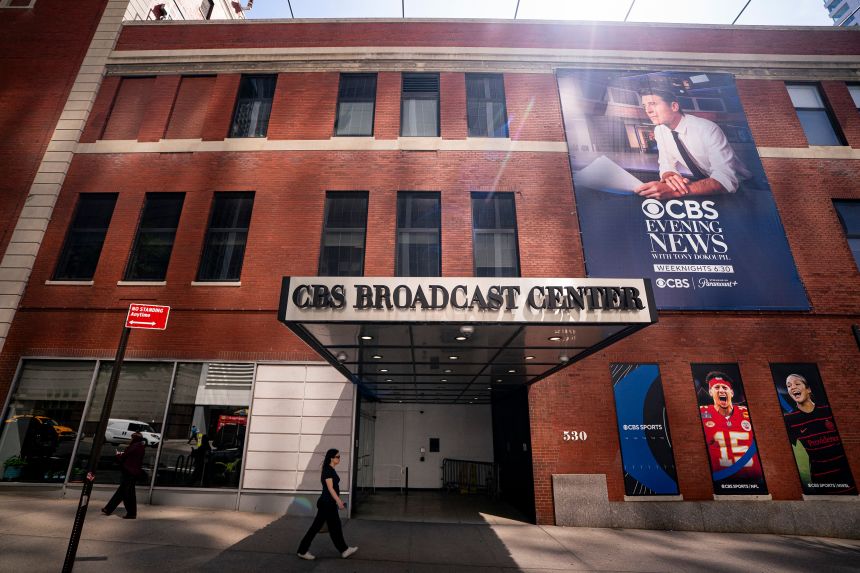
Some newsroom staffers believe Weiss is the problem, while others are more forgiving (or at least less impacted by her changes). A few told me they wish Weiss would defend herself and explain her moves on the record, though I’m told non-disparagement clauses and other legal provisions stand in the way of that.
Several others told me they are worried about a chilling effect from Pelley’s firing, if colleagues hesitate to push back against management, though the sources all said they wouldn’t hesitate to do so.
And CBS journalists outside New York told me they barely interact with Weiss or feel her involvement, which is striking because, as a source in Washington said, “if this were all ideological, you’d think it would be the opposite,” with management involving itself in the intricacies of Trump coverage.
The big unknown, one veteran CBS News staffer said, is, “How many viewers have turned us off or tuned us out because of all of this?”