
When George Orwell wrote 1984, he devised a language, Newspeak, in which a simplified and restricted version of English was introduced to diminish the intellectual and emotional range of the population. When I read words like “grindset”, “hustle” and “maxxing”, I experience the same cognitive shrinkage. These are terms designed to gloss over the complex interrelations of capitalism, and nobody has come to emblematise this kind of vapid corporate jargon quite like Steven Bartlett, the British host of The Diary of a CEO, which is on the cusp of overtaking Joe Rogan to become the world’s number one podcast.
Bartlett has been on one hell of a journey. “In the first chapter of my diary,” he wrote, announcing the show’s first episode in 2017. “I discuss what it takes to be an entrepreneur.” The show was intended as a live memoir, charting his business adventures. Over the first couple of years, he only occasionally interviewed other bosses, like Leon’s John Vincent and nightlife tsar Sacha Lord. It wasn’t until 2019 that the show transitioned into a regular interview format, and, even then, the focus was heavily on entrepreneurialism. Episodes had explicitly mercenary titles like “£100m in Revenue Aged 27”, “From £27 to £72m” and “£45m in 4 Years”.
For half a decade, the show existed somewhere between a serious editorial outlet and a meme. Bartlett’s propensity for swigging the viscous protein shake Huel was easily mocked. When, in 2022, Matt Hancock, the secretary of state for health during the Covid-19 pandemic, appeared on the show, he struggled to chug the drink, much to the amusement of armchair commentators on Twitter. It demonstrated the show’s strange position at the midpoint between a serious political interview and lampoonable fodder for sketch comedians.
But the global podcast ecosystem was changing. Lavish true crime documentaries like Serial and liberal news shows like The New York Times‘s The Daily were being wrestled away from the top of the charts by men like Joe Rogan, Lex Fridman, Theo Von, Adin Ross and Logan Paul. Libertarian politics and “manosphere” influencers have flourished in this unregulated free-for-all. In 2024, they helped propel Donald Trump, who amassed a reported 68.7 million YouTube views on their shows during the campaign, back to the White House.
Bartlett is a different sort of host – reserved where they are boisterous – but he shares their credulous curiosity. The late Charlie Kirk, a prolific podcaster in his own right, used to appear on university campuses proclaiming the slogan “change my mind”. Bartlett was one of the few British podcasters espousing a similar ethos, although his motto might, instead, have been “make my mind up”.
Today, the show looks very different to 2017. Many episodes focus on health advice (“This Reverses Gray Hair & Boosts Your Energy!”, “Sleep Expert On The Truth About Melatonin And Magnesium”, “The Truth About Dairy, Sugar, Fruit And Fasting”) or the dawn of the AI age. From British business leaders, Bartlett has become an intermediary for some of the world’s most controversial thinkers: the likes of Jordan Peterson, Andrew Huberman and Chris Williamson. In June of this year, Bartlett hosted American Vice President JD Vance for an episode titled “No One Saw This Coming, The Ceasefire Is Real!” The cover artwork shows Vance and Bartlett, overlaid with the text: “The Iran War Is Over”. As the crisis in the Strait of Hormuz continues to rage, it is hard not to see this as overt propagandising for a foreign power.
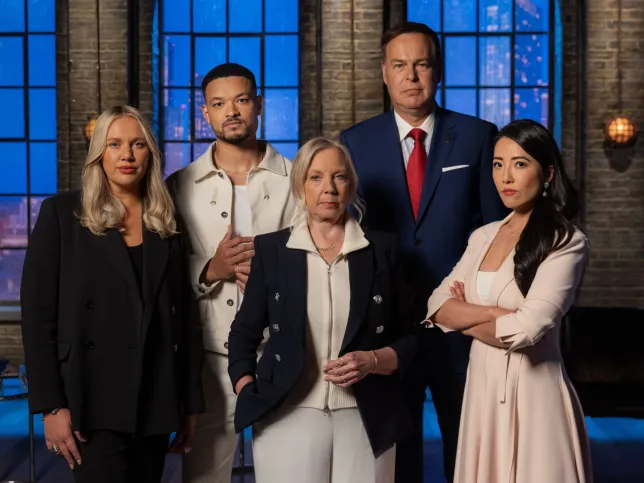
It is the latest controversy that will see Bartlett labelled, by some, as a credulous platformer of malign forces. In December 2024, a BBC investigation accused the show of amplifying health misinformation, citing interviews with Aseem Malhotra, a vaccine-sceptical doctor, and Thomas Seyfried, a controversial physician who believes in using diet to control cancer. The report served as a slap on the wrist, and while The Diary of a CEO is no longer available on iPlayer, as it was previously, Bartlett has continued his work as an investor on BBC One’s Dragons’ Den. His team claimed the report created a partial and misleading narrative because it only looked at a small number of the episodes.
Far from deterring Bartlett, the bad press seems to have ignited the most productive period in his working life: he has launched FlightStory, a production company, FlightCast, a video podcasting software, and Steven.com, which describes itself as “the operating system for the creator economy” (whatever that means).
As with many successful people, a cottage industry has sprung up around Bartlett, with YouTubers rushing to respond and critique his output. One of these videos – “Diary of a CEO Is Making You Less Successful”, on the Barry’s Economics channel – has racked up more than 1.2m views in just three months. The video’s creator, comedian-turned-inequality campaigner Barry Ferns, was inspired to tackle the subject after witnessing The Diary of a CEO’s growth into one of the country’s leading podcasts.
“I was watching his videos early on,” he tells me. “Initially, it was a good faith investigation into what makes a good CEO, but it became something else, which is what happens when podcasts scale.” He points to Bartlett’s investment in, and promotion of, Huel as indicative of a shift towards a more commercial product. “Getting shares in Huel and then hawking Huel without saying that he’s got shares in it,” Ferns observes. “We’d see that as cynical, but I’m sure he’d just see it as him being a businessman.”
Ferns points out the gradual erosion of Bartlett’s claims to be a disinterested observer. Another YouTuber, Lola Aurelia, takes this idea further. Her best-performing video is titled: “Misogyny Rebranded? The Diary of a CEO’s Neutrality Problem”. “He’s a mainstream interviewer who presents himself as a neutral platform,” she tells me. “However, he increasingly platforms ideas that also circulate within the manosphere, and because his audience is so much more mainstream, these ideas reach people who would never actively seek out manosphere content themselves.”
She cites an interview with Alok Khanajia, aka Dr K, which has been criticised for its presentation of male loneliness as a problem that can be solved via heterosexual coupledom. Deborah Frances-White, a feminist writer who has appeared on the show, was also critical of the interview with Dr K and the way that Bartlett engages with his guests. “Constantly hosting guests who blame women because we also wish to spend time in education and self-development is fostering unfair resentment and even a dangerous hatred that is changing the fabric of society,” she wrote afterwards in The i Paper.
On another channel, The Kavernacle, a self-described “communist YouTuber” takes aim at Bartlett’s increased fraternisation with the political right. “The Diary of a CEO was always going to be a pro-capitalist, pro-conservative, pro-business podcast,” he tells me. “But if you’re going to get more extreme or radical figures, like JD Vance or Trump’s daughter [Ivanka], then I think some more balance would legitimise his podcast.”
At the same time, compared with his American contemporaries, like Joe Rogan and Tim Ferriss, Bartlett is more of an inscrutable cipher. Softly spoken and at times conspicuously unopinionated, he has made a fortune out of reflecting, rather than obscuring, his guests’ ideas. “He’s very bland, very easy to listen to,” says Ferns. “I don’t think people are sick of him – they’re sick of his self-deluding innocence.”
The Kavernacle agrees. “The show is generally just self-promotion,” he tells me. “He himself doesn’t espouse these views but he platforms them all the time.” And so, despite all his success, Bartlett has begun to feel like the punchline to a joke. What do you call a rage-baiting podcaster who never says anything interesting? Steven Bartlett.
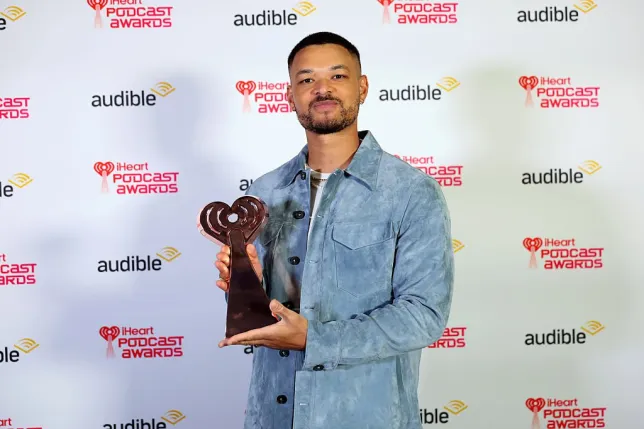
It is hard to establish quite how popular Bartlett actually is. The show is routinely cited as one of the UK’s most listened to podcasts, with Edison Research ranking it second only to The Joe Rogan Experience in terms of audience. It is rarely far from the top of Apple or Spotify’s lists of trending shows.
Yet, The Diary of a CEO has made a concerted decision to turn comments off on Spotify, and the feedback on Apple is mixed, to say the least. “Great variety and a uniquely humble and interested interview style,” one recent review adjudges. “Steven Bartlett is a grade A helmet who spouts utter garbage,” says another.
There is, perhaps, no stereotypical Bartlett fan: he is just a well-remunerated conduit for other people’s ideas, a glittering shop window for young, aspiring capitalists to gawp into.
And it is on YouTube where Bartlett really thrives. He has 18.3 million subscribers (roughly equivalent to the population of the Netherlands). He is routinely getting more than a million views on his videos, which are packaged up with dramatically enticing titles like “The Whistleblowers Were Right About Aliens” and “Why Sex Is Causing Divorces!”. The channel is growing furiously: he has gained 900,000 subscribers in the past month, making The Diary of a CEO the 25th biggest creator in the UK (but still some way behind our nation’s top influencer, Peppa Pig). Industry analyst Matt Deegan attributes the show’s video success to the fact that Bartlett has “jumped early on changing behaviour, such as getting into full YouTube videos in 2019”.
Bartlett epitomises the Government’s problem with YouTube and social media more broadly. He seems credible – aided, in part, by his BBC contract for Dragon’s Den – yet flirts with deeply problematic subject areas. He seems to believe he has plausible deniability about the quality of ideas presented on his show. It relates in part to the idea of The Wrongternet, which posits that social media is increasingly inflammatory, vague or incorrect as a way of eliciting engagement. In the fragmented bunfight for new media supremacy, it is a depressingly effective tactic. But is it a short termist vision?
“Like many digital creators, Steven has two choices,” says Deegan. “He can be a mainstream media figure, or he can choose to be a counterculture one. What the US shows us is that the latter can be very profitable, but he’ll sacrifice his ability to ever leave that content cul-de-sac, satisfying a minority but making him less acceptable for a broader audience.”
But for now, Bartlett seems insulated from censure by continued establishment approval, the fragmentation of news media, and the lack of a regulatory body overseeing social media. “We’ve all got bias and we’re not able to regulate ourselves,” says Ferns. “So, we do need bodies and institutions to regulate us. I don’t know what that is, but it certainly doesn’t seem to be working right now.”
As it stands, podcasters and YouTubers are still being incentivised to create attention-grabbing, shocking and provocative content. And, in this world, Bartlett is thriving. He started his journey trying to teach people business tips, and, along the way, discovered that his greatest entrepreneurial skill was a cynical willingness to follow the money. Like the Pied Piper of bullshit, he may have gained a following but it’s hard to ignore the stink.