
Cape Verde goalkeeper Vozinha says his mother will be in attendance for their second group-stage game, after she was unable to be in the United States for his man-of-the-match performance against Spain earlier this week.
United States government officials said Wednesday they were working to get her to the U.S. so that she can watch her son play at the World Cup, after Vozinha had said “visa issues” prevented her from watching the opener in person.
Reuters has carried photos of Vozinha’s mother arriving in Miami ahead of Cape Verde’s game there against Uruguay.
And on Friday, Vozinha, 40, told media including Hayters, “For me, this is very important. All my family support me in everything, and to have her here is something special. My father will be here, and my brother also.
“I wish I could bring more members of my family here too: maybe my other brothers and sister and nephews. Sometimes it’s difficult, but I’m very happy for this.”
Vozinha’s mother arriving in Miami. (Reuters / Marco Bello TPX Images of the day)
Vozinha, who plays for Portuguese second division side Chaves, was the star in Atlanta on Monday as he made seven saves in his nation’s first World Cup appearance.
After the match, Vozinha said visa issues stopped his mother Ana Candida Evora from witnessing his heroics in person. The U.S. State Department said the day after the game that, while it had been working to secure her arrival in the country, it had “no record” of Vozinha’s mom applying for a visa.
House Minority Leader Hakeem Jeffries had said Wednesday that Vozinha’s mother was to join the team ahead of Sunday’s match.
On Wednesday, the State Department said: “We can confirm our visa team in Praia (Cape Verde’s capital) is in close touch with her and providing the needed service.”
“The U.S. rules changed and we had to pay a very big tax to bring my mum here and other brothers I have,” Vozinha said to reporters immediately after the game. “We could not do this in time. I will try to get this done at least for them to be here in our last game of the group phase so they can be here.”
Due to the “Visa Bond Pilot Program” introduced by President Trump’s administration, nationals from 50 countries, including Cape Verde, are required to post a bond of $5,000, $10,000 or $15,000 to be granted a tourist visa to enter the U.S.
In May, Assistant Secretary of State for Consular Affairs Mora Namdar said that the Trump administration “has waived the visa bond requirement for qualifying team members, including players, coaches, and support staff who otherwise meet all requirements for entry into the U.S.” The State Department also told The Athletic in May that access would be provided for immediate relatives.
Jeffries, who has served as House Minority Leader and leader of the House Democratic Caucus since 2023, posted Wednesday that he had spoken to Secretary of State Marco Rubio.
“No mother should miss the chance to see her child make history”, Jeffries said, adding that as a result of his discussions with Rubio: “All fees (for Vozinha’s mother) have been waived consistent with official policy. Travel arrangements are now being made for mother and son to reunite in Miami.”
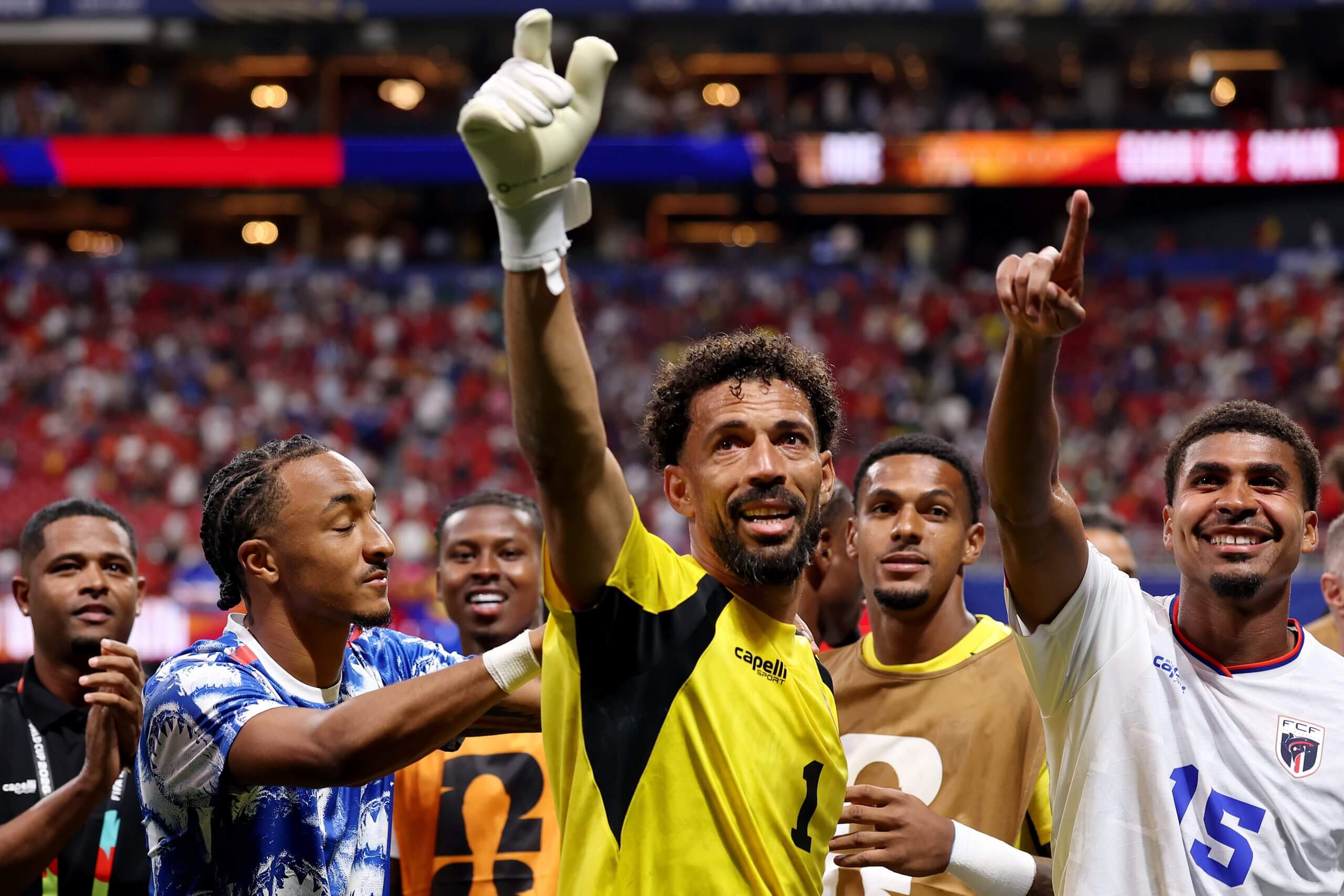
Cape Verde’s 0-0 draw with Spain was arguably the shock of the first round of World Cup matches. (Maddie Meyer — FIFA/FIFA via Getty Images)
Vozinha was visibly emotional on the pitch following the draw. “I cried after the game because I grew up with my grandparents when I was a kid, and they could not be there. They passed away a few years ago.
Vozinha, whose two-decade career has included spells at club teams in Cape Verde, Moldova, Slovakia and Cyprus, became the oldest player to make an appearance in a nation’s debut World Cup game at the age of 40 years and 12 days old.
The 91-time Cape Verde international has gained significant traction since his tournament debut. His Instagram account before the match had 50,000 followers but, at the time of writing three days later, it has grown to 12.6 million.
Senegal captain Kalidou Koulibaly, meanwhile, criticized the U.S. travel restrictions which prevented fans of his and other African nations from attending the World Cup, speaking after his side’s defeat by France on Monday.
“It’s true that some supporters couldn’t fly to America,” Koulibaly said. “I think that every team can have their people, so I don’t understand why people from Africa cannot have their people.”
In December, Trump signed a proclamation which imposed partial travel bans on Senegal, with Ivory Coast, Iran and Haiti being the other World Cup teams whose residents are subject to travel bans.