
“At the end of the day, this is the most important decision that I will likely make in my tenure at MLSE.”
The “decision” that Keith Pelley, the president and CEO of MLSE, was referring to in late March was the hiring of the next front office of the Toronto Maple Leafs.
This was it then? With the most important decision of his tenure, at a crucial pivot point for the franchise, the best Pelley could do — the best the Leafs, one of the league’s most iconic and richest franchises, could do — was hire John Chayka as general manager and the apparent head of hockey operations and Mats Sundin as senior executive adviser of hockey operations?
The best Pelley could do was hand the keys to the front office to someone who hasn’t been in the NHL since he was suspended by the commissioner five years ago after a largely ineffective run with the Arizona Coyotes and someone else who has never run an NHL team, nor been around the team or league for nearly 20 years?
And all apparently with an unusual, convoluted setup where Chayka is apparently in charge?
This is not a serious hockey team. That’s what this decision suggests. A serious team, determined to win the franchise’s first Stanley Cup title in almost 60 years at any cost, with the biggest financial muscles in the sport, would have pursued and landed the most credentialed front-office talent possible.
This is not that.
And after overseeing one of the most chaotic seasons in franchise history, following prior actions in the front office that included the dismissals of Kyle Dubas and then Brendan Shanahan, Pelley and an ownership group in transition haven’t earned the benefit of the doubt.
Why Chayka drew the top job is the biggest question here.
Only one year after he was brought in as an inexperienced assistant GM to then-GM Don Maloney in 2015, Chayka became the youngest GM in pro sports history, at age 26. The Coyotes finished with 70 points in his first season (third-worst in the NHL) and 70 points in his second season (third-worst again). They missed the playoffs both times. They missed the playoffs again in Year 3, by four points, and were sitting 11th in the Western Conference when the 2019-20 season was halted for the COVID-19 pandemic.
Shortly before the NHL resumed play for the playoffs, Chayka quit in controversial fashion.
Soon after that, in the summer of 2020, the Coyotes were forced to forfeit first- and second-round picks in the 2020 and 2021 drafts because they had violated the league’s draft combine testing policy while Chayka was in charge. And not long after that, in early 2021, in a move without much precedent, the NHL suspended Chayka for conduct detrimental to the league.
NHL commissioner Gary Bettman said Chayka “breached his obligation to the club” by reportedly pursuing opportunities with other NHL teams, namely, the New Jersey Devils, while he was still employed by the Coyotes.
No team had hired him in any capacity since — until the Leafs. Twenty-five general managers have been hired in that time.
Those controversies might be easier to set aside if Chayka had an impeccable managerial record. But he doesn’t.
About a month after he became GM, the Coyotes scored at the 2016 draft, selecting Clayton Keller and Jakob Chychrun in the first round. But that was it for major draft finds in his short tenure. His front office notably passed on Quinn Hughes (485 career points) in the 2018 draft and selected Barrett Hayton (155) instead. The Coyotes did sign some young talent — Keller, Chychrun, Nick Schmaltz — to deals that would become favorable and secure their crease. But they also took big swings that bombed, such as an eight-year contract for Oliver Ekman-Larsson that was later bought out, a trade for Phil Kessel as his prime days were ending, and a pricey gamble on pending UFA Taylor Hall in a furious bid to make the playoffs.
The Coyotes were one of the NHL’s biggest spenders by the end of Chayka’s run.
John Chayka had a checkered history with the Arizona Coyotes. (David Wallace / The Arizona Republic)
This was no successful rebuild or retool: Arizona, after losing in the second round in the aftermath of Chayka’s ignominious exit, would miss the playoffs in its final four seasons in the desert.
He has since been serving as the CEO of JKC Capital, a family-run business which, according to the company website, holds 50 Wendy’s franchises and five Tim Hortons franchises in Ontario and Quebec. Chayka is also on the board of Wendy’s Canada, the website says.
He was the best person the Leafs could find to manage their team now of all times, in a potentially franchise-altering offseason? Why had no other team hired him — in any capacity — in the four-plus years since his suspension ended?
With Pelley now at the helm, MLSE appears to be making the same mistake with Chayka as they made with his predecessor, Brad Treliving, ignoring a track record that doesn’t scream success or anything close to it.
While Sundin has no front-office experience, Chayka has a mere five years.
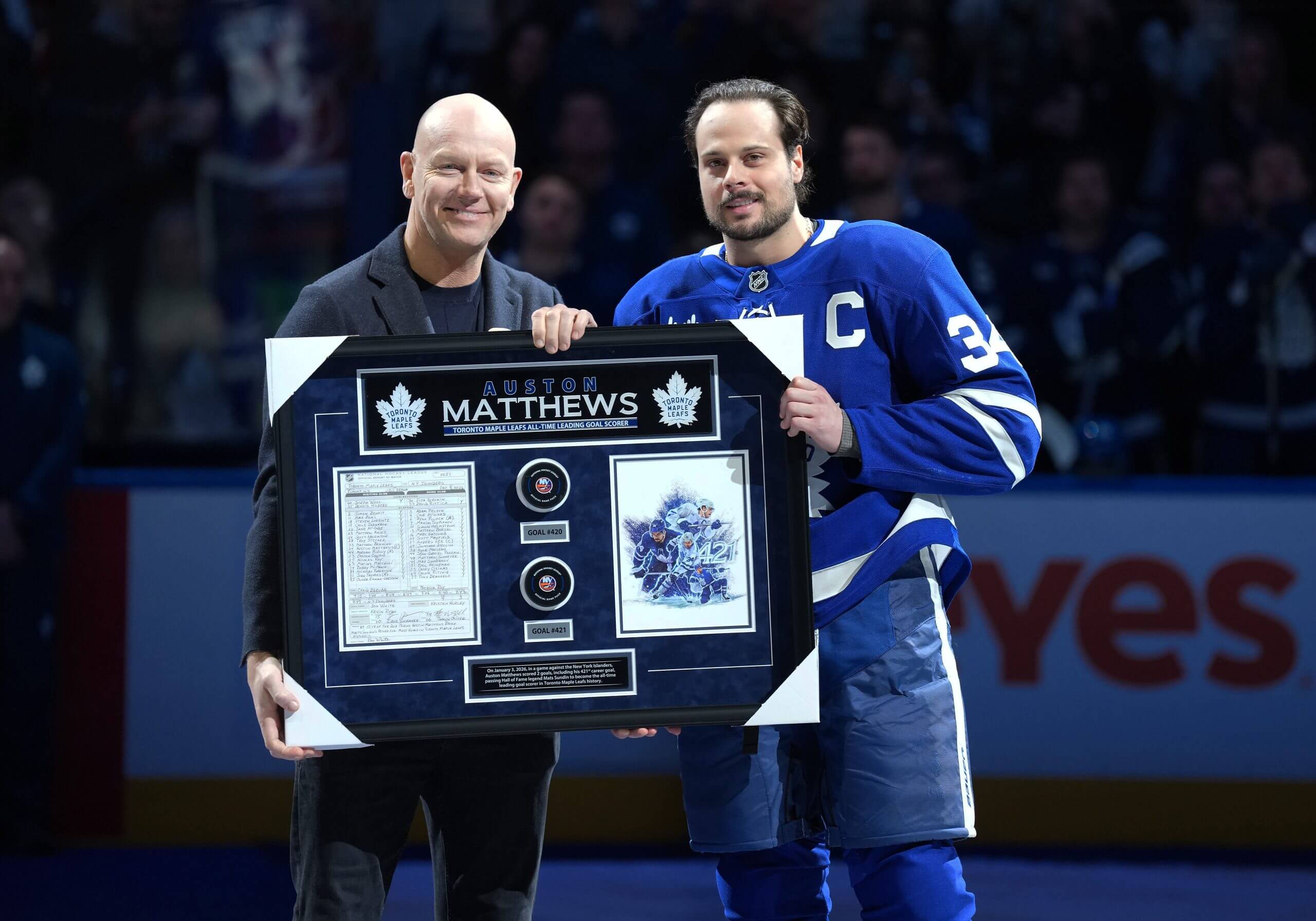
Sundin, feeling more like the second fiddle in this new front-office setup, is among the greatest players in Leafs history, with the most points ever by a Leaf and, until this past season when he was passed by Auston Matthews, the most goals. He was the captain of the team for 10 seasons and has a plaque in the Hall of Fame.
But Sundin has never worked in an NHL front office in any capacity and has been a scarce presence around the Leafs since he retired from the NHL in 2009. What will he lean on other than a playing career that ended 17 years ago, when the salary cap was still relatively new, in a league that looks radically different today? What role will he even play for a team that’s in a perilous position at the moment?
He’s not the president. The Leafs still aren’t filling that role for some reason. So what is his role exactly?
According to the team, Sundin will “provide support across hockey operations, with a focus on team culture, player development and leadership support.”
It will be tempting to view Sundin as a not-so-dissimilar choice from Shanahan a dozen years ago. Hall of Famer, that is, with no front-office experience.
Except that Shanahan, a month after his retirement as a player, went to work in the league’s head office and had even played a central role in pushing the league toward the faster, more skilled product we see today.
And it appears that Sundin won’t have the power that Shanahan had as president.
Mats Sundin returns to the Leafs in his first front-office role. (Nick Turchiaro / Imagn Images)
Choosing Sundin as an executive adviser has the feel of a PR play for a team in crisis.
It feels very reminiscent of the Francesco Aquilini-led Vancouver Canucks installing Trevor Linden, a franchise icon and longtime captain with no front-office experience, as their president in the spring of 2014 and pairing him up with Jim Benning as GM in a run that proved disastrous.
How hungrily did Pelley pursue top managerial talent from rival teams? Was it just a perfunctory phone call to the Tampa Bay Lightning to inquire about Julien BriseBois and that was that? Did he pivot to Chris MacFarland, Eric Tulsky or Kelly McCrimmon afterward? Was there really an all-out attempt to hunt down the best talent?
And if there was, how did Chayka, first and foremost, and Sundin along with him, emerge as the best this team could do?
It is a massive gamble on two people with questionable credentials. And at a time when Auston Matthews’ future with the team is in real doubt.
The search process itself raises questions: from Tie Domi (the father of a player on the team) being involved; to Chayka, a longtime friend of that player (Max) being hired; to Neil Glasberg’s search firm also representing candidates; to not having a clear-cut plan for the front-office structure in the first place.
Yes, there is a possibility that this all works somehow. That Chayka finds redemption in his second tour as GM. That Sundin proves to be a dynamic front-office leader despite his inexperience.
But that possibility would have existed with anyone. Hiring more qualified people would increase the odds of success.
That this was the best that Pelley and MLSE could do for a jewel of an NHL franchise, with a loyal and passionate fan base desperate to see a Stanley Cup victory for the first time in six decades, really is hard to believe.