
State election officials could soon face a stark choice: Hand over voter lists to the Trump administration or risk losing Postal Service delivery for mail-in ballots.
That dilemma stems from newly proposed USPS rules that seek to comply with an executive order President Donald Trump signed this spring to crack down on mail-in voting. If courts let the order stand, it would give the federal government an unprecedented role in elections — and could put even more voter data in the hands of Trump officials searching for supposed election fraud.
The proposed rules lay out new conditions that states would have to meet to send ballots through the mail, including giving the agency lists of all voters set to receive mail ballots.
So far, 23 Democratic-led states and the District of Columbia are suing, as are Democratic Party leaders and non-partisan voter advocacy groups, setting up a potentially active summer of high-stakes judicial rulings.
The Trump administration cleared an initial legal hurdle last month, when a federal judge in Washington, DC, who is overseeing one set of the cases, declined to block Trump’s executive order, allowing the Postal Service to begin implementing it.
The Democratic Party groups are asking an appeals court to speed up its review of that decision, warning that voters around the country could be disenfranchised in this year’s midterm elections if the proposal is not blocked.
In an interview with CNN, Maine Secretary of State Shenna Bellows, a Democrat whose state is part of the coalition that filed a legal challenge in Boston, said that if courts rule for the Trump administration, “Then you will see a virtual elimination of mail-in voting, unless the states supply voter lists to the federal government.”
The March 2026 executive order is one of several moves Trump has made recently to seek federal control over elections and restrict mail-in voting, which he has repeatedly cast as a tool used by his opponents for election cheating despite no evidence of widespread voter fraud.
On Capitol Hill, the SAVE Act, a Trump-backed bill requiring new citizenship verification measures to register to vote, has floundered in the Senate. Courts have pushed back on other aggressive attempts by the administration to inject itself in the voting process — a job the Constitution largely gives to the states.
But now Trump’s executive order seeks to give USPS an unprecedented role in the midterm elections: not just delivering ballots but policing who gets one.
“If proper postage is paid on a mail piece, the USPS should deliver it,” former USPS Board of Governors Vice Chair Anton Hajjar told CNN. “The proposed rule says it’s not regulating elections but that’s what, in effect, it’s doing,”
In a statement, the White House said that the “entire Trump Administration will continue lawfully enacting the agenda President Trump was elected to enact – which includes the safety and security of American elections.”
“The Administration remains confident that the Executive Order will be implemented by the November election, which was always the intent when it was signed,” White House spokeswoman Abigail Jackson said.
While the language the Postal Service drafted still leaves states in charge of deciding which voters end up on the lists submitted to the agency, it tells USPS not to send ballots for states that don’t follow that process. The states’ mail balloting programs must meet other requirements in Trump’s order for USPS to deliver their ballots, potentially forcing some jurisdictions to completely redesign their mail voting materials.
“This would deny eligible people the right to vote. Full stop,” said Tobias Read, secretary of state in Oregon, one of the 23 states suing the administration over the order.
“This is not in the president’s power,” Read said. “It’s absolutely clear in the Constitution – states run elections.”
As the legal fight unfolds, Postal Service unions have communicated their concerns to USPS leadership about the order – and how it puts mail carriers in the position of deciding whether to transmit certain ballots.
“As we read this draft, if a state does not comply with it, if they don’t provide the information or the right format, then the Postal Service is going to simply refuse all of those ballots or whatever election mail it is, and that is very, very concerning,” said Brian Renfroe, president of the National Association of Letter Carriers.
Trump’s order also instructs the Department of Homeland Security to build its own state-by-state citizenship lists of eligible voters by pulling data from various federal agencies, fueling fears the administration could use the lists to pressure states to purge their voter rolls.
State election officials already have the ability to use a DHS immigrant record system to verify their rolls, and the program has come under fire for falsely identifying eligible voters as non-citizens.
In court filings, the Trump administration has waffled on how DHS intends to carry out the plans for releasing state-by-state lists, but on Monday, the Justice Department said DHS is working on making “citizenship list information” available for states to access.
DHS is also having “preliminary conversations” about the agencies sharing data, DOJ said Monday. The administration previously told the court that DHS was exploring whether the state voter data provided to USPS could be used to help “monitor mail-in and absentee ballot flows, identify anomalies that may suggest voter fraud or misuse, and generate authorized investigative leads.”
A spokesperson for DHS said in a statement to CNN that it was lawfully implementing President Trump’s executive order and that it was committed to “restoring integrity to our election systems and ensuring that American citizens and only American citizens are electing American leaders.”
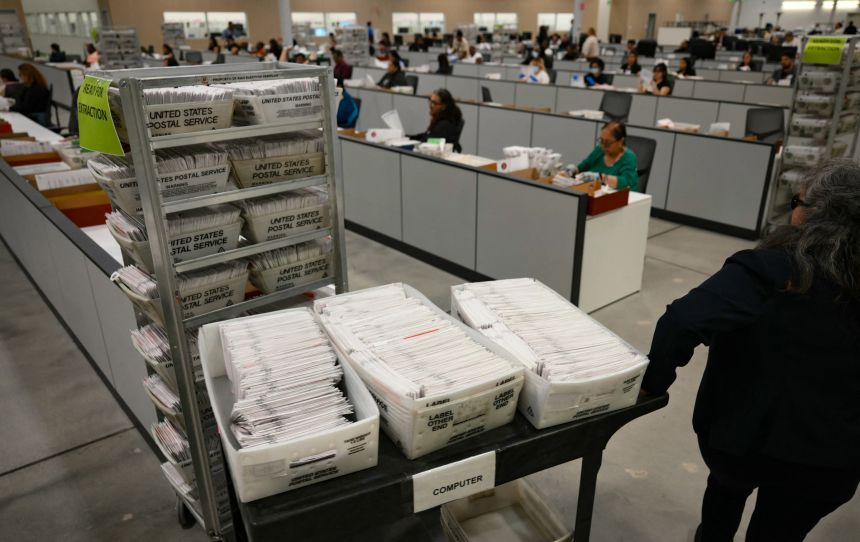
There are major questions over the feasibility of the Postal Service’s plan, including whether the already cash-strapped agency has the funding and wherewithal to execute such drastic steps on such a quick timeline.
“When they don’t have the funding to do their declared mission, how’s anybody reasonably expecting that they can expand that mission?” said Matt Crane, executive director of the Colorado County Clerks Association, which represents the local officials who run elections in the state. “Focus on their day job and let us do ours.”
Under the proposed regulations, the Postal Service will need to design and launch a portal through which states could submit a list of their mail voters, along with unique bar codes for each individual.
“The real problem is, to my knowledge, this portal doesn’t exist yet,” said Jeff Ellington, whose company, Runbeck Election Services, has been hired by Maricopa County, Arizona, and other large jurisdictions to print ballots and administer other aspects of mail voting.
The Trump administration has told USPS there is money to support the internal implementation, a person familiar with the conversations told CNN, though the specific stream of funding is unclear.
Within the agency, the outsized impact the new system will have on smaller, rural communities has been a matter of discussion, the person said.
In addition to the lists of eligible voters, the proposed regulations include new standards for ballot envelopes, including barcodes that would help keep track of ballots — all of which pose challenges for smaller election offices with limited budgets to revamp mail-in ballots.
Large counties in states where mail voting is prevalent, such as Arizona and Colorado, are likely to already use ballot envelopes that are designed in accordance with the proposed regulations. Those design features have long been best practices for mail voting, said Tammy Patrick, chief programs officer at Election Center, a non-profit that serves elections officials across the country.
“There are practical reasons why some jurisdictions haven’t adopted this,” said Patrick. She pointed both to budgetary issues as well as state laws that stand in the way of ballot envelope designs that facilitate automated tracking.
How jurisdictions organize and format their mail vote data varies from state to state, and within each state, posing potential obstacles for how USPS will receive those lists.
“Across the states, it’s been a challenge for local officials to make sure their data can be ingested and read by the states,” Patrick said. “And now we are asking all 50 states to have information that can be aligned for the Postal Service.”
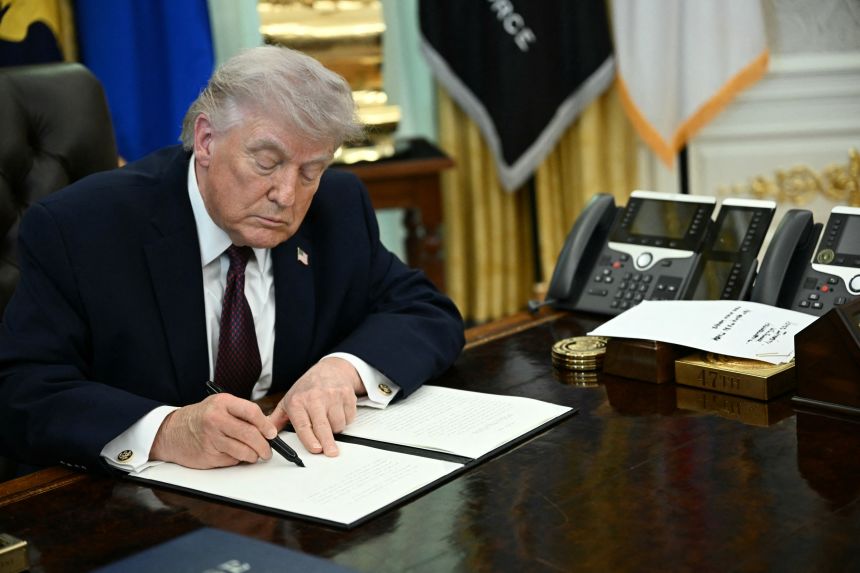
Trump tried to assert more control over federal elections in an executive order last year, but that has been largely blocked by judges who concluded he has no unilateral power to alter voting rules, and any such authority must come from Congress. Similar arguments are being made against the latest order.
Last month, US District Court Judge Carl Nichols declined to block Trump’s 2026 executive order – not because he found its directives lawful, but because he said there were unanswered questions about how the government would implement it, so it was too soon for him to intervene.
Democrats are pushing the DC US Circuit Court of Appeals for a ruling this summer.
“If the Order remains in force, millions of American voters’ sensitive personal data will be amassed into inaccurate and unlawful databases and USPS will engage in unprecedented interference with state mail voting programs,” the Democrats wrote in a Monday court filing.
The Justice Department argued in court filings “that there is no justification for such a compressed schedule.”
The USPS proposal, which was rolled out the day after Nichols’ ruling and is open to public comment, included some notable modifications to what Trump’s March 2026 directive envisioned, softening some of the most stringent limitations on mail-in voting. For instance, it gave states flexibility to continue to modify the voter lists that are submitted to USPS as the midterms approach.
Still, election experts are puzzled by what USPS will do with those lists once the agency receives them and warn that any hiccups in that process could lead voters not getting their ballots in time.
Some election officials see the requirement as a backdoor data-grab by the administration as the Justice Department has sued 30 states to obtain sensitive voter data – particularly for universal mail-balloting states where essentially every voter would be on such a list. The eight courts that have ruled in those cases have all ruled against the Justice Department.
“We already told the Trump administration that they couldn’t have our voter data,” said Amanda Gonzalez, who is the clerk of Jefferson County, Colorado, and a Democrat running to be the top election official in the state, which is fighting the administration’s voter roll demand in court. “This is just a poorly disguised ploy to get it another way.”